I used to be kind of addicted to knives. I owned them all—all the big, expensive brands, chasing the high-end outdoor industry hype. But a while ago, I got rid of most of them. I realized something crucial: It is far better to own a few simple, basic tools and actually master them than to constantly crave more.
The outdoor industry and social media algorithms are designed to pull money out of your pockets. They want you to believe you need a 300-dollar “tactical survival” monster. You don’t.
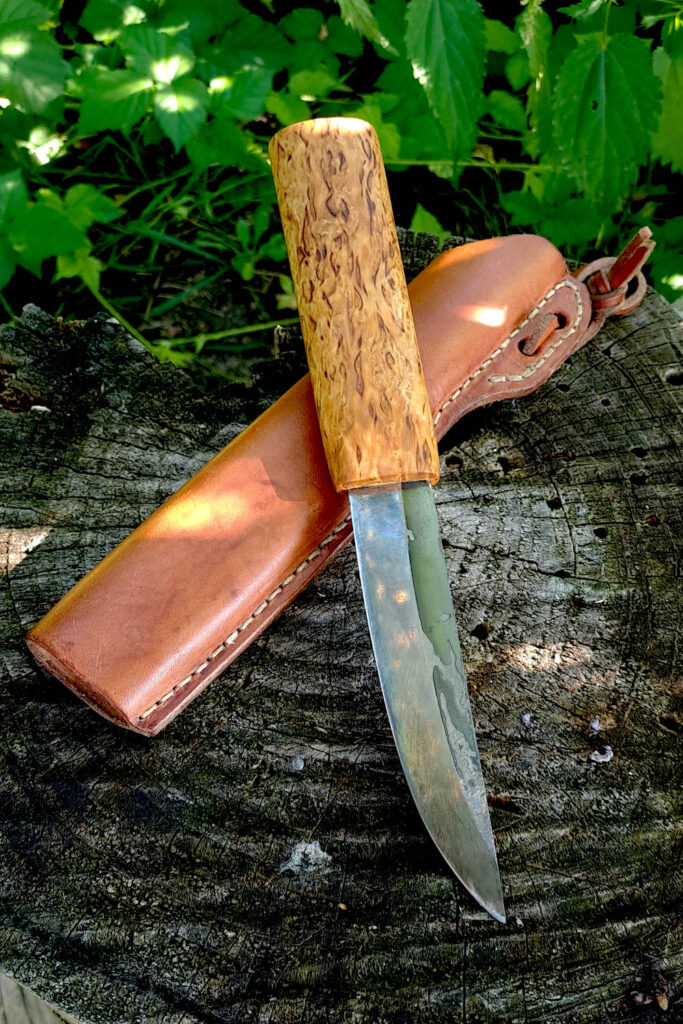
Let me show you my Boreal Puukko knife, which I made myself, and why it became so special to me.
The Anatomy of an Archaic Tool
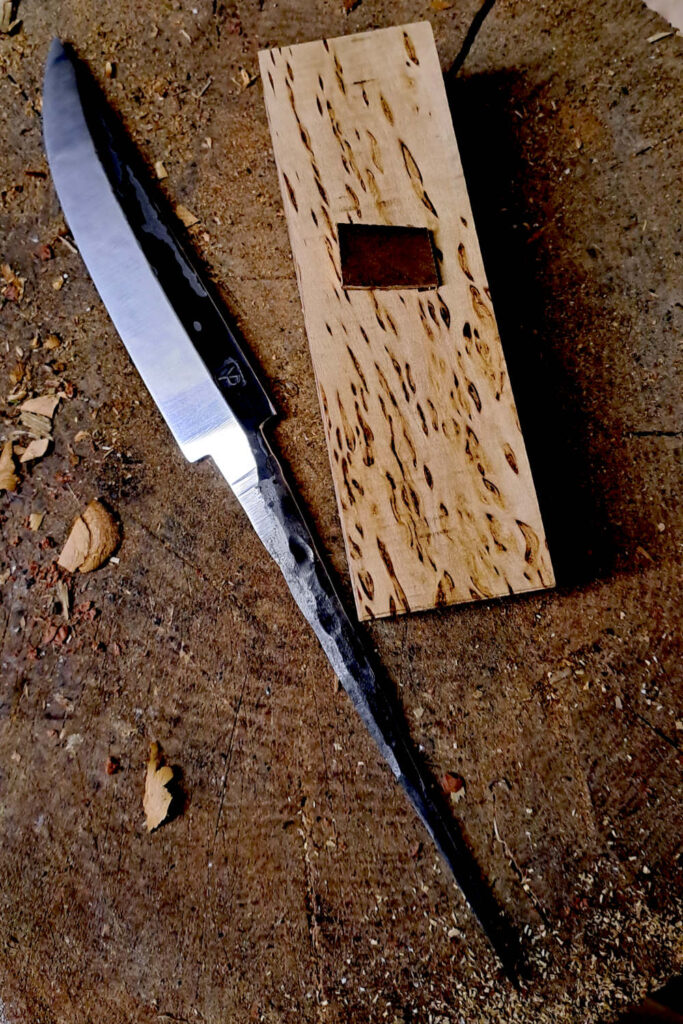
For the handle, I used a piece of curly birch. I deliberately avoided any fancy bolsters or decorative spacers. I wanted a rough, archaic, honest tool—just plain wood. The only exception is the small brass washer I crafted for the end to pin the full tang into place. The handle features a distinct teardrop/oval shape, making it incredibly comfortable to hold without twisting in your hand.
The blade itself wasn’t forged by me—it’s a hand-forged carbon steel blade made by the blacksmith Antti Mäkinen from Yrjö Puronvarsi in Finland. It features a very high scandi grind (almost a flat grind), making it an incredible slicer. Even though it starts out at a beefy 5mm thickness at the spine, it tapers beautifully all the way down to a very fine, precise tip.
The total material cost for this unique, handmade knife? Around 80 to 90 bucks.
The Simple Spruce-Core Sheath
I wanted to avoid artificial materials entirely. The sheath is a very basic, traditional design featuring a wooden core made from spruce wood and hand-stitched with waxed linen thread—no nylon or polyester here.
If you notice that weird little cut-out corner near the opening of the leather: That was actually a mistake. The first time I pulled the blade out, I accidentally slashed a giant slit into the fresh leather. Instead of throwing it away, I just trimmed it down. It’s a reminder of trial and error, and it works perfectly fine.
Built for Crafting, Not for Show
I don’t use my knives for batoning logs. If I need to split heavy wood, I carry an axe or a saw. But when it comes to actual craftsmanship, this Puukko shines.
- Carving: It glides through hard, dried maple and cuts through softer spruce wood like butter. Because it’s a traditional wooden handle, you can whittle for hours without getting hot spots or blisters.
- Leatherwork: It’s sharp enough to cleanly slice thick leather, bevel edges, and skive leather down to a thin edge.
- Food Prep: Despite the thick spine, it effortlessly slices carrots and potatoes without splitting them. And nothing goes to waste on our farm anyway—the chicken and dogs always look forward to the kitchen scraps.
Dwelling vs. Surviving
Modern rubber handles and tactical steels have their place if you just want to “survive” a bad storm. But I consider myself more of a dweller than a survivor. I love the connection to traditional materials and the peace that comes from sitting down and carving a small figurine with a tool you understand inside out.
You don’t need to chase the newest gear. Look for the simple, time-tested tools. They are less expensive, highly efficient, and carry a real soul.
What’s your go-to tool that you’ve mastered? Let me know in the comments below!