There is something deeply satisfying about restoring an old, beaten-up tool and giving it a second life. Recently, I got my hands on a classic vintage knife from Norway. The blade needed some serious attention, and the handle was crying out for care. But the biggest problem? It came without a sheath.
A knife like this belongs on your belt, not in a drawer. So, after restoring the knife itself, I decided to build a custom leather sheath from scratch – combining traditional Norwegian style with a few heavy-duty upgrades.
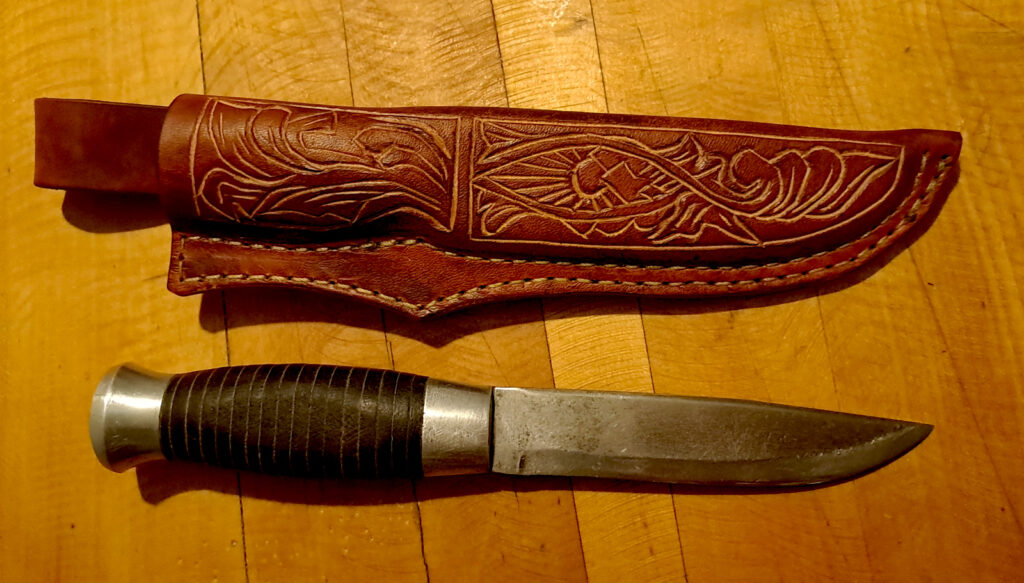
Uncovering the Roots: A Mid-Century Helle Classic
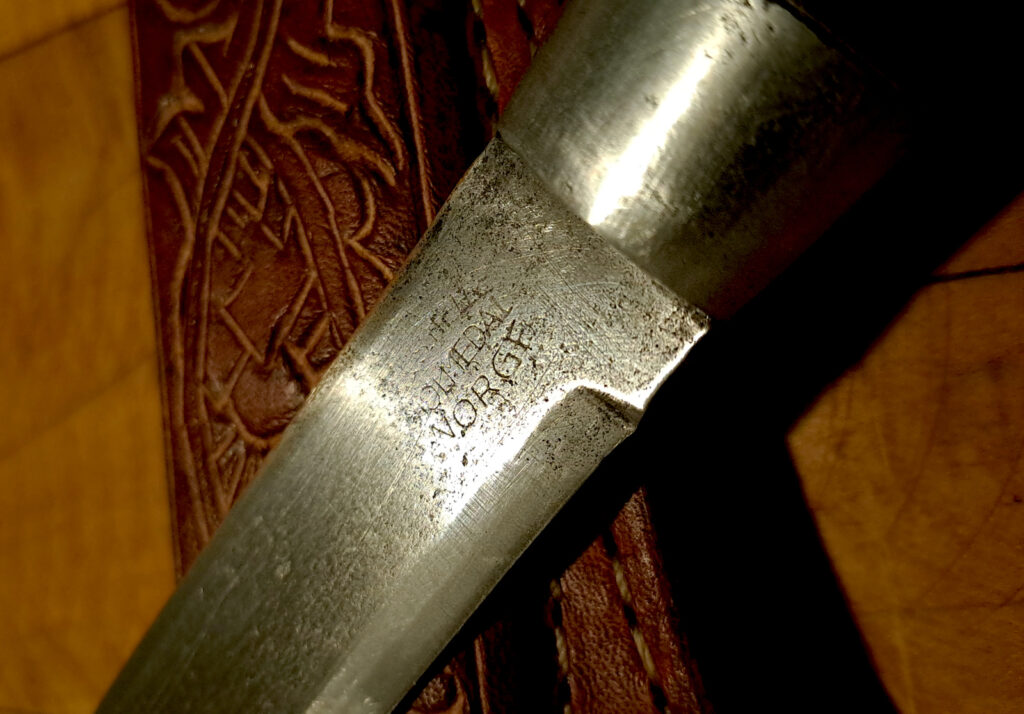
During the restoration process, I carefully cleaned the blade and managed to make out a faint, weathered stamp near the spine: “Helle Holmedal Norge.”
This confirms its heritage. Based on its distinct construction, this is a mid-century Helle model, likely dating back to somewhere between the 1950s and early 1970s. It features the signature elements of that era:
- The Handle: Built from stacked leather and fiber washers, which gives it an incredibly solid, comfortable grip even after all these decades.
- The Hardware: Cast aluminum bolster and a distinct, flared aluminum pommel—highly characteristic of Helle’s classic working and scouting knives from this period.
- The Steel: A traditional Scandinavian blade profile with a robust Scandi grind. It carries a beautiful, hard-earned patina that tells a story of its own.
Crafted for the Woods: The Sheath Design
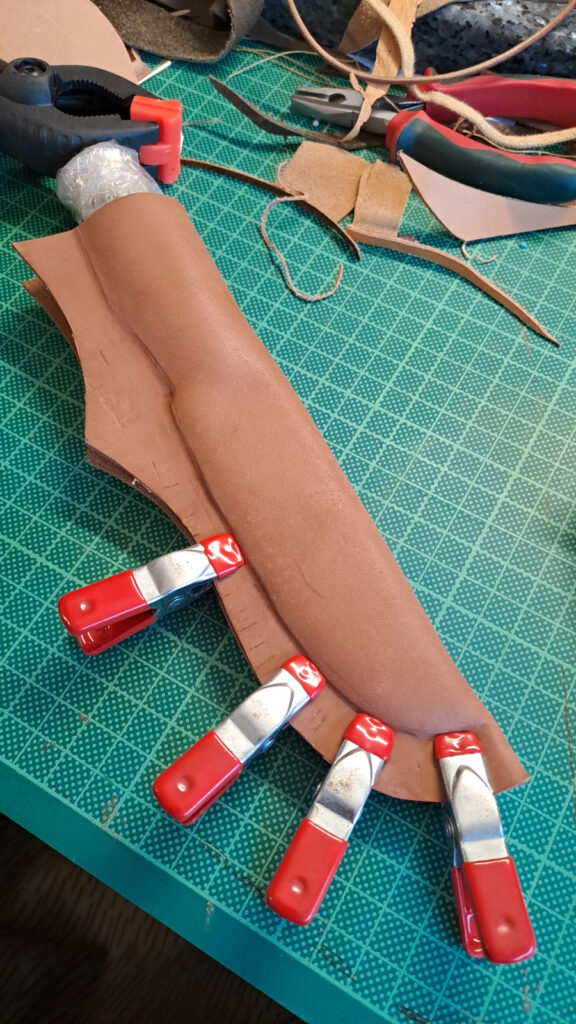
Since this knife is meant for real use in the field, safety and longevity were my top priorities when crafting the sheath from vegetable-tanned tooling leather (Blankleder).
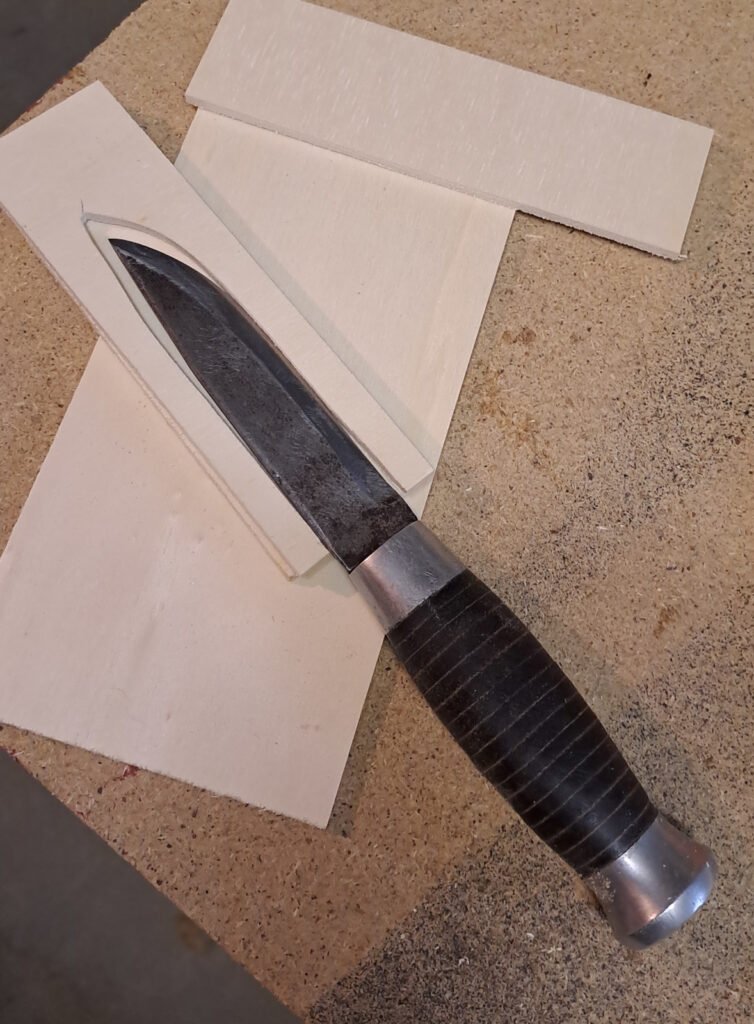
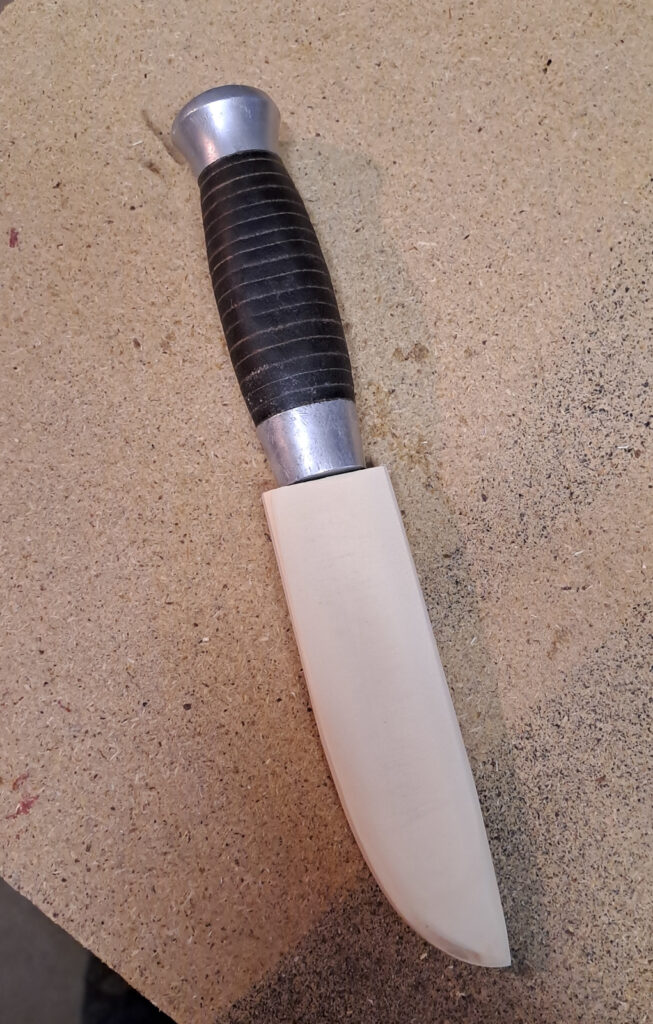
- Internal Safety: Inside the leather, I integrated a custom-fitted blade guard made from poplar plywood. This prevents the razor-sharp edge from ever cutting through the stitches or the leather.
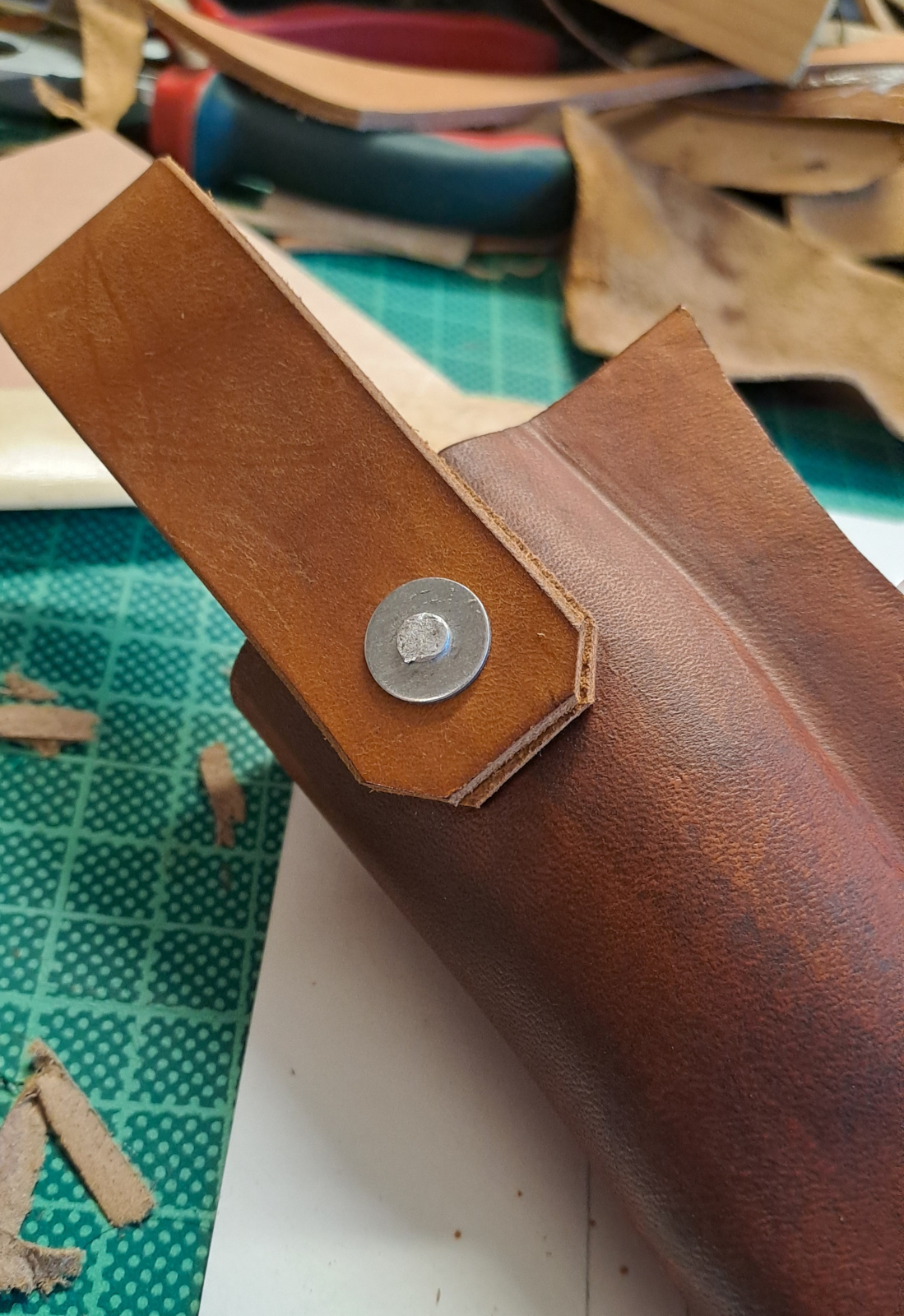
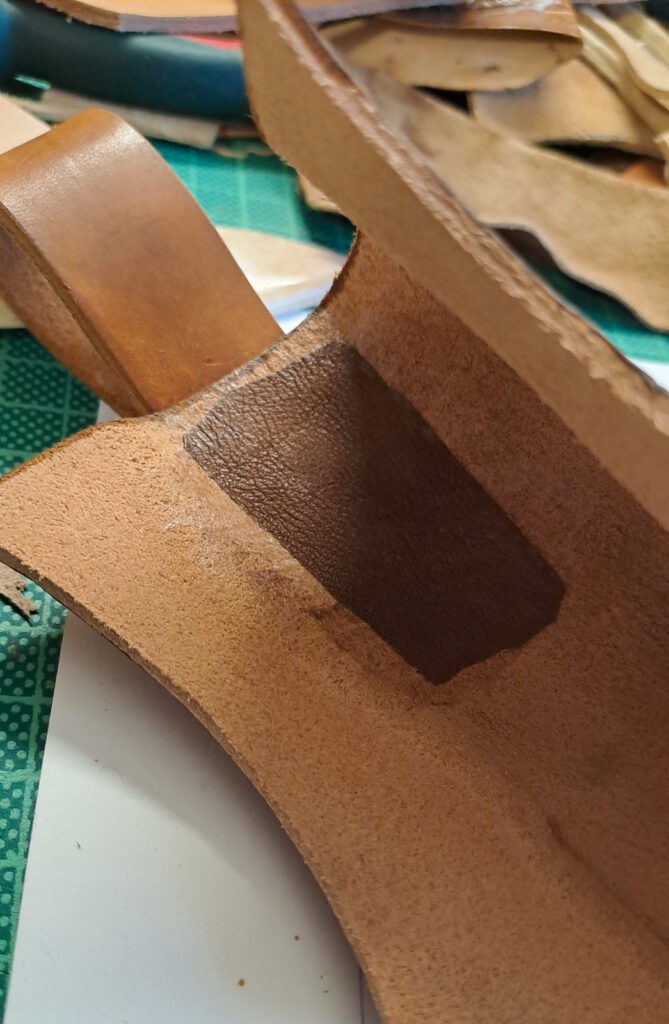
- Heavy-Duty Hardware: The belt loop is secured with a solid aluminum rivet, matching the knife’s original hardware. To ensure the metal doesn’t scratch or dent the stacked leather handle when sheathed, I skived down a small piece of scrap leather and glued it firmly over the inside of the rivet. Smooth contact only.
The Finishing Touches: Hand-Carved Acanthus
Once the construction was done, I dyed the leather myself to get that deep, rich tone that only develops a real patina with time and use.
For the final touch, I wanted to pay homage to the knife’s heritage. Traditional Norwegian crafts often feature distinct geometric and flowing patterns. Using a V-gouge (Geißfuß), I carved a decoration into the surface inspired by classic Norwegian Acanthus wood carvings and traditional Helle designs.
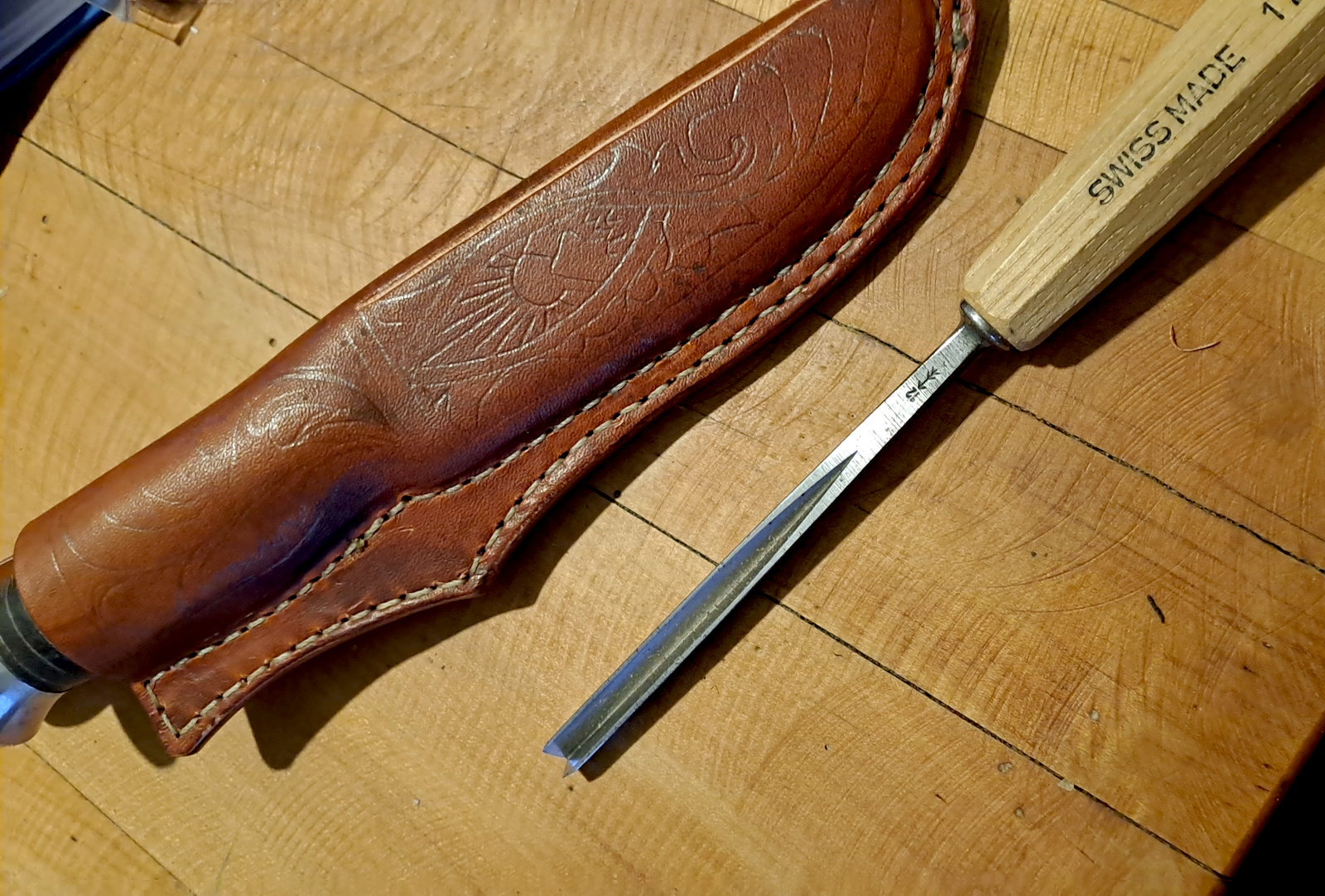
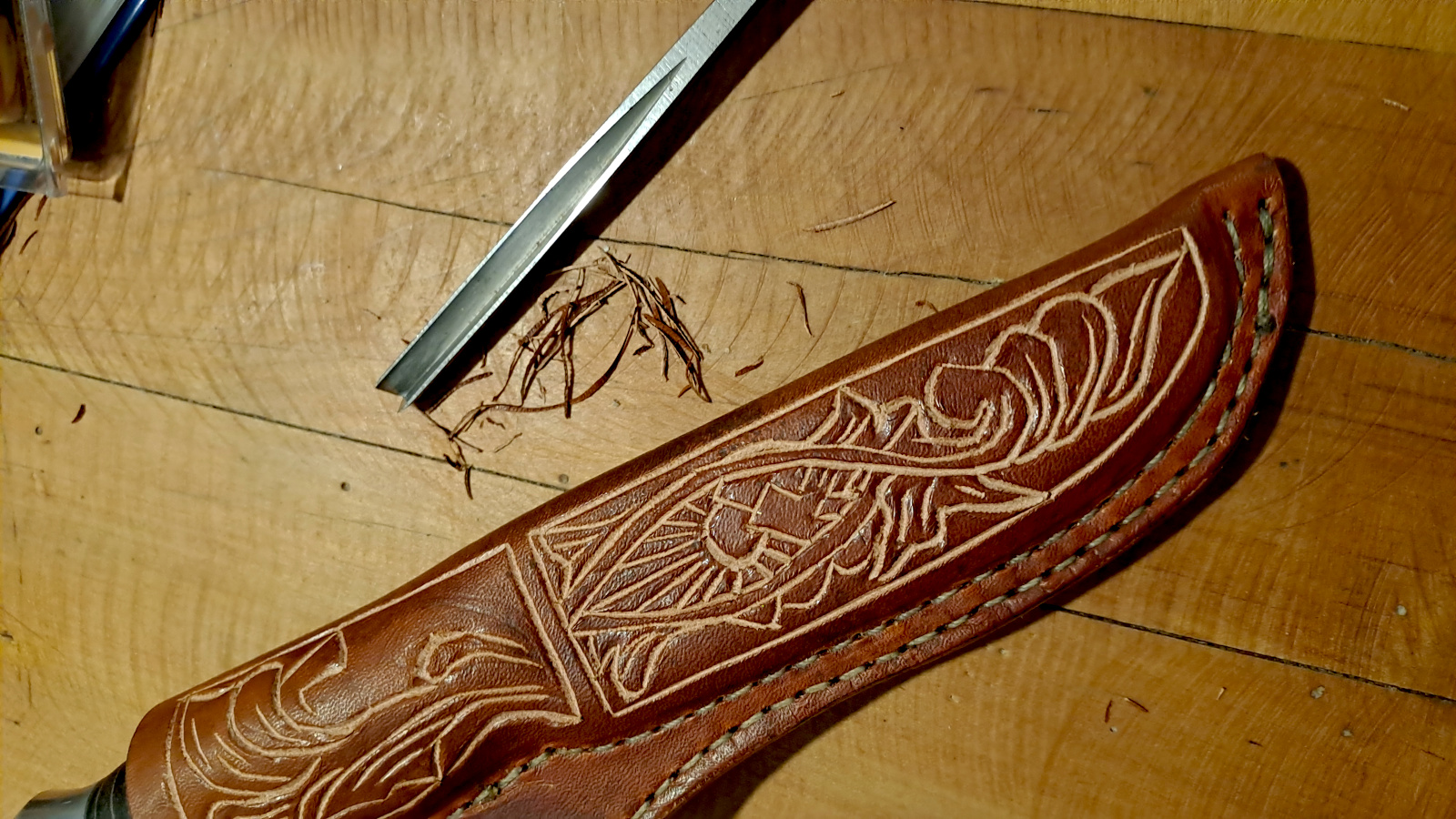
It’s not just a restoration; it’s a continuation of the knife’s story. It feels incredibly solid, sits safely on the belt, and is ready to go back out into the woods where it belongs.
Cheers!