When it comes to survival and bushcraft knives, the modern market is flooded with tactical designs and high-tech wilderness blades. But if you look at the people who have actually lived and survived in the harsh northern forests for centuries—the Sami people of Scandinavia—you’ll find a completely different tool: the Leuku (also known as a Huggare or Stuorra Niibi).
For me, a large Sami knife combines the absolute best of all worlds when it comes to a heavy-use outdoor tool. For this project, I wanted to create a unique fusion: a traditional Scandinavian knife built with materials that reflect my own home and roots in Westphalia, Germany.
The Heart of the Beast: An Yrjö Puronvarsi Blade
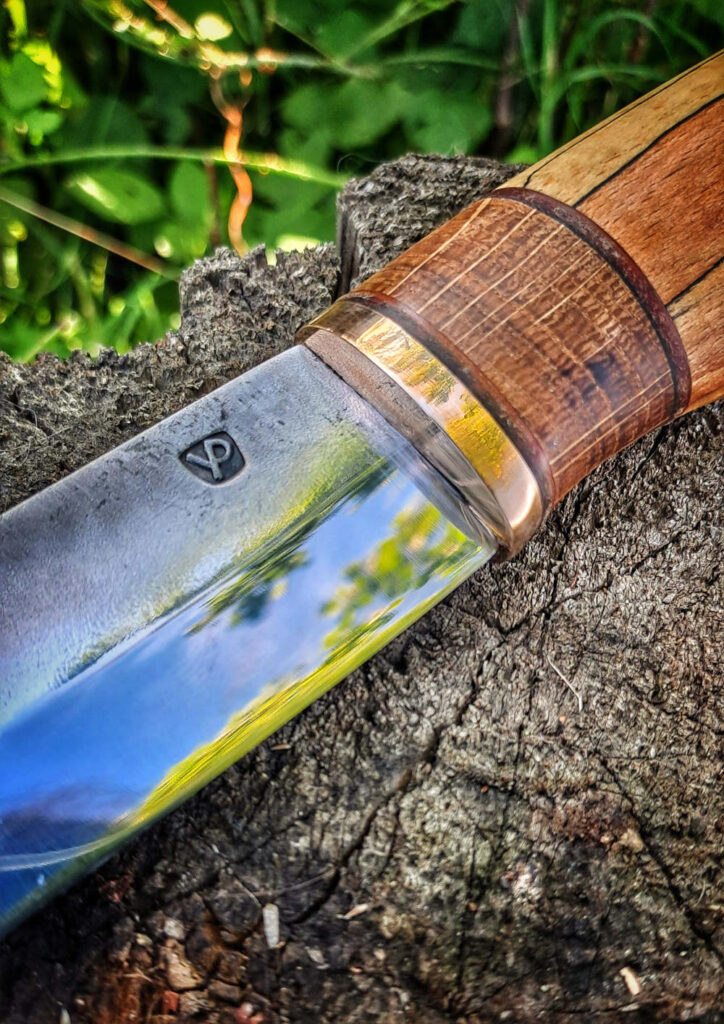
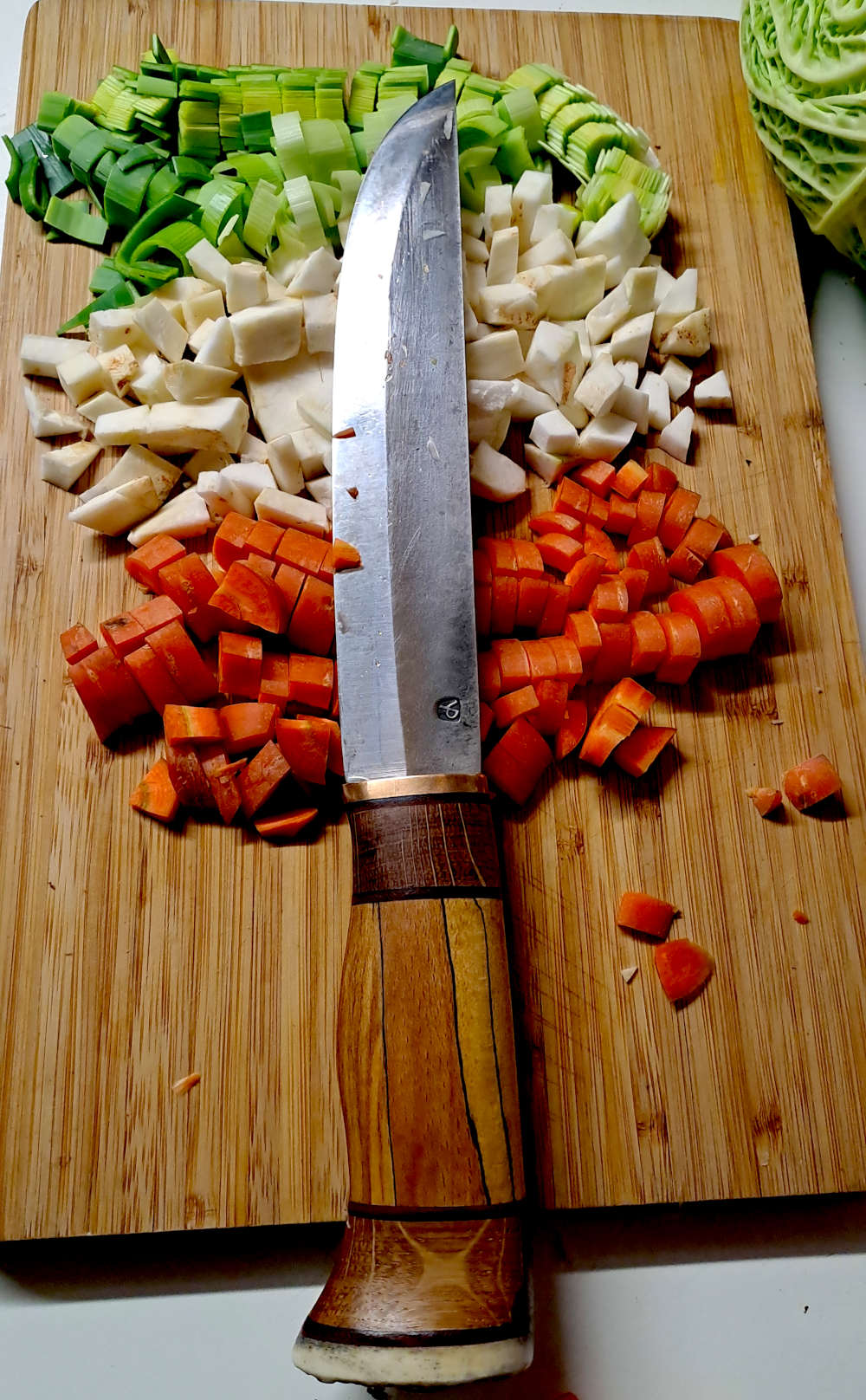
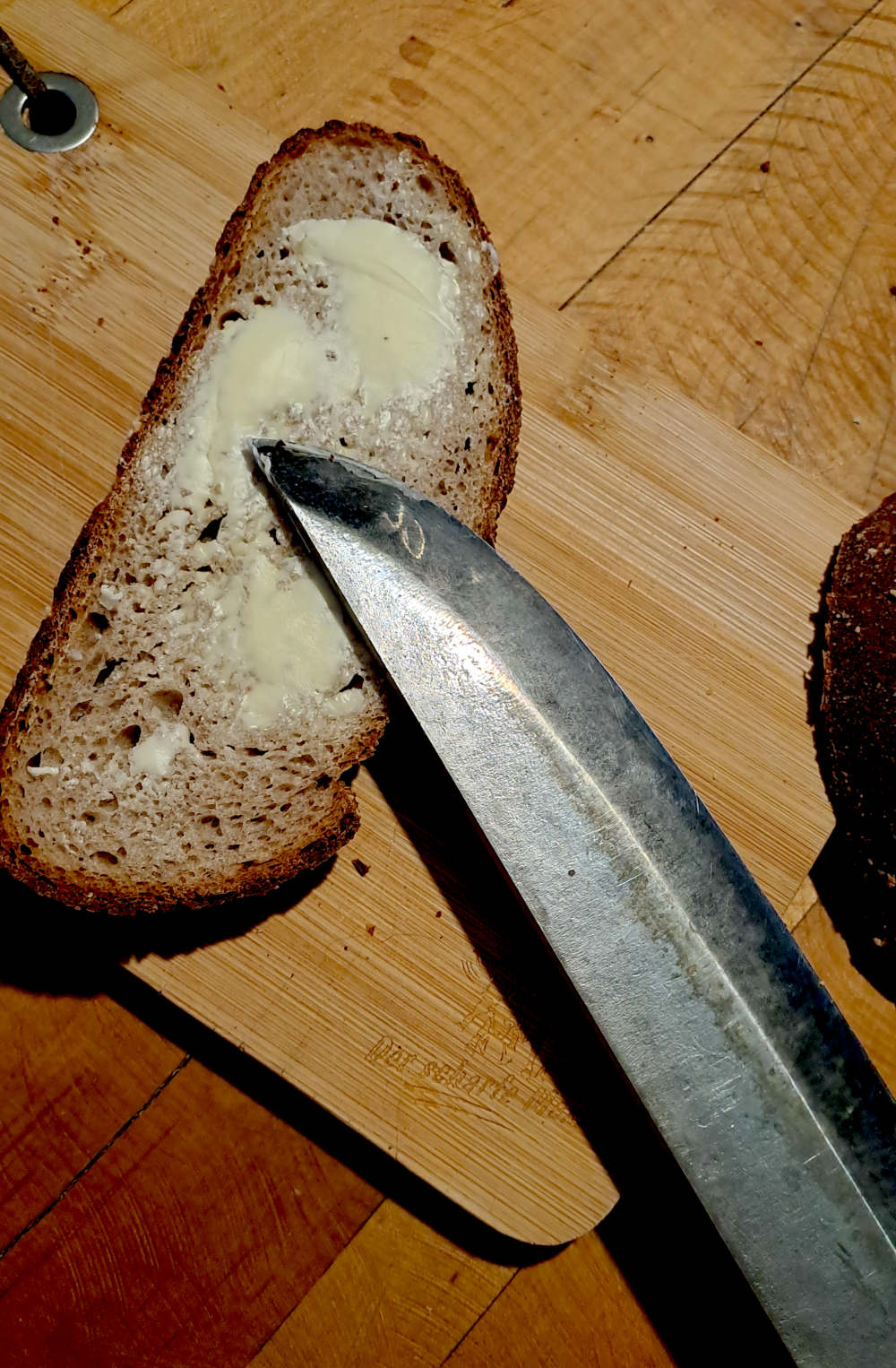
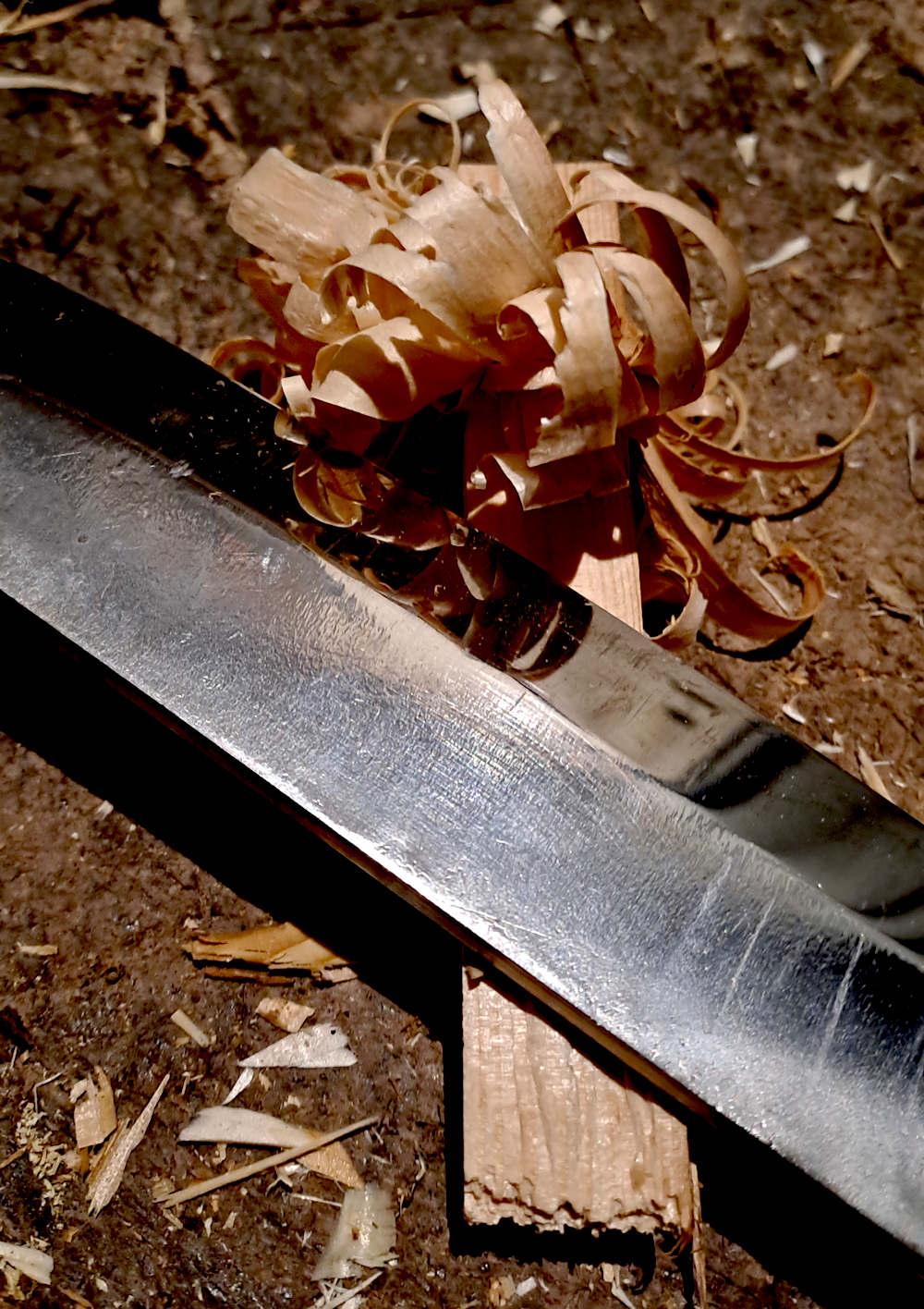
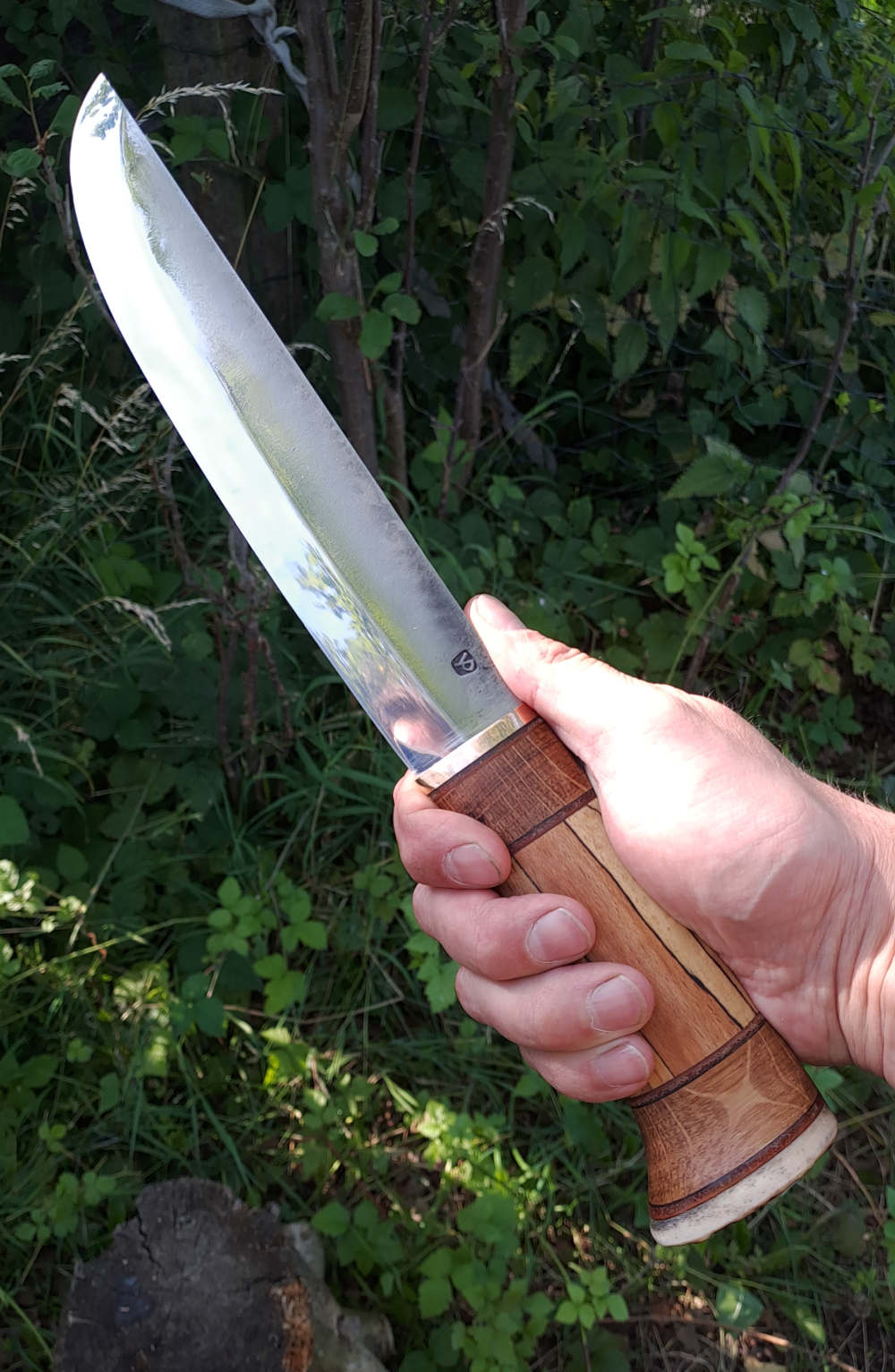
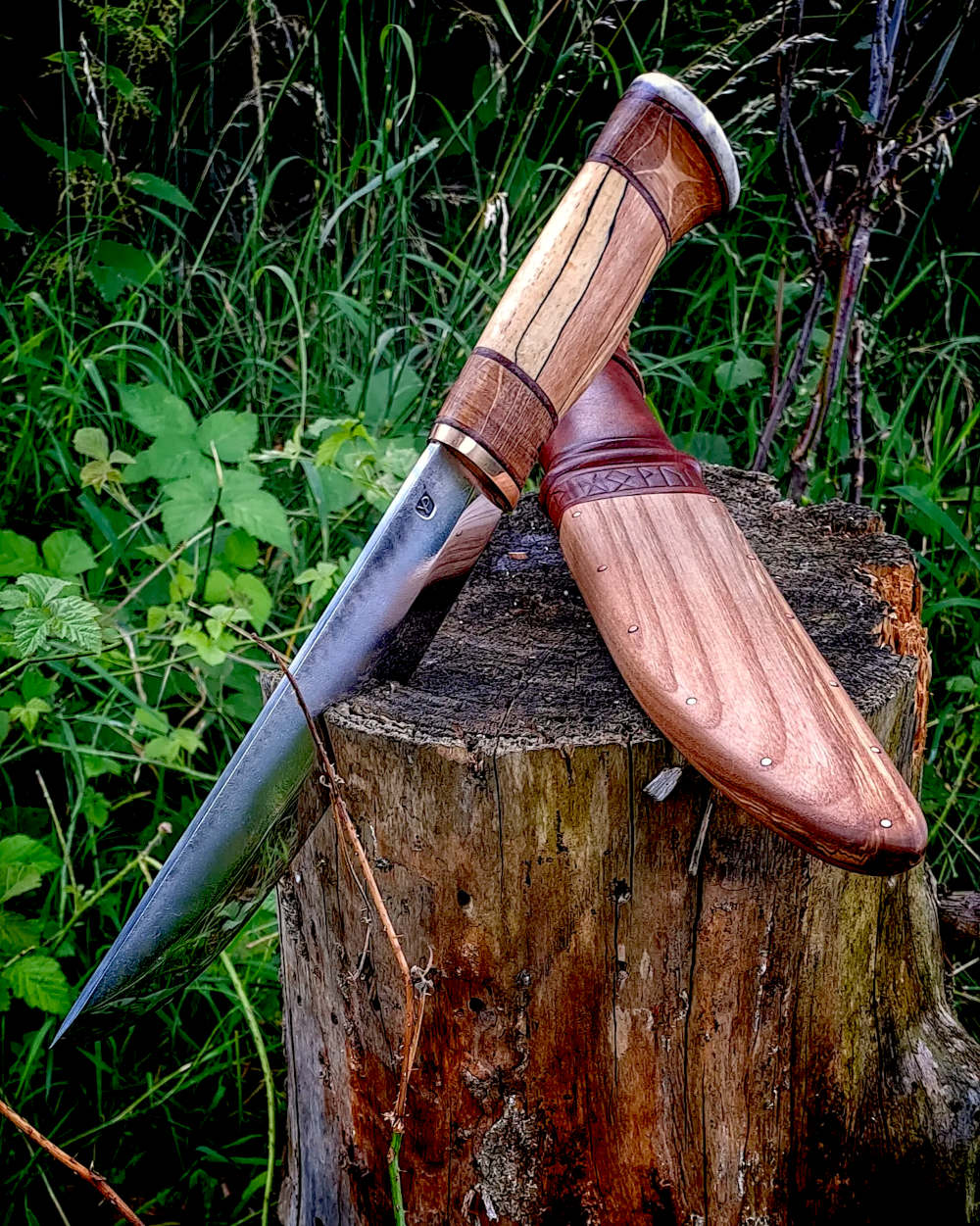
The foundation of this build is a hand-forged carbon steel blade blank from Yrjö Puronvarsi (YP Taonta) in Finland. Puronvarsi is famous for forging blades with a distinct, historic soul—featuring a brutal, thick spine, raw forging scale on the flats, and a razor-sharp Scandi grind.
To complement this legendary Finnish steel, I built a heavy, contoured handle using locally sourced materials from my homeland:
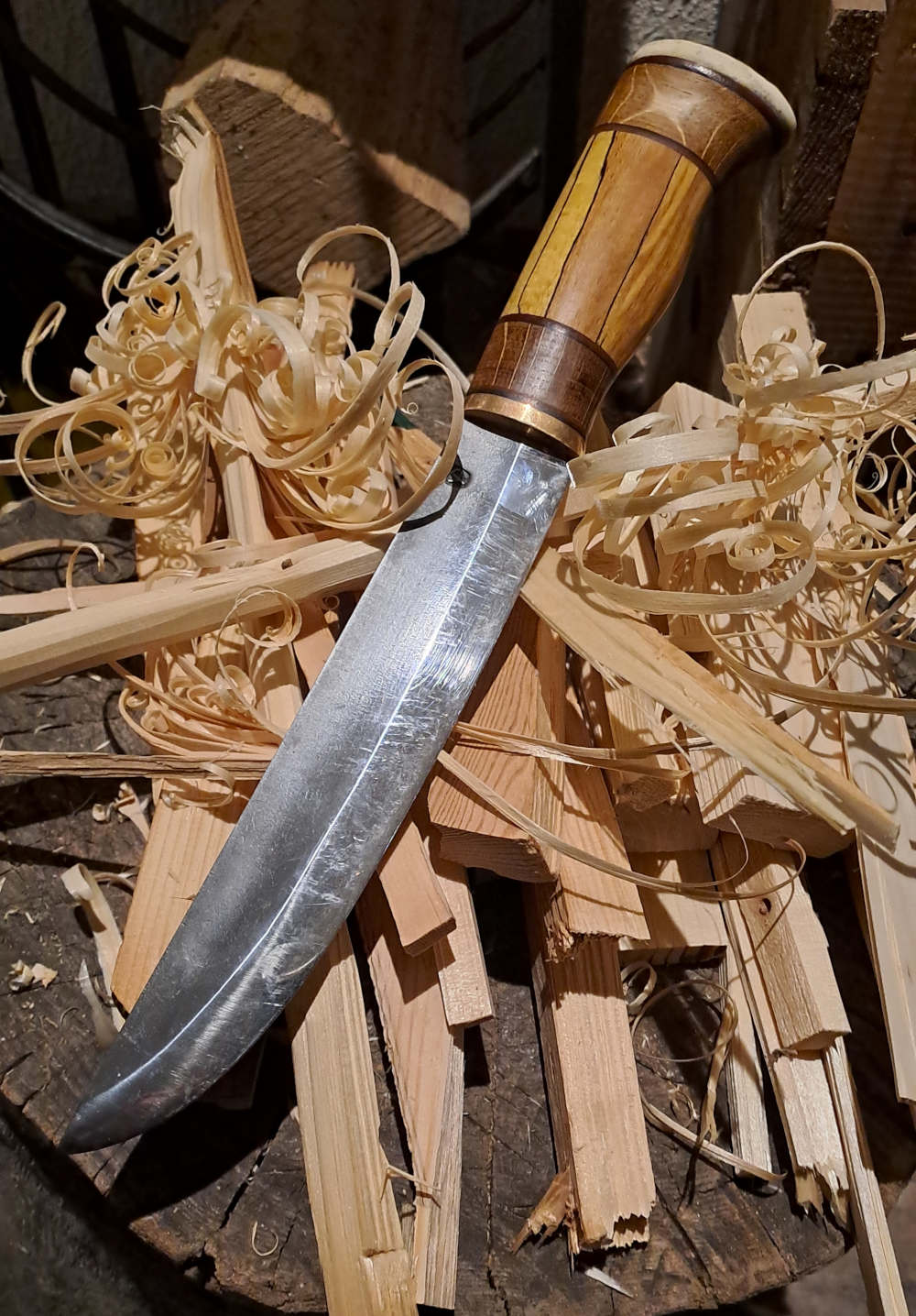
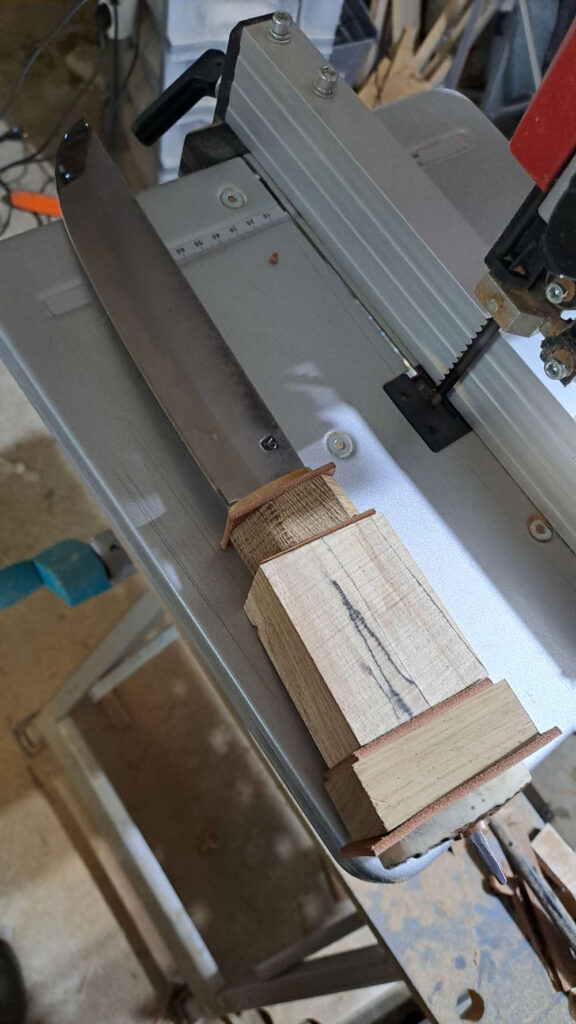
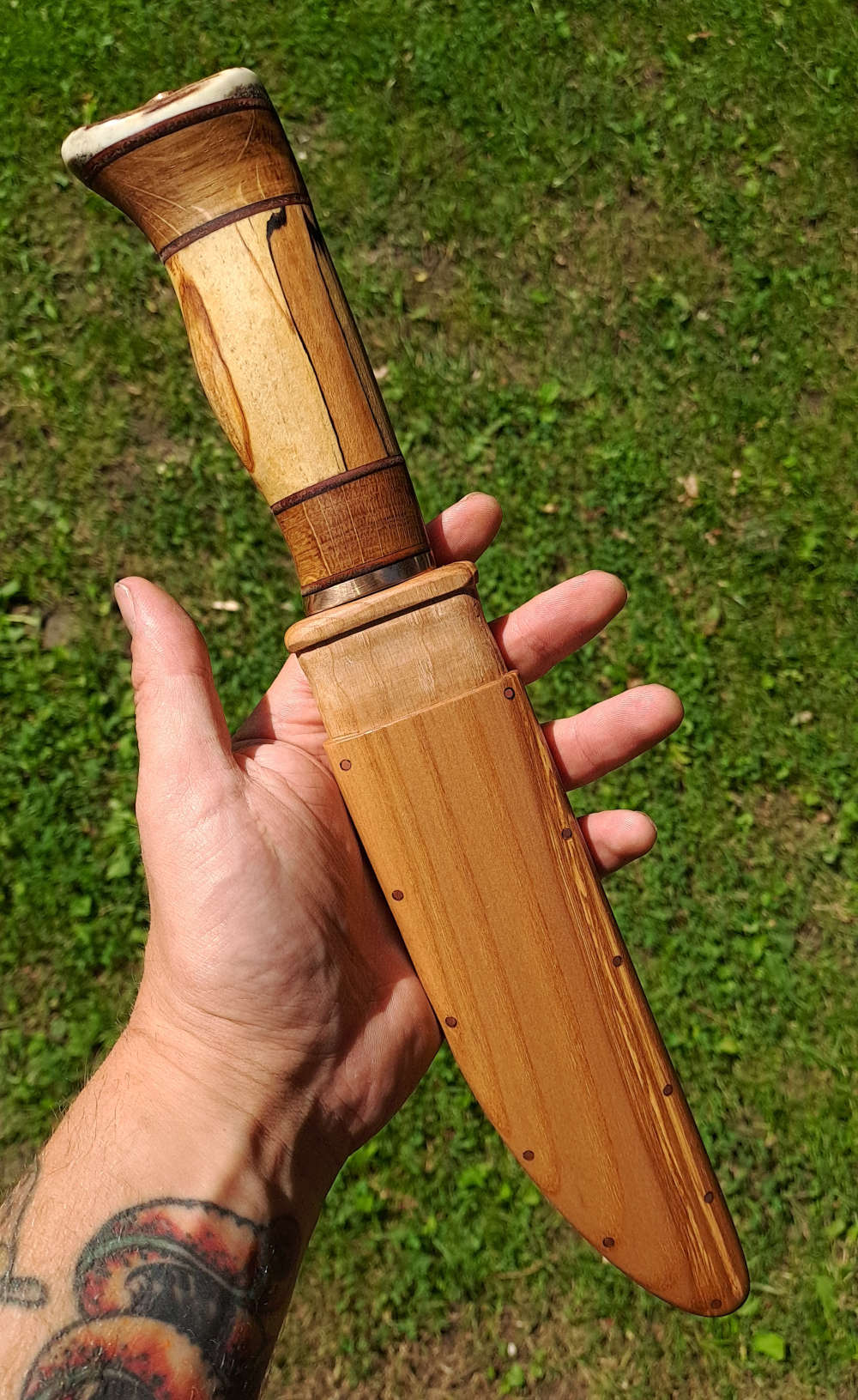
- The Handle Stack: The handle is a rich combination of spalted beech (gestockte Buche) and oak (Eiche), separated by clean accents of bronze.
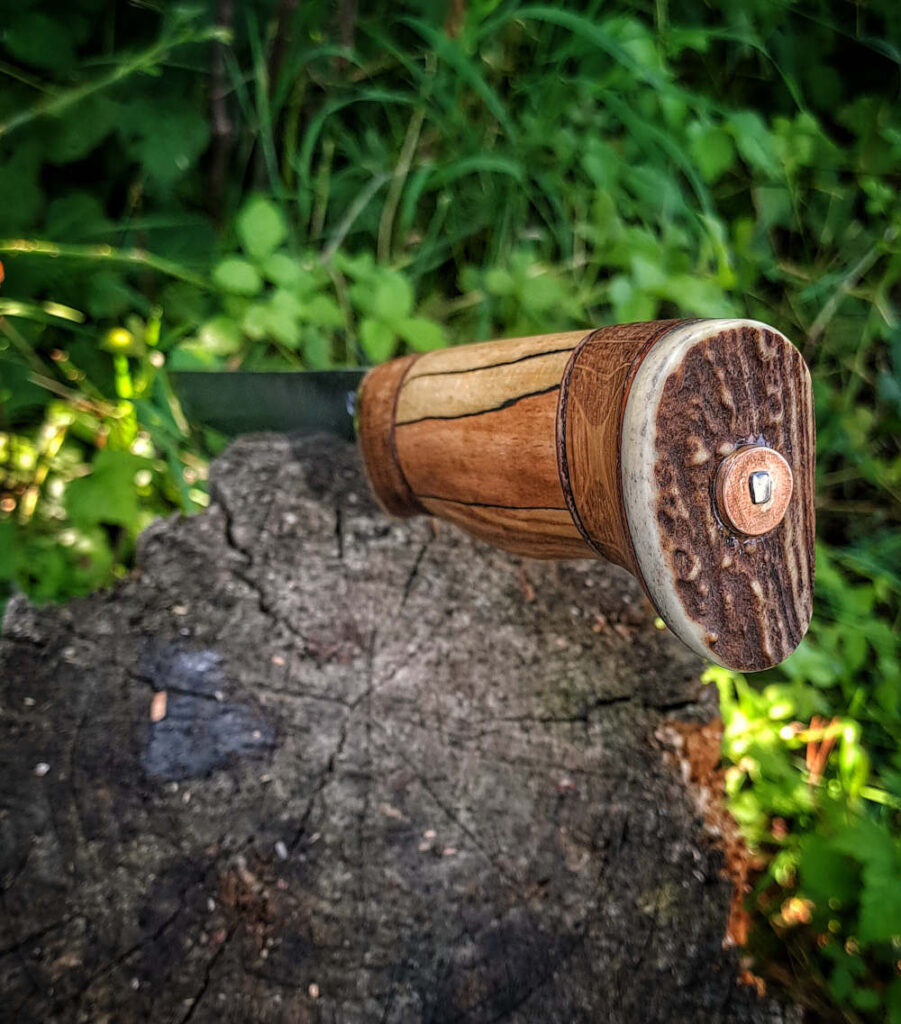
- The Pommel: The end piece is crafted from rugged deer antler (Hirschgeweih), adding a classic, organic finish.
- The Construction: This is a true through-tang build. To ensure maximum durability, the tang runs all the way through the handle and is securely peened over a bronze rivet washer (Bronzenietscheibe) at the very end.
The generous handle allows for multiple grips. Choking back on the antler pommel gives you incredible leverage for chopping limbs like a small hatchet, while choking up close to the blade offers surprising control for finer woodcraft tasks.
The Sheath: A Traditional Puolituppi Design
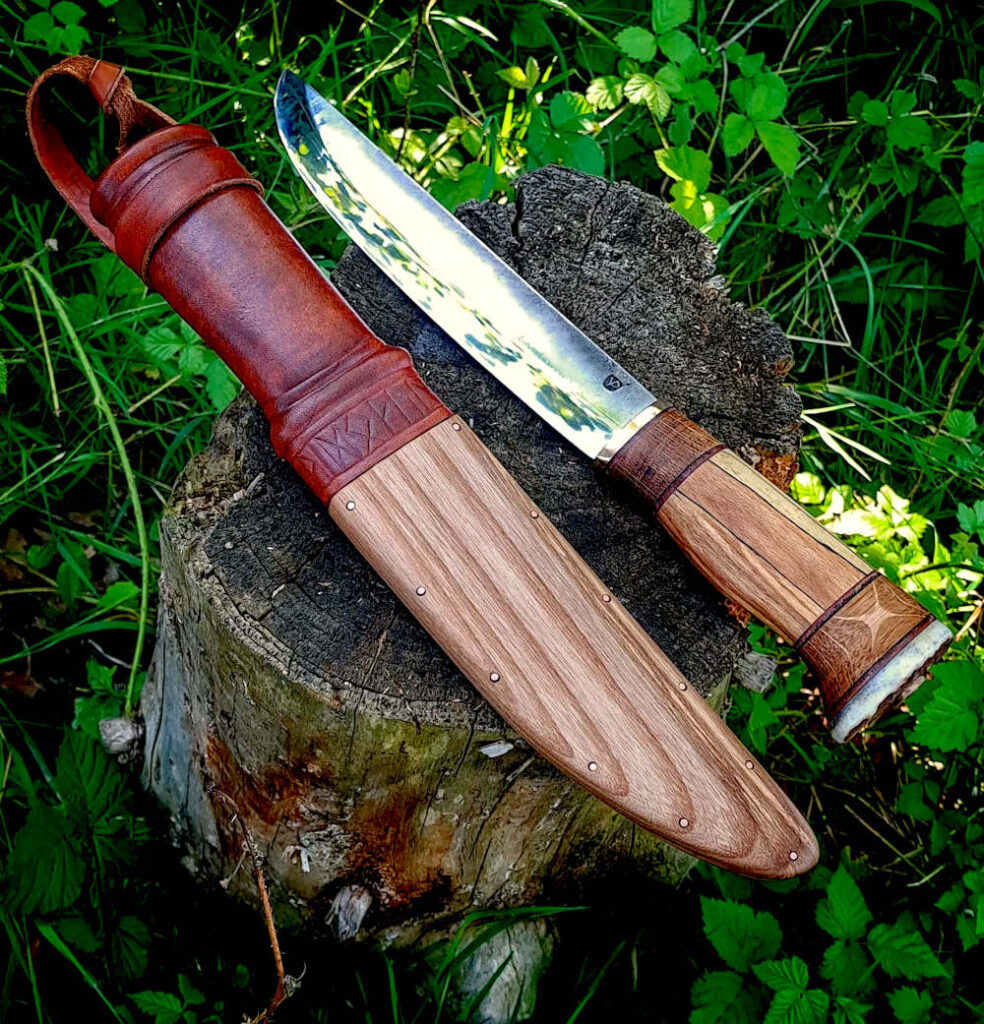
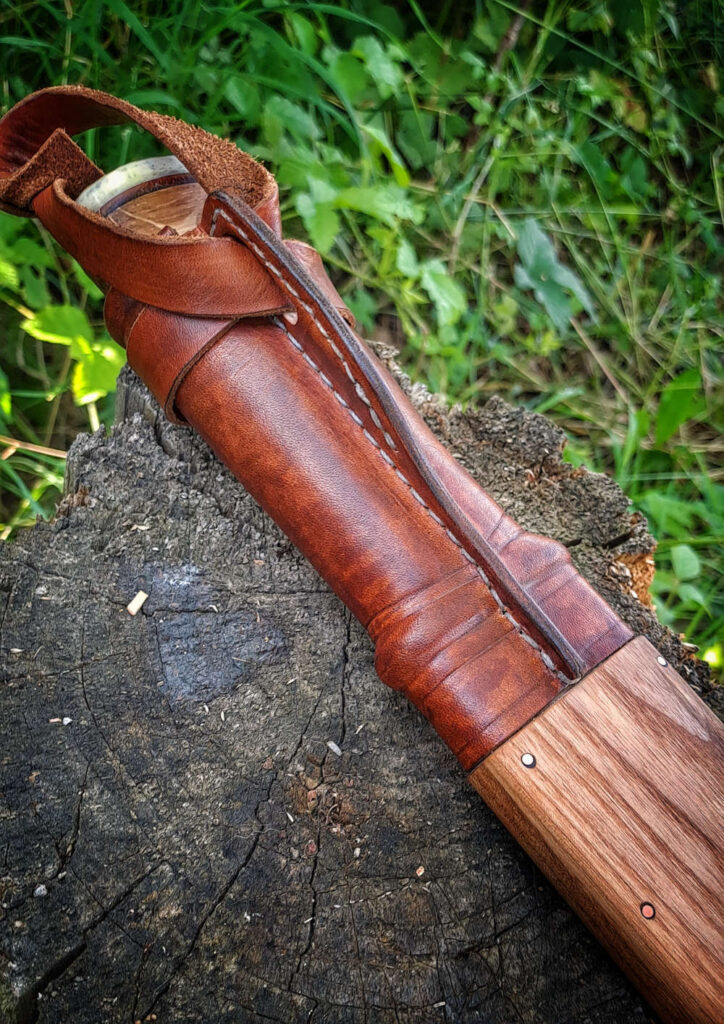
A knife of this heritage deserves an equally authentic carry system. I decided to build a traditional Finnish Puolituppi (half-sleeve) sheath, where the fusion of wood and leather takes center stage.
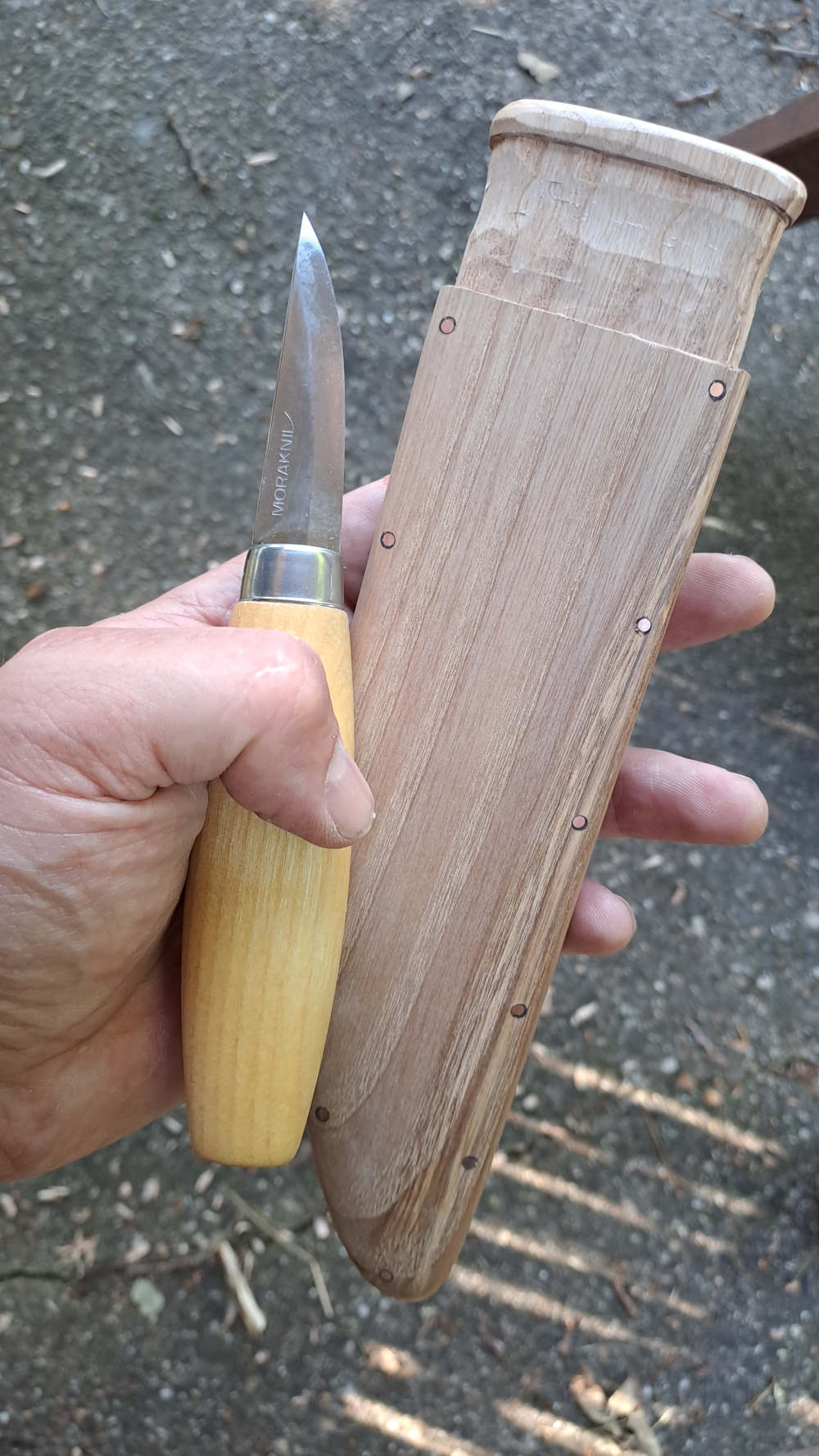
- The Visible Wood Component: The lower half of the sheath is crafted from a beautifully shaped piece of elm wood (Ulme). Unlike western sheaths where the wood is hidden inside, here the elm is completely visible, forming the solid, protective housing for the blade.
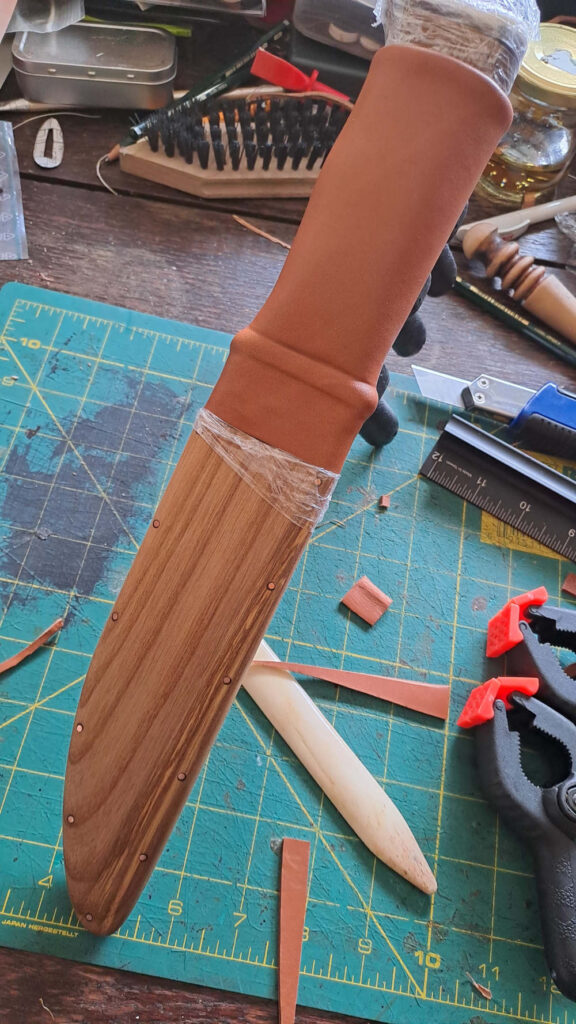
- The Leather Sleeve: The upper half consists of a heavy vegetable-tanned leather sleeve that is wet-formed to tightly grip the handle. It is hand-stitched directly to the wooden lower section.
- Rugged Protection: I dyed and conditioned the leather by hand to withstand the wet, unpredictable elements of the woods. Together, the elm wood and the dark leather will develop a beautiful patina over time, perfectly matching the character of the knife itself.
A Tool with a Story
There is an unmatched level of appreciation you feel when you step out into the wild carrying a heavy tool you put together yourself. This Leuku doesn’t just chop, split, and carve—it tells a story of northern tradition blended with the raw, honest materials of my Westphalian home.
What do you think about using locally sourced materials on traditional knife designs? Have you ever built a regional fusion tool yourself? Let’s discuss in the comments below!
Want to see the entire build process and hear more about the materials? Watch the video on my channel:
Cheers!