The Opinel is easily one of the most recognizable pocket knives in history. It is cheap, it is simple, and it has absolutely no tactical hype attached to it. You could call it the utilitarian workhorse of the knife world. Yet, it divides the gear community like few other blades: some dismiss it as a cheap wooden toy, while others swear by its performance.
Personally, I always keep an Opinel in my work bag and another one ready in the kitchen drawer. To understand why this humble tool causes so much debate today, we have to look at where it came from.
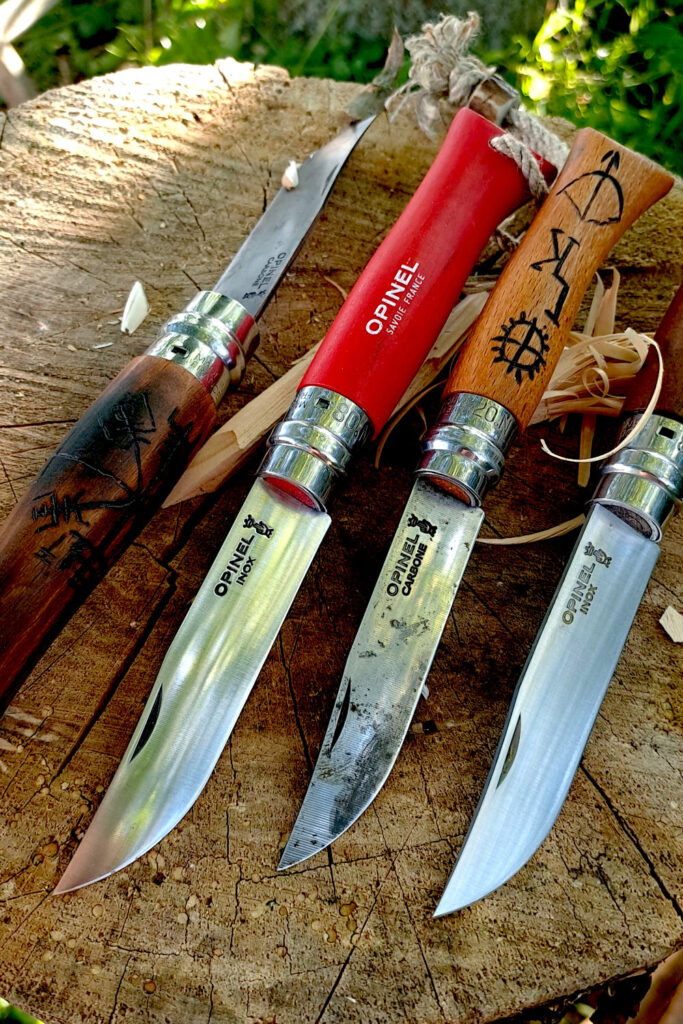
A Piece of Living History
The story of the Opinel began in 1890 in a small village in the Savoie region of the French Alps. Joseph Opinel, a young blacksmith working in his family’s edge-tool workshop, wanted to create a practical, affordable pocket knife for the local farmers, herders, and woodcutters.
His father wasn’t convinced, preferring traditional hand-forged tools, but Joseph persisted. He designed a simple, robust knife consisting of just four parts: the blade, the wooden handle, a metal band, and a rivet. By 1897, he had created twelve different sizes (numbered 1 to 12).
The knife became an instant success among working-class people across Europe. In 1955, Marcel Opinel added the famous Virobloc safety ring, allowing the blade to be locked open, and later, locked closed. Today, the design remains virtually unchanged, recognized worldwide as a masterpiece of industrial design—even earning a place in the Museum of Modern Art.
Why the Opinel Polarizes the Modern Knife Community
Look into any modern knife forum or bushcraft group, and you will see heated arguments over a tool that costs less than a burger. Why does something so simple polarize people so intensely?
The “Overbuilt” Trend vs. Radical Minimalism
We live in an era of tactical gear snobbery. The modern market is flooded with thick, heavy survival knives made from premium super-steels, featuring G10 scales, ball-bearing pivots, and complex locking mechanisms. To someone who just spent a fortune on a knife built like a tank, the Opinel looks like a flimsy relic from the past. It challenges the belief that a tool needs to be indestructible to be useful.
Pure Utility vs. Tactical Aesthetics
The Opinel doesn’t look aggressive. It doesn’t look tactical. It looks like something your grandfather used to peel an apple—because he did. For some, this lacks the “survival” appeal. But for those who value performance over appearance, the Opinel represents absolute honesty. It doesn’t pretend to be a weapon; it is proudly a tool.
The Ultimate Food Slicer
When it comes to pure cutting performance, the Opinel punches way above its weight. Because the steel blade is incredibly thin, it cuts circles around most expensive, over-built tactical knives.
I absolutely love using it for prepping food. If you are slicing vegetables, dicing onions, or preparing a simple breakfast at camp, that thin geometry is pure genius. It gets razor-sharp with minimal effort, and because it costs so little, you are never afraid to actually use it.
Low-Tech Flaws & Smart Workarounds
Of course, extreme minimalism comes with a few notorious issues, but a resourceful woodsman knows how to handle them:
- The Swelling Handle: The handle is made of solid beechwood. If it gets wet from rain or juicy vegetables, the wood swells and tightens around the pivot. Suddenly, opening the blade becomes a two-handed wrestling match.
- The Baton Myth: Many people claim you cannot use a folding knife for heavy tasks like splitting wood. They are right if you try to hammer directly on the spine of a thin Opinel blade—you will break it. But you can still baton with it indirectly. By using the Opinel to carve a hard wooden wedge first, you can drive that wedge into the log to do the heavy splitting. It is about using technique instead of brute force.
- Maintenance: The classic carbon steel version requires a bit of care, a drop of oil, and a willingness to accept a dark patina, though it rewards you with an edge that is incredibly easy to maintain.
The Verdict
The Opinel polarizes because it forces us to ask what we actually need from a knife. Is it a heavy-duty survival crowbar? No. But as a daily companion for work, kitchen tasks, and the quiet moments in the forest, it is a masterpiece of functional minimalism. It reminds us that a good tool does not need premium marketing or military aesthetics. It just needs a sharp edge and a resourceful user.
See it in Action: If you want to see exactly how I use the Opinel for daily tasks, food prep, and how the wooden wedge trick works for indirect batoning, check out my full video on the channel below!
Cheers!