The Nessmuk is one of the most iconic wilderness knife designs in history. Named after George Washington Sears (who wrote under the pen name “Nessmuk” in the 19th century), its distinct hump-backed blade has a legendary reputation.
Instead of buying a mass-produced version, I decided to build my own using the high-quality Brisa Nessmuk 125 blank. After putting this knife through its paces—including taking it on a trip to Scandinavia—here is how I customized it, why this shape works so well, and the custom leather I built for it.
Part 1: Modifying the Blade & Shaping the Walnut
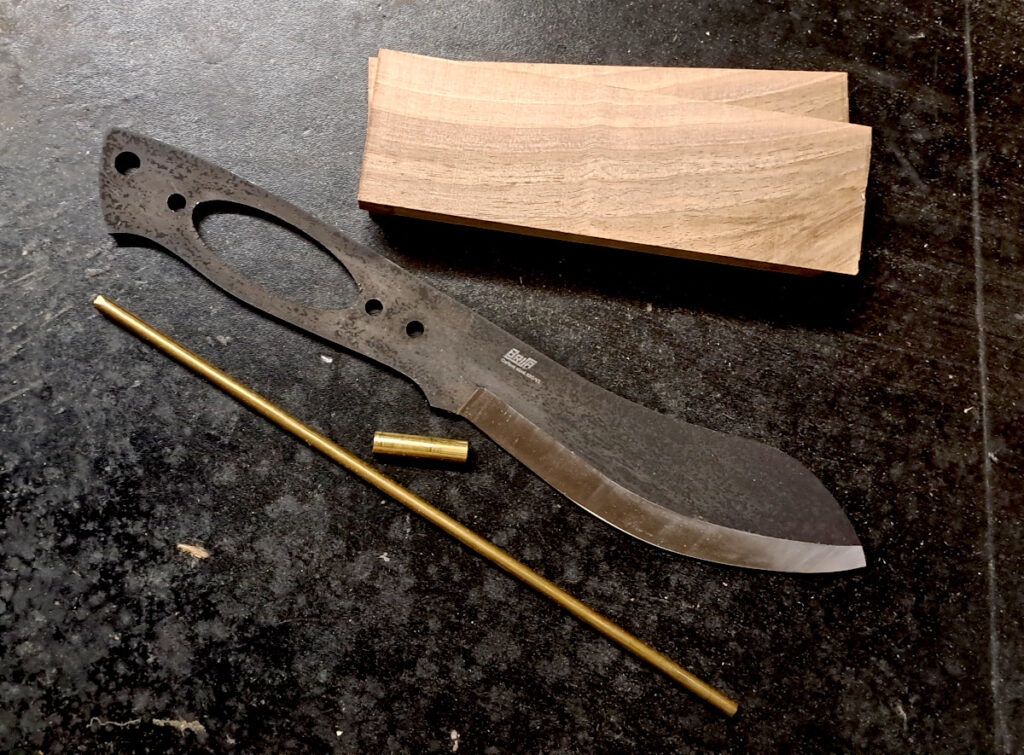
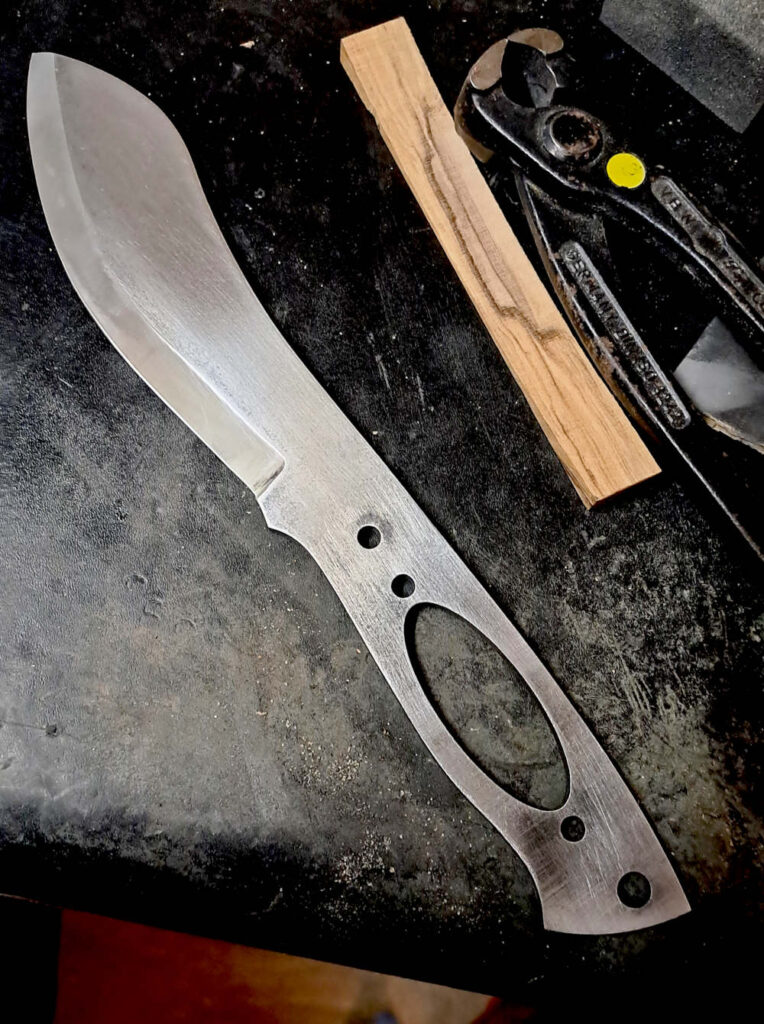
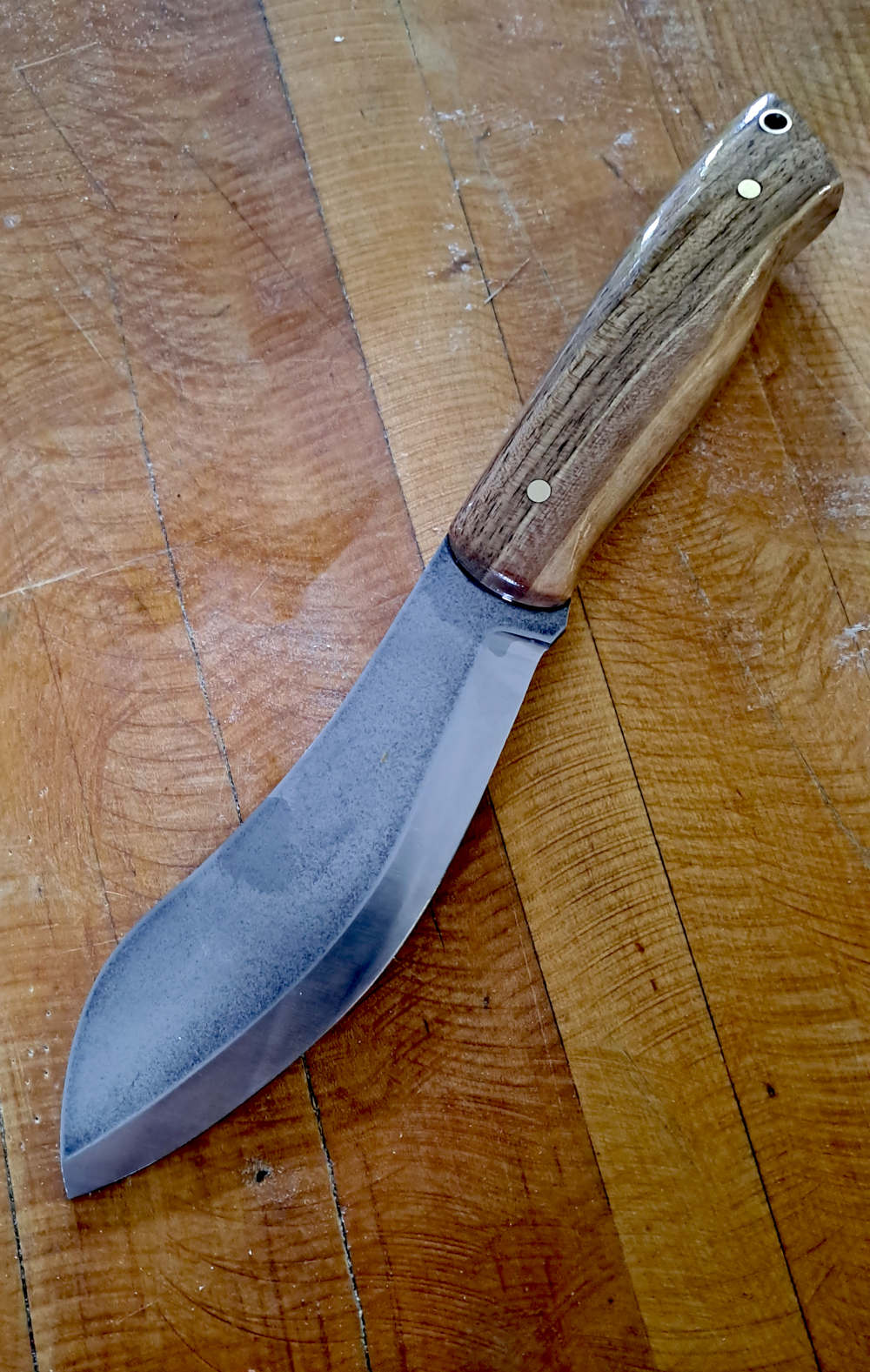
The Brisa 125 blank has excellent proportions: a 125 mm blade length, 23 cm overall, and a robust 3.5 mm blade thickness. It’s incredibly well-balanced, but I wanted to make it truly mine.
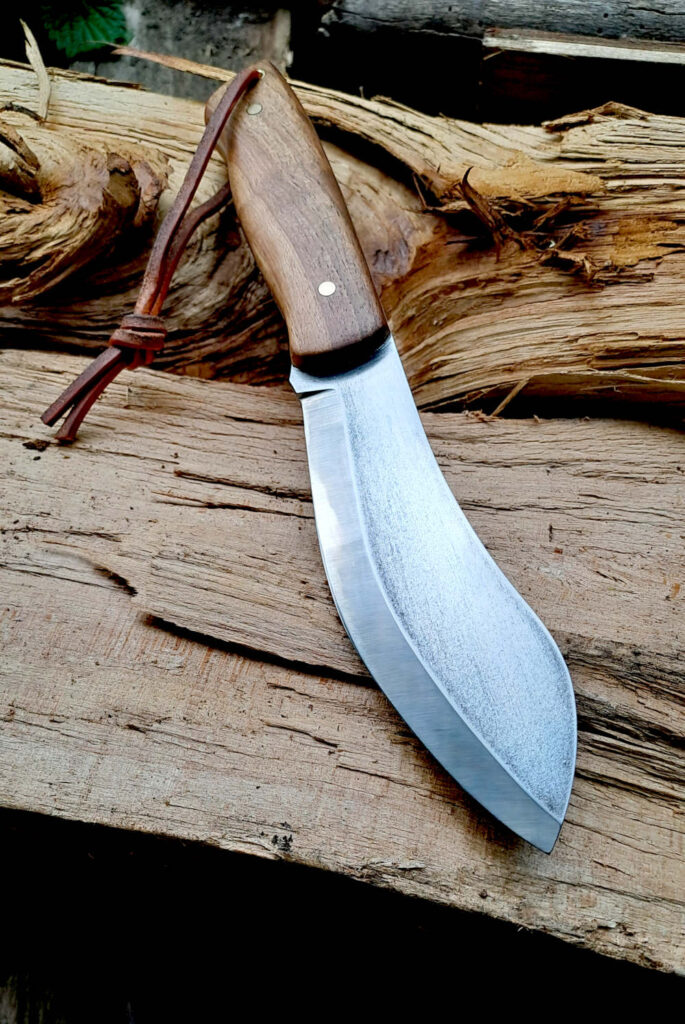
- Stripping the Patina: The blank arrived with a heavy black heat-treat scale on the flats. I spent time carefully removing it to achieve a clean, satin finish that will develop its own natural, honest patina over time.
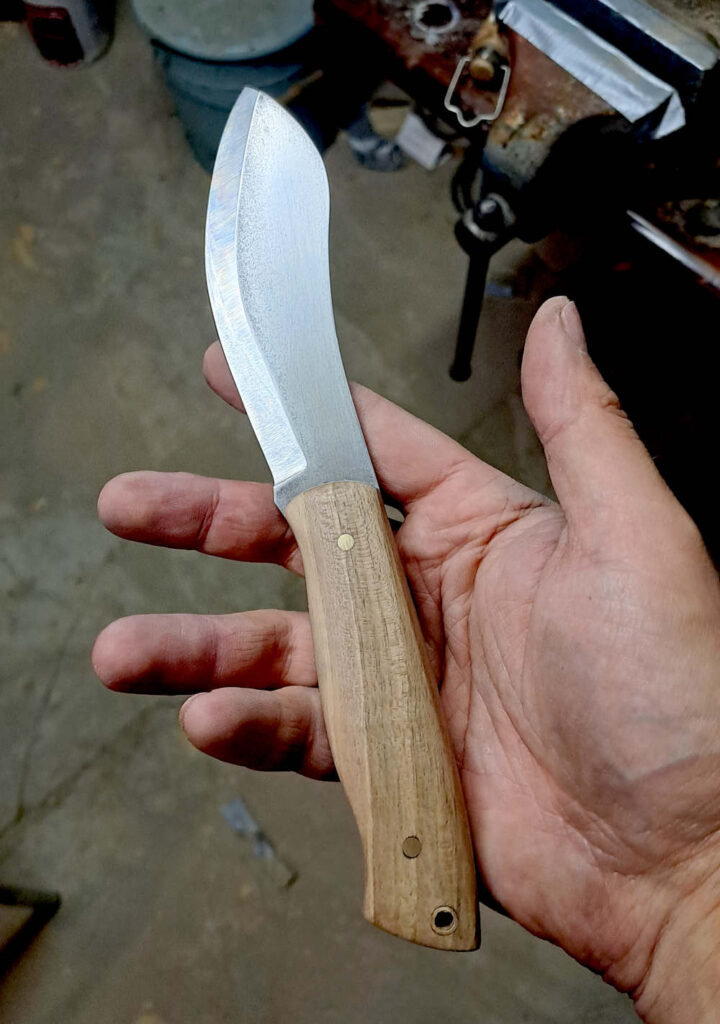
- Regrinding the Edge: Originally, the Brisa came with a very bold secondary bevel. I didn’t want that. I carefully reprofiled and reground the edge to a clean, zero-grind “Scandi-vex” (a slightly convex Scandinavian grind). It bites beautifully into wood and is incredibly easy to maintain.
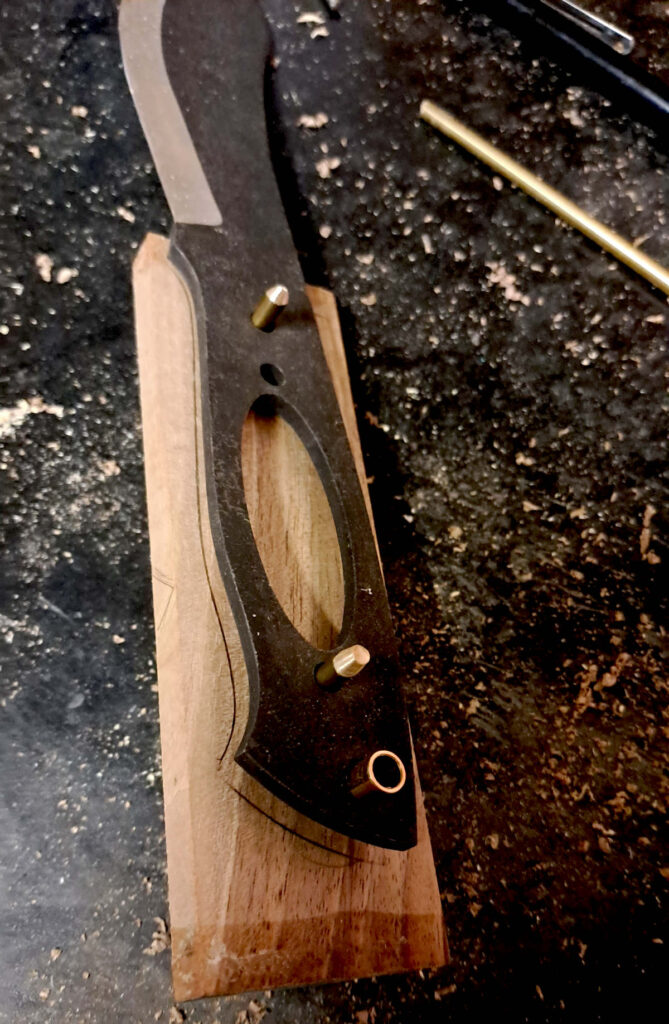
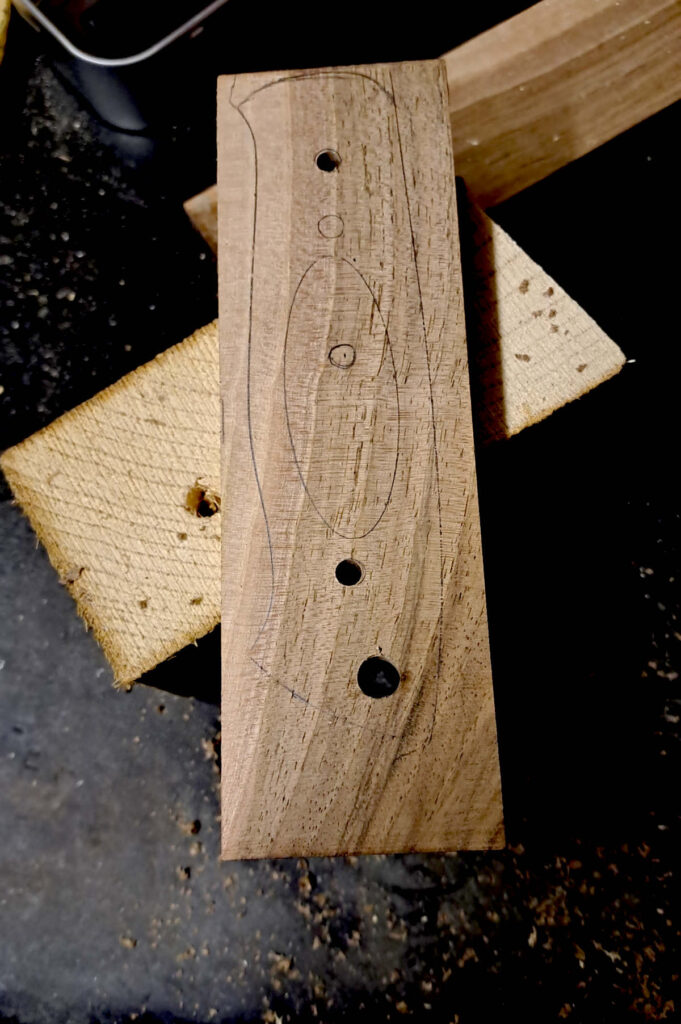
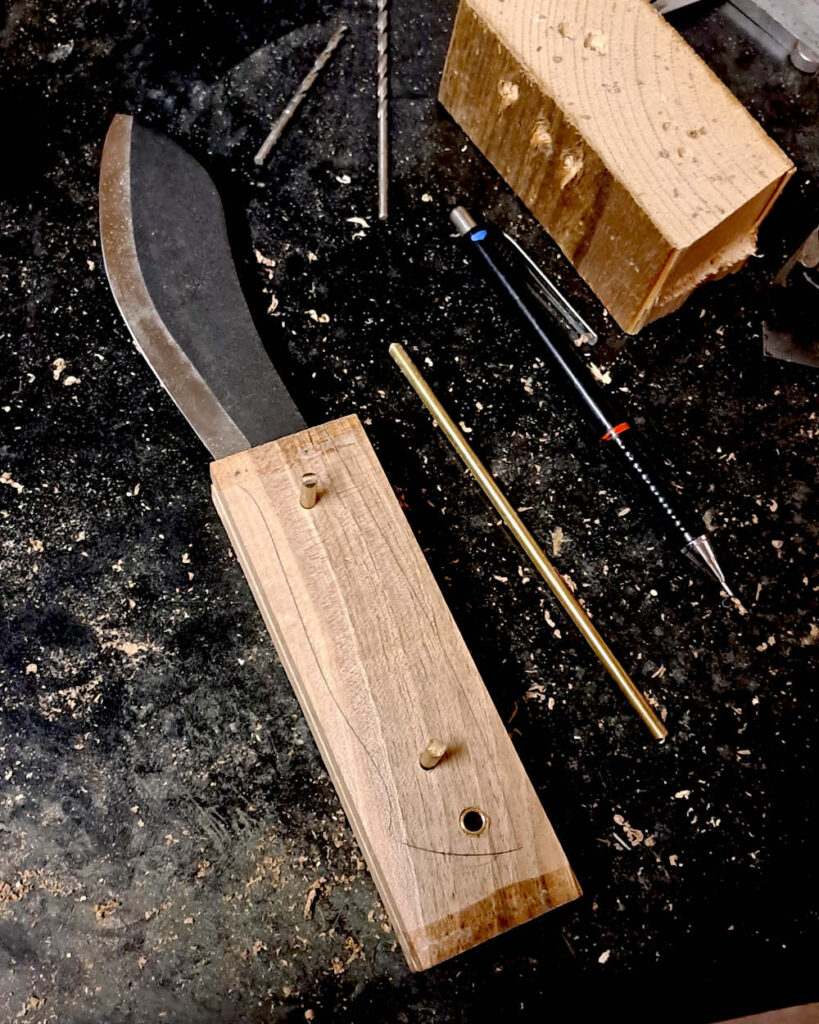
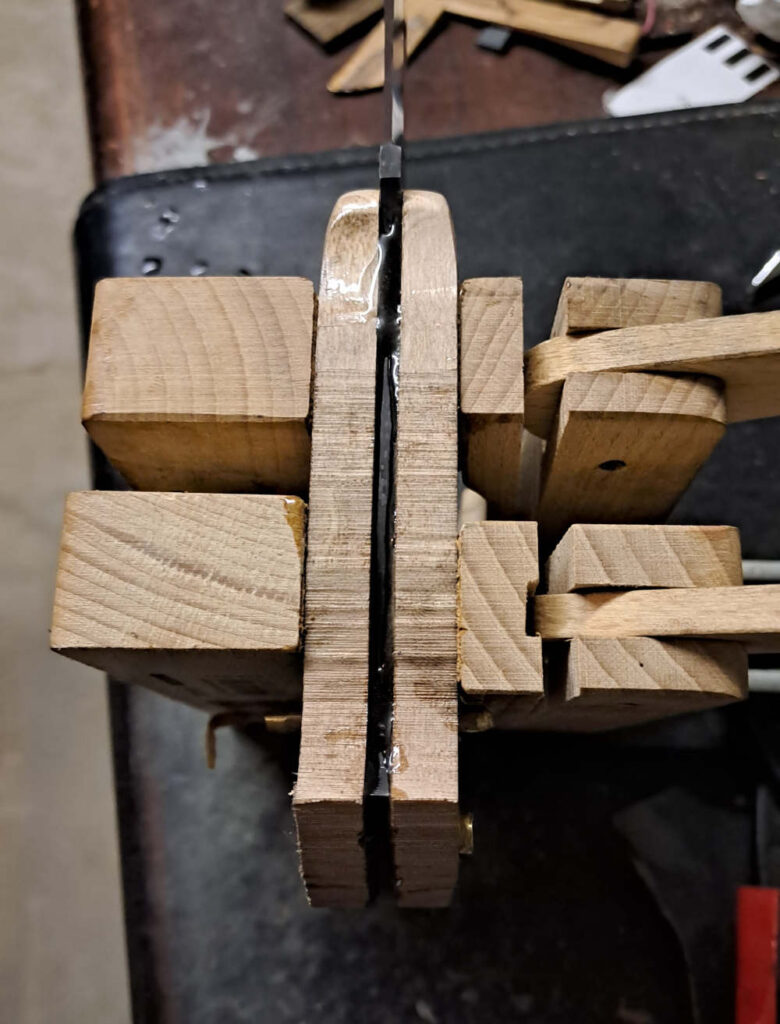
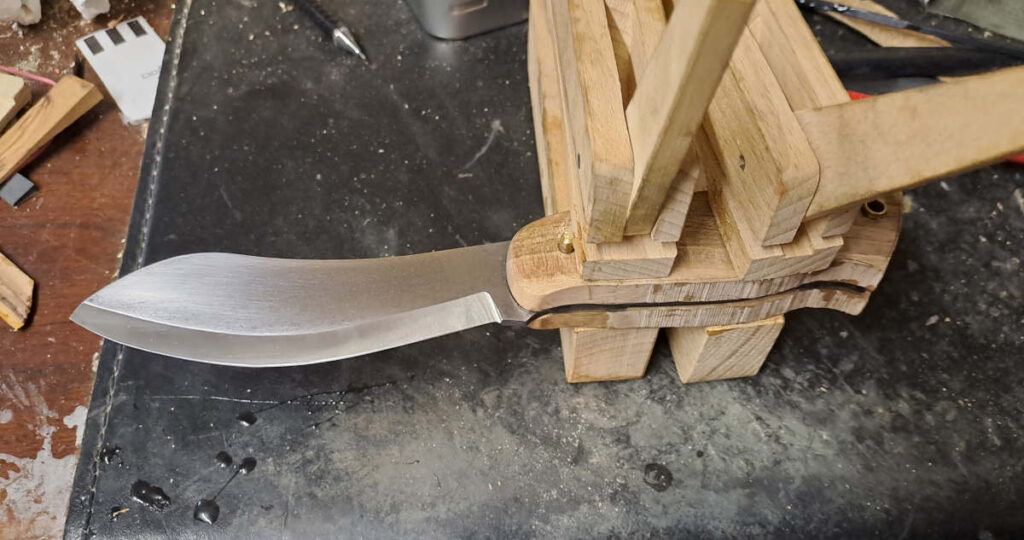
- The Handle: For the scales, I chose a beautiful, dark piece of walnut (Walnussholz). I secured them to the full tang using solid brass pins and added a matching brass tube for the lanyard hole. After hours of rasping and hand-sanding, the wood fills the hand perfectly.
Part 2: The Myth of the Nessmuk (A Butcher’s Blade at Heart)
Having spent years looking into living history and the American mountain man/trapper era, I’ve learned that the knives back then weren’t the overbuilt “tactical crowbars” we often see in the modern bushcraft bubble.
Frontiersmen used mass-produced, thin butcher blades because they were affordable and effective. The Nessmuk is essentially a modified butcher knife.
- The Round Belly: It’s designed perfectly for skinning game without piercing the hide (which would ruin valuable fur).
- The Up-Swept Tip: Excellent for gutting, allowing you to place a finger near the tip to guide the cut safely.
- In the Camp Kitchen: This historical heritage makes it an absolute king in the camp kitchen today. The blade’s curve and offset design allow you to chop veggies, peel taters, or spread butter easily without your knuckles smashing into the cutting board. It’s the ultimate breakfast burger companion.
Note on wood & fire: The Scandi-vex grind shines on softer woods like pine, birch, or spruce, though it handles hardwood just fine. It can even handle light branch chopping surprisingly well for its size. However, the spine is deliberately kept soft and smooth—I don’t use it for a ferro rod anyway, as I always keep a small piece of saw blade on my firesteel lanyard.
Part 3: Heavy Leather & Viking Tooling
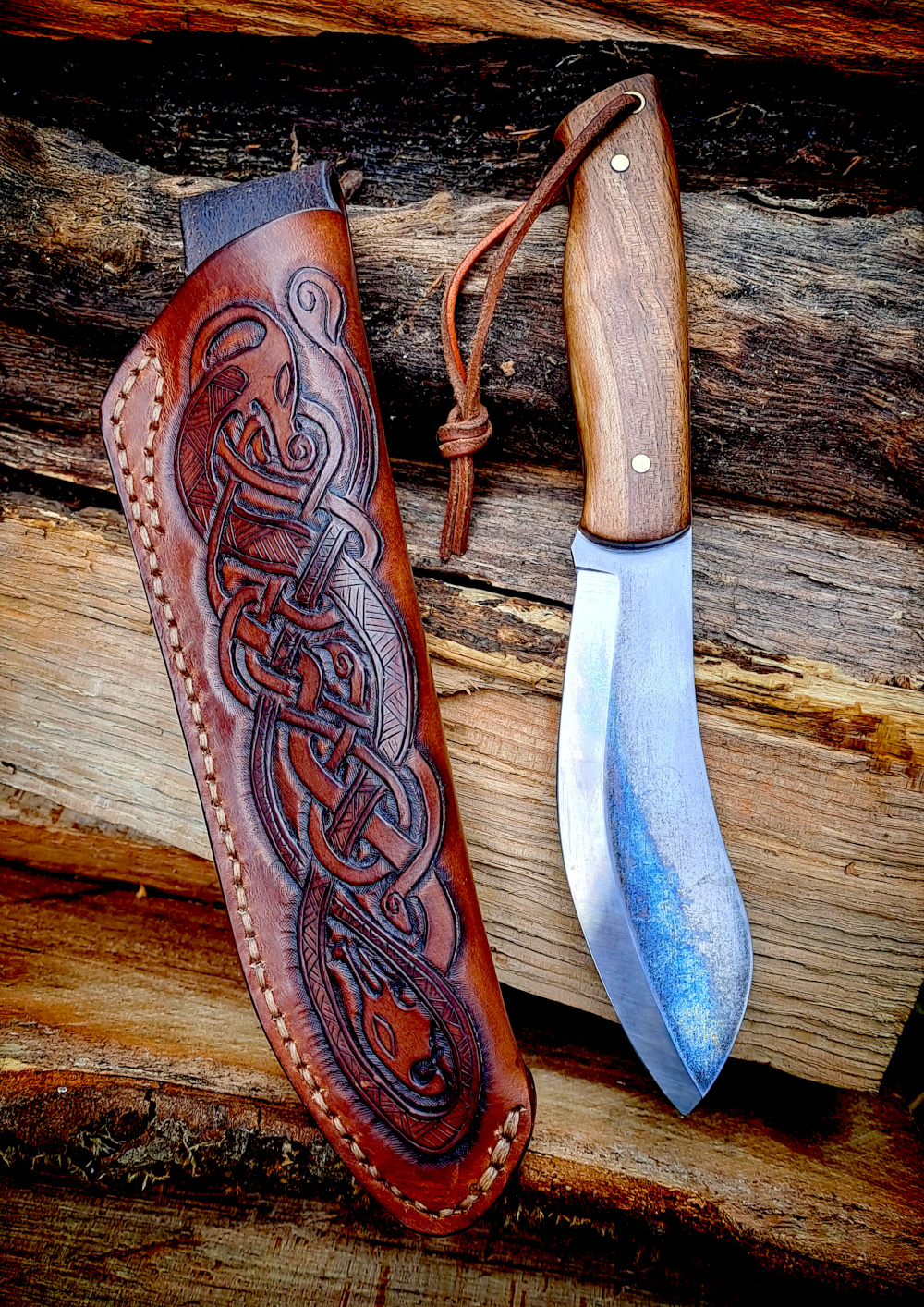
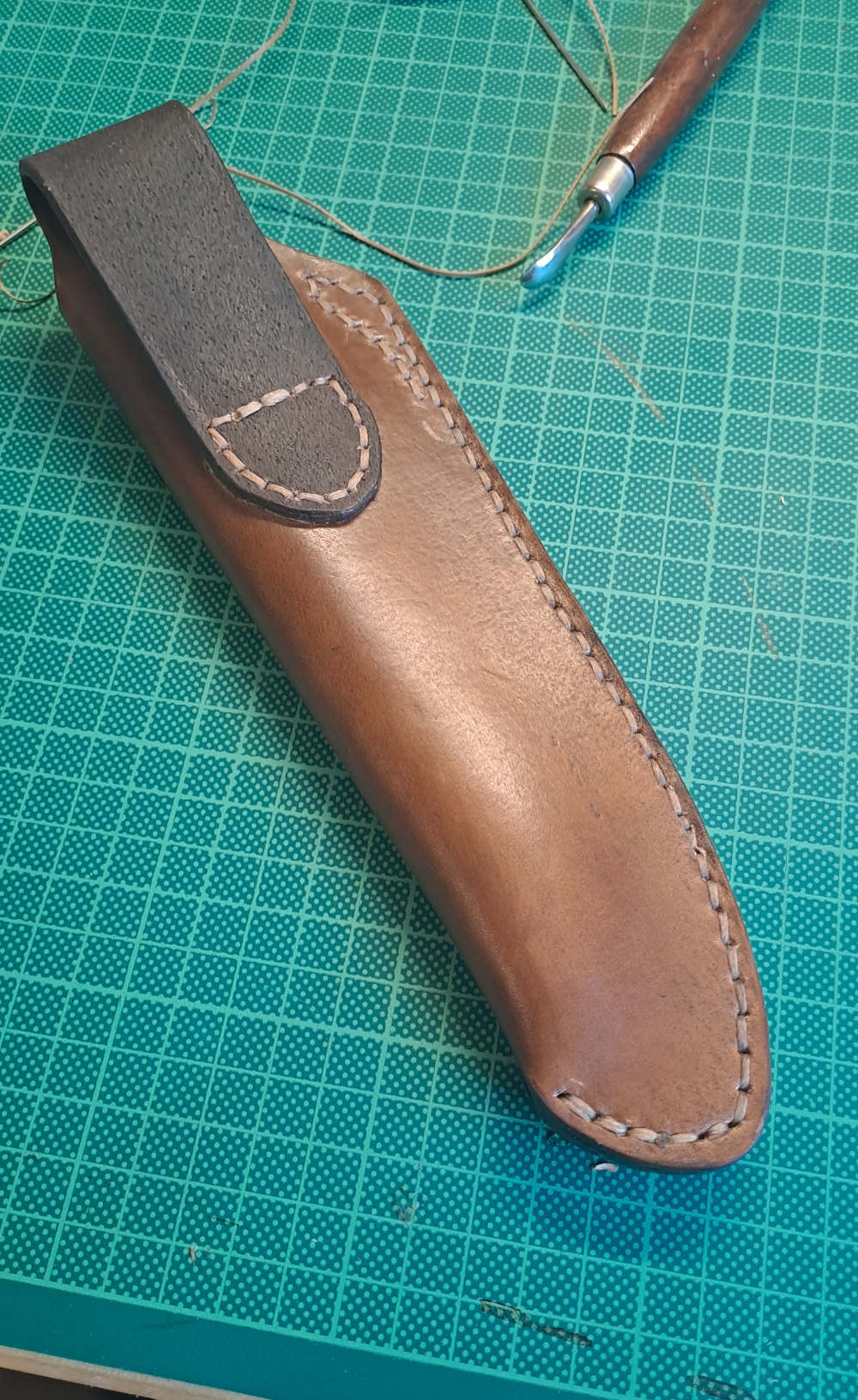
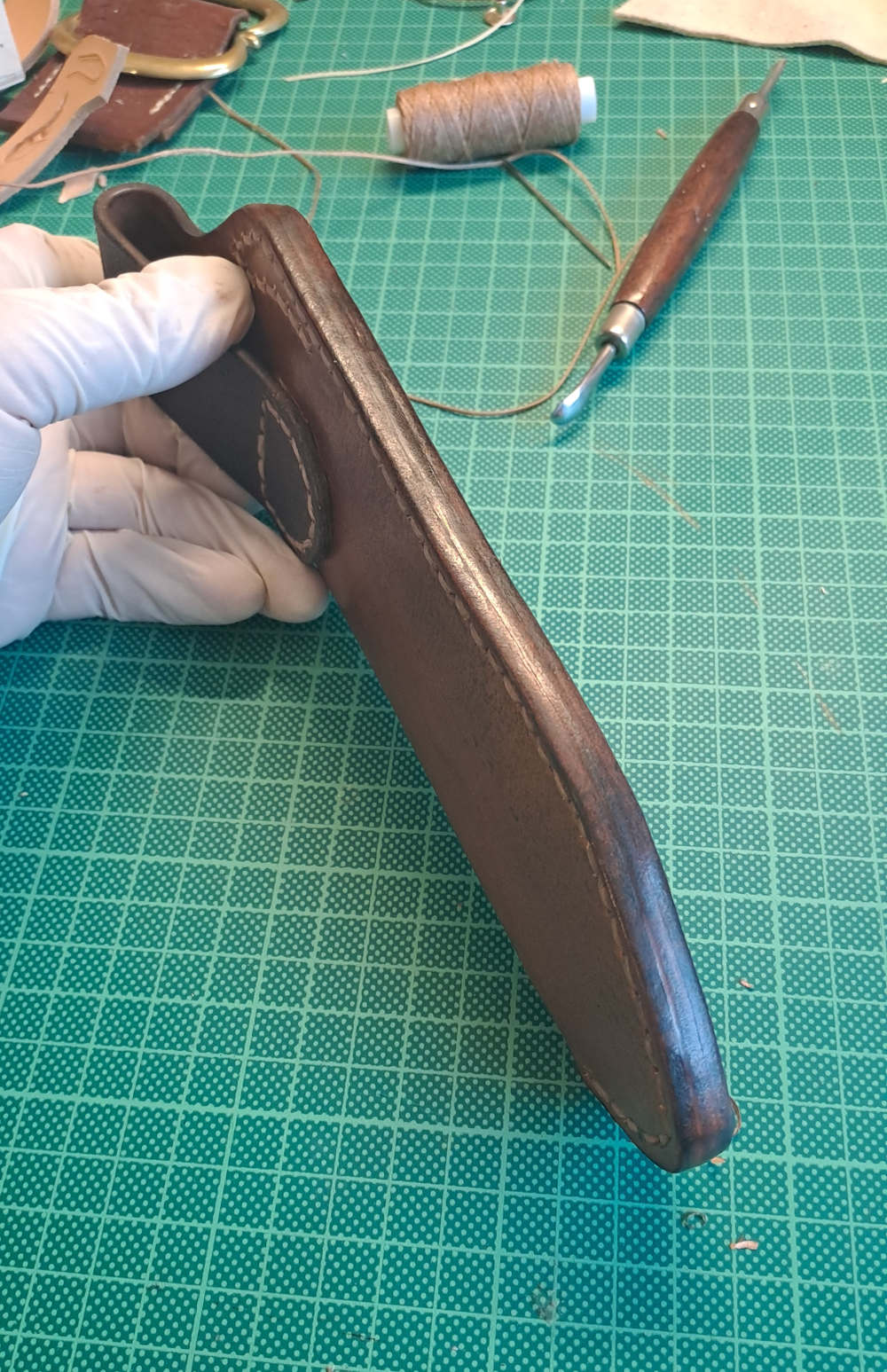
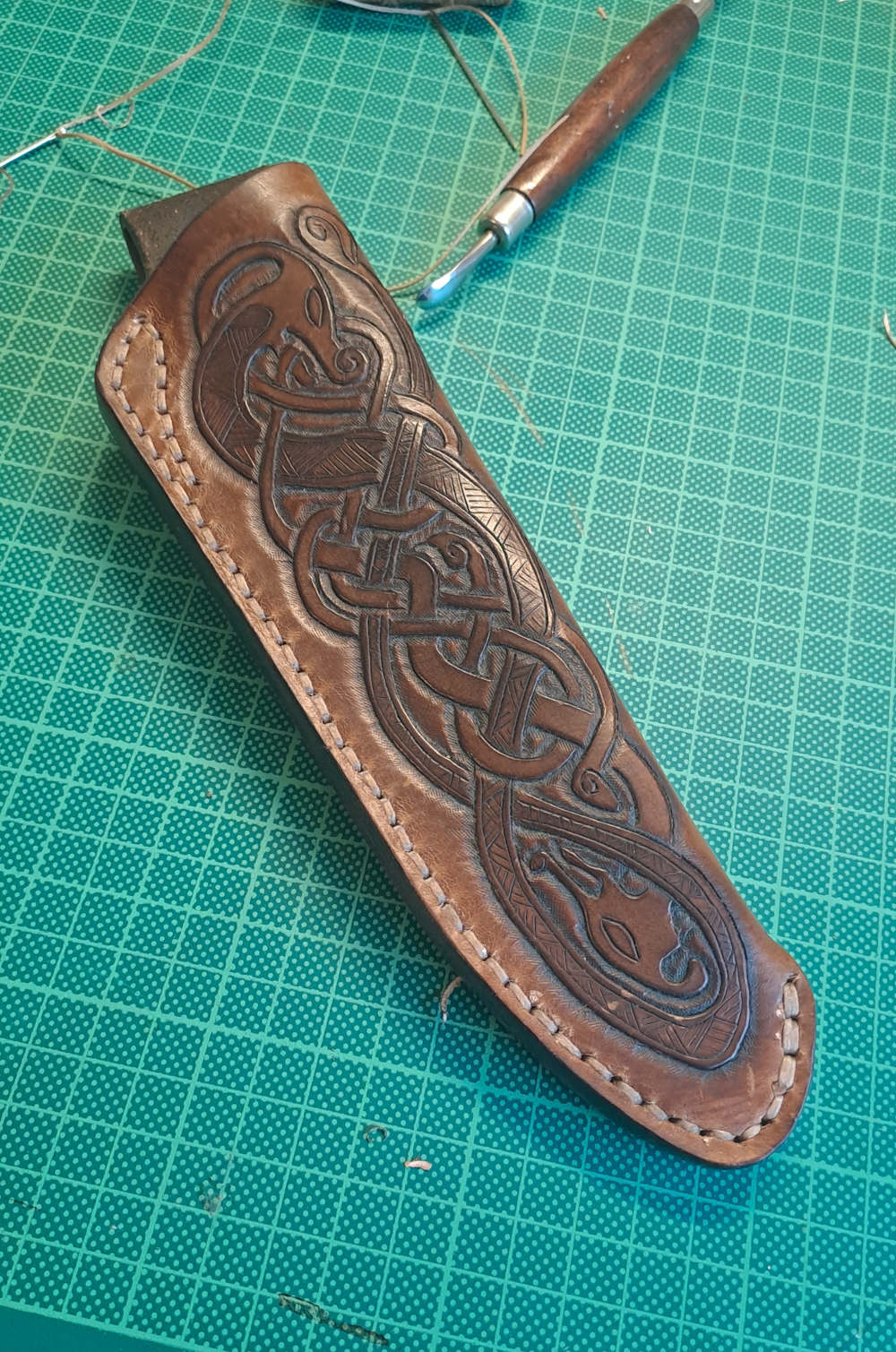
A rugged knife needs a heavy-duty home. I crafted a classic deep pouch sheath from heavy, vegetable-tanned leather.
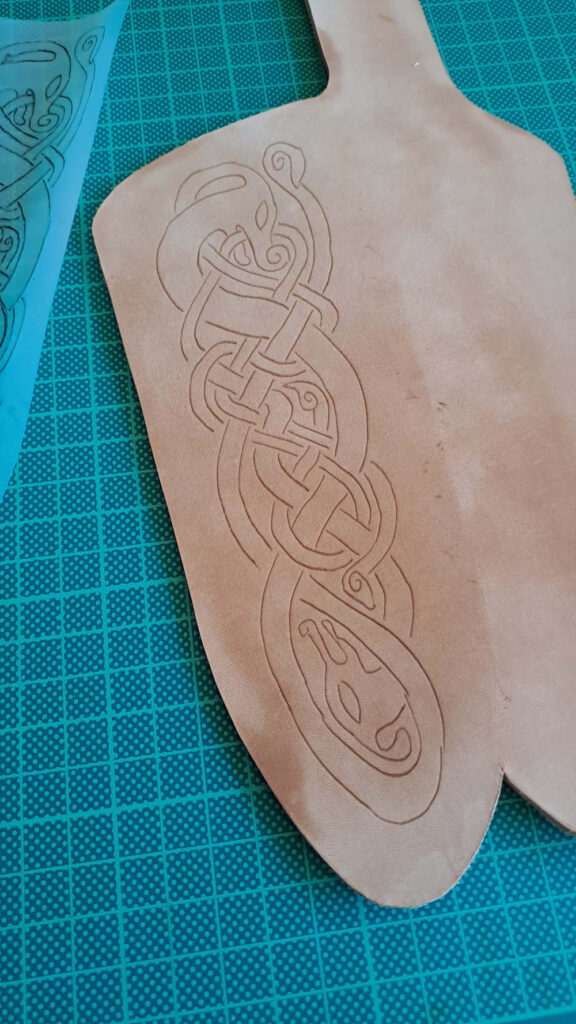
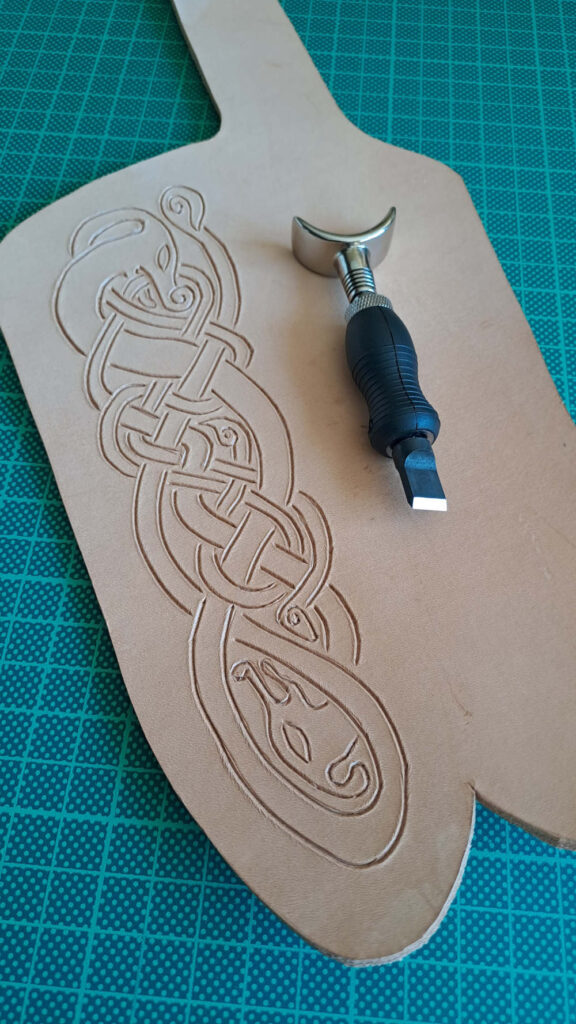
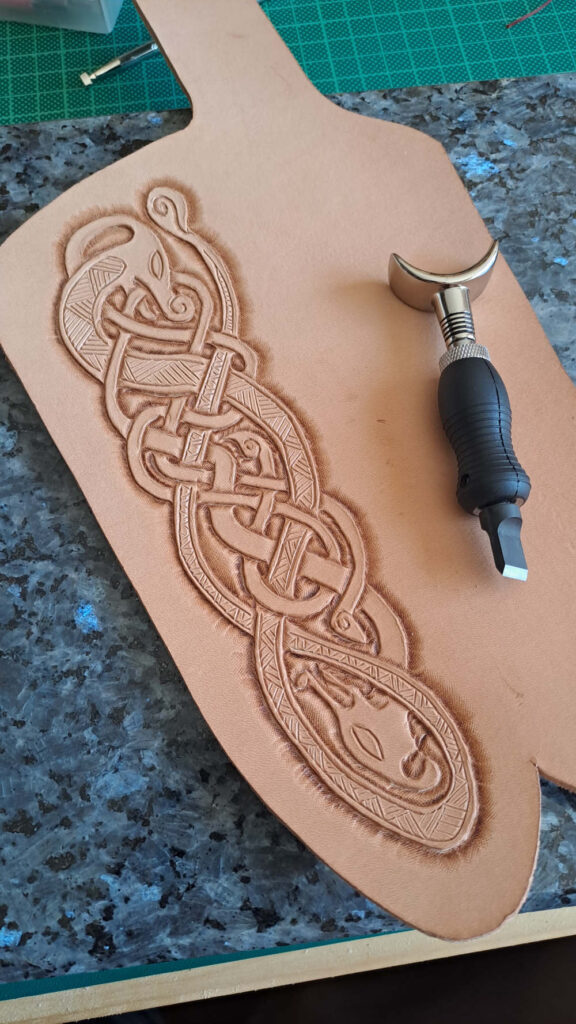
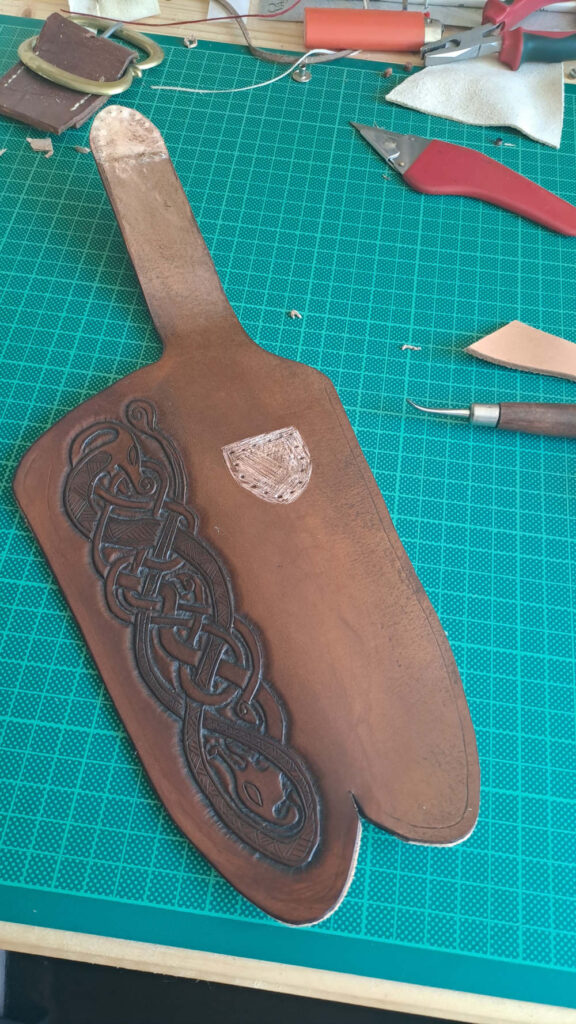
- The Tooling: Before stitching, I hand-carved a distinct, traditional Viking-style pattern into the damp leather to give the rig a historical soul.
- Hand-Dyed: I dyed the leather by hand to bring out the depth of the cuts and treated it thoroughly with heavy-duty leather care to protect it against wet northern weather.
- A Maker’s Tip: If you’re building a sheath like this and attach the belt loop with a sewn seam rather than rivets, make sure the stitch placement is completely shielded. You cannot easily reach or repair that seam once the main body of the sheath is fully stitched up!
Built to Last
There is a unique joy in taking raw materials, spending hours shaping the wood, grinding the steel, and tooling the leather until you have a tool that is an extension of your own hands.
Have you ever handled a traditional Nessmuk shape, or do you stick to standard drop-point bushcraft knives? Let me know your thoughts in the comments below!
Want to see the full build, the wood-shaving test, and some campfire food prep? Check out the full video on my channel:
Cheers!