In the outdoor and survival bubble, certain knives achieve legendary status. The Peltonen M95, also known as the Sissipuukko (the Finnish Ranger Knife), is one of them. It is widely praised as a bulletproof military tool, designed for soldiers who need a dependable blade in any climatic condition.
But as anyone who actually spends time working with tools in the woods knows, high-tech marketing is one thing, and long-term field use is another. Having owned and used these knives since the mid-2000s, I have a deep appreciation for the M95—but it also highlights a classic dilemma between military utility and traditional craftsmanship.
From Fiskars to Lauri Metalli: A Brief History
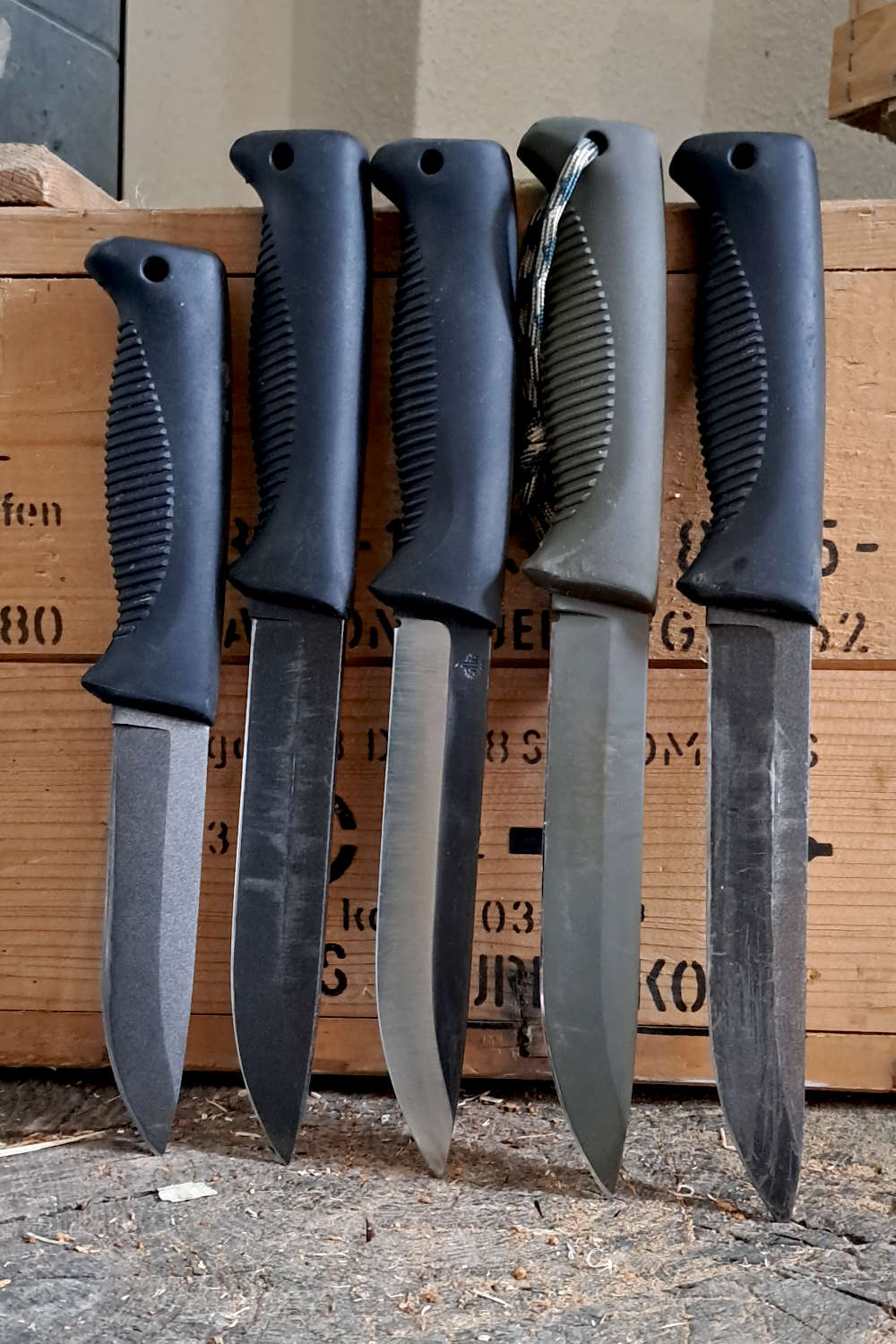
The history of the Sissipuukko is fascinating for gear enthusiasts. Back then, the original M95 featured a flat grind and a heavy Teflon coating. These early blades were manufactured by Fiskars in Finland. Over the years, the production shifted. Modern versions feature a prominent saber grind with a secondary bevel, a small choil or ricasso near the handle to make sharpening significantly easier, and they are produced by Lauri Metalli.
While the price has crawled up over the years along with global inflation, the knife has retained its core identity: a rugged, no-nonsense tool that punches well above its weight class.
The Good: Pure Tactical Reliability
There is no denying that the Peltonen M95 is a masterpiece of functional design when it comes to hard, unpredictable situations. If a “Shit Hits The Fan” (SHTF) scenario ever went down and I could only pick one knife to walk out the door with, it would probably be this one.
Here is why the M95 outperforms even premium alternatives like the Fällkniven A1 in the field:
Exceptional Balance and Geometry: For a thick, military-grade knife, it is surprisingly capable at basic tasks. It slices pita bread, cuts tomatoes smoothly, and can even peel potato skins or baton through a carrot for a camp stew without shattering the vegetable.
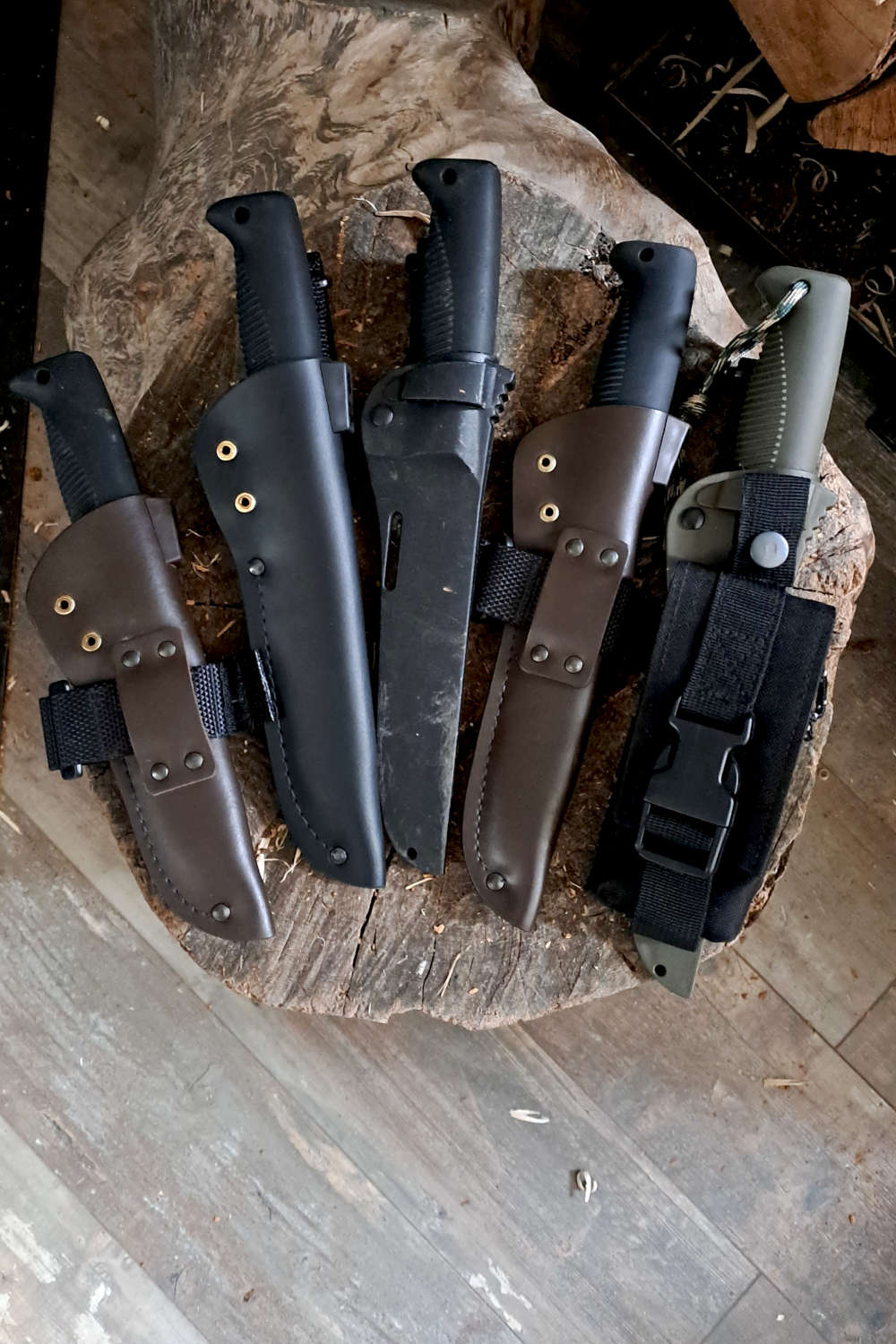
The Locking Mechanism: The rubber roller mechanism inside the sheath is outstanding. It locks the knife securely in place, allowing you to carry it tip-up on a backpack or horizontally on a belt without ever fearing it will fall out.
Built to Abuse: The blade can handle direct batoning through dry, seasoned hardwood like hazel or holly without showing a hint of damage. It is long enough to cross-notch pegs or chop small branches with ease.
The Comforting Spine: Unlike modern bushcraft knives with a sharp 90-degree spine built for ferro rods, the Peltonen features a rounded spine. This means you can rest your thumb on the back of the blade during heavy carving sessions without developing painful blisters.
The Catch: Why It Is Not My Favorite
Despite all its strength, the modern Sissipuukko highlights a major philosophical divide for me. The handle is made of a modern thermoplastic elastomer (TPE) rubber.
While a rubber handle is perfect for a soldier who needs a secure grip in freezing winters or soaking rain, it falls short during extended woodworking. The sticky texture tends to attract sand, dirt, and grit. When you are doing heavy carving sessions in the field, that dirty, high-friction surface becomes a recipe for blisters.
As a craftsman, I will always prefer the warmth, texture, and character of natural materials like plum wood, birch bark, stacked leather, or deer antler. Natural handles age with you, breathe with your skin, and feel far more grounded than mass-produced industrial rubber.
The Custom Leather Sheath Project: Giving a Tactical Icon a Soul
Because I prefer natural materials over industrial plastic and rubber, the standard sheath—while functional—didn’t quite match my style. I decided to change that by completely rebuilding the housing from scratch.
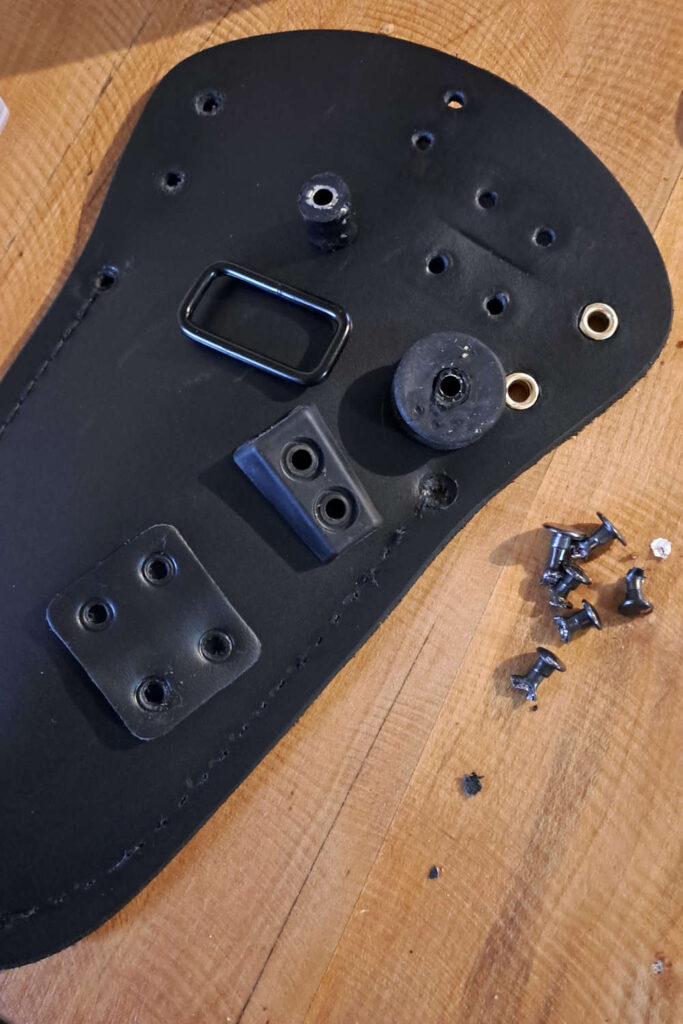
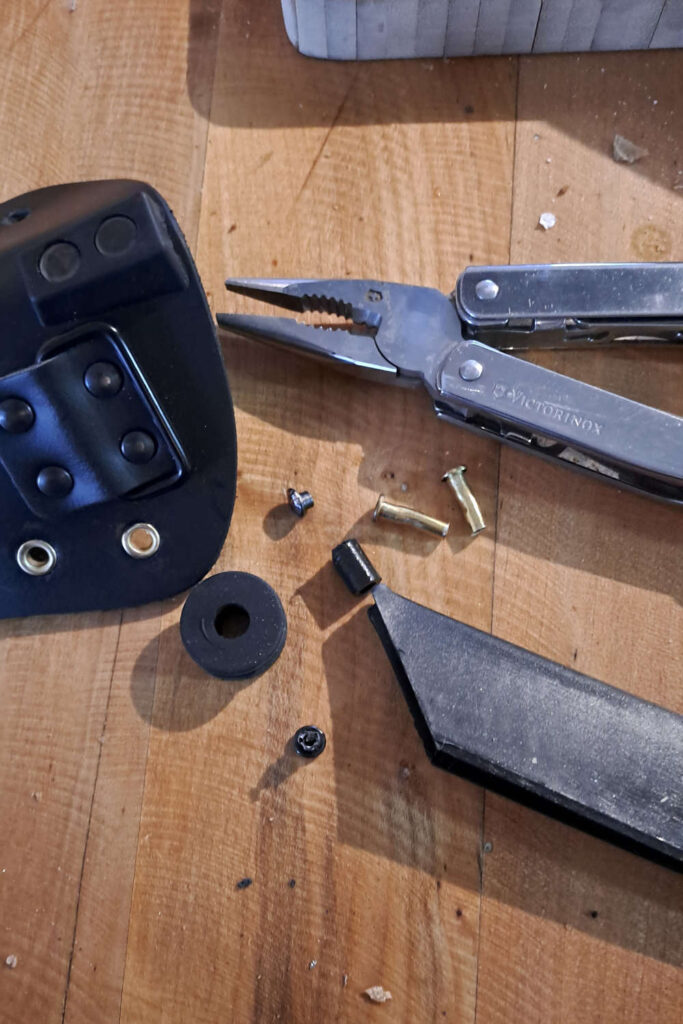
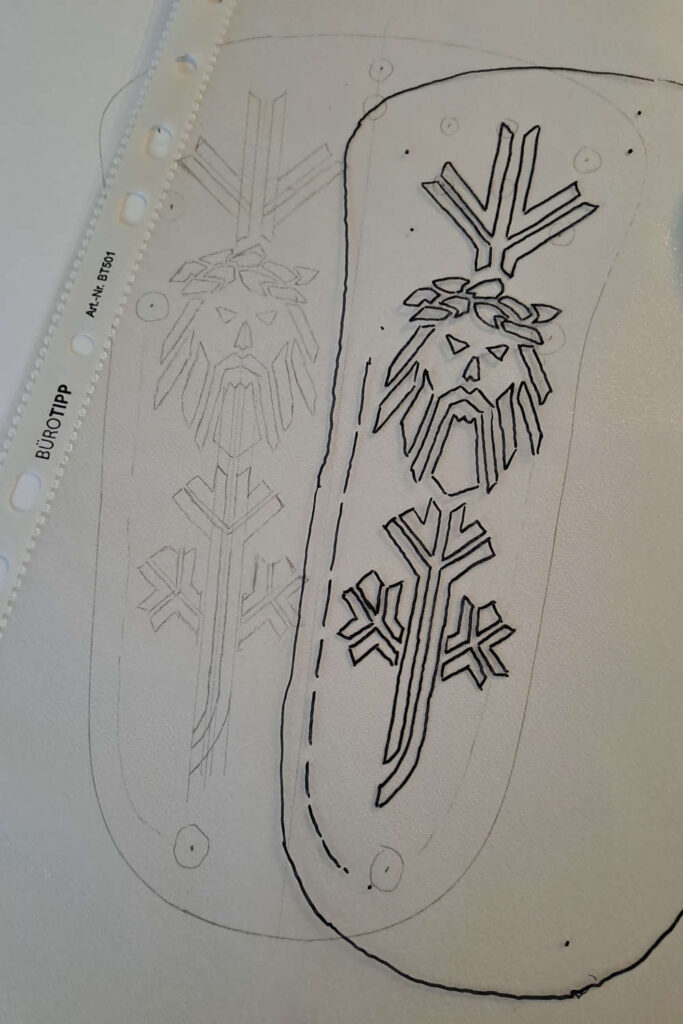
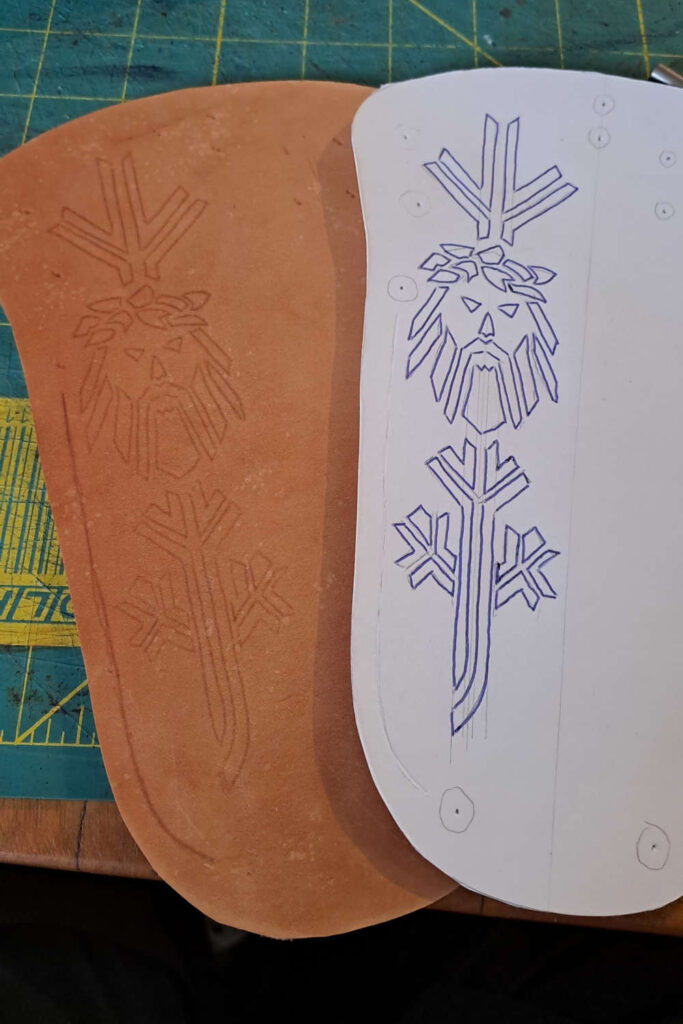
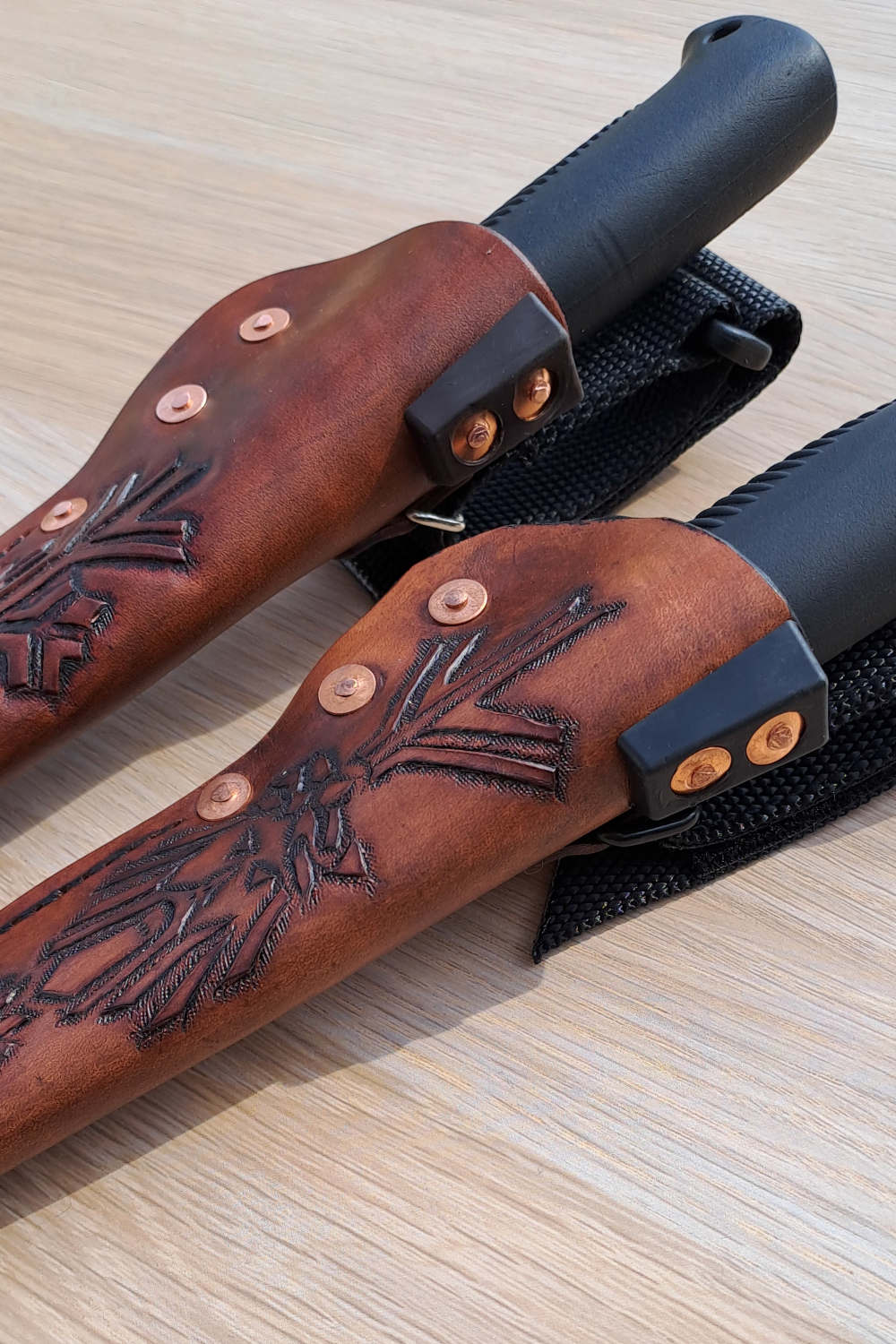
I took an old, worn-out Peltonen leather sheath, carefully dissected it, and extracted the original internal rubber roller mechanism. Using the old pieces as a template, I traced the pattern onto heavy vegetable-tanned leather, meticulously cut out the new shapes, and transferred the dimensions.
This gave me the perfect canvas for some traditional leathercraft:
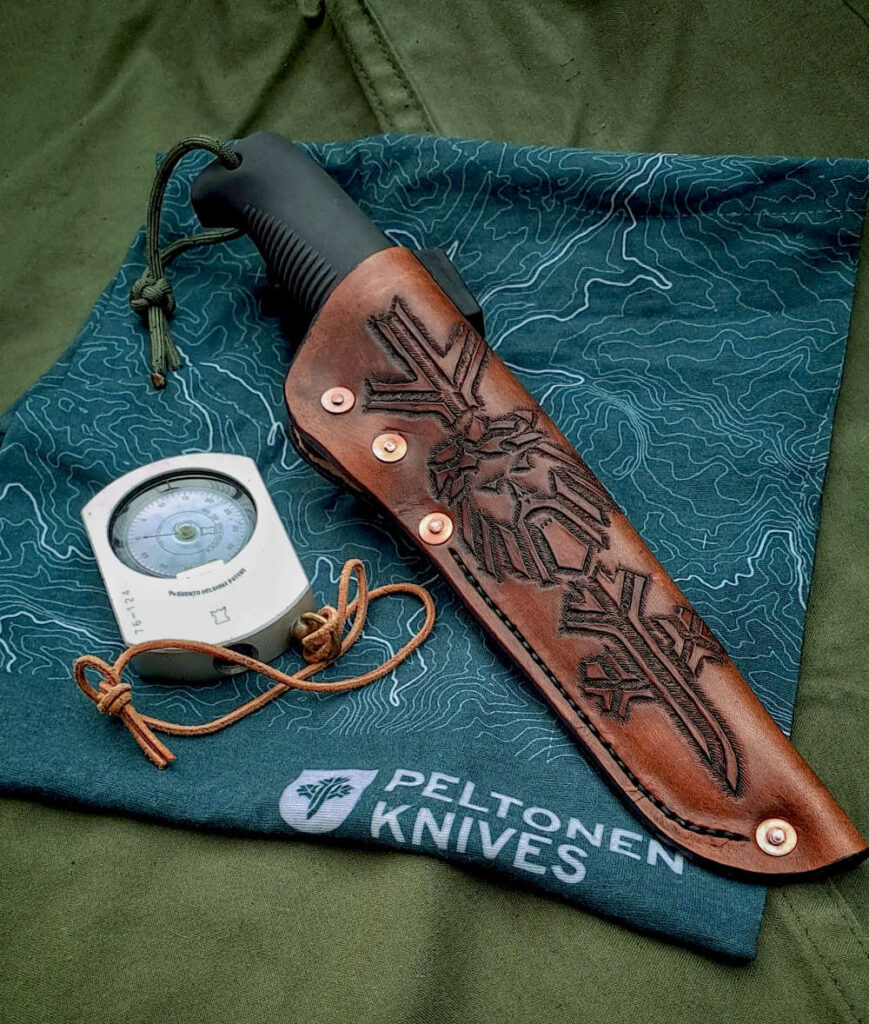
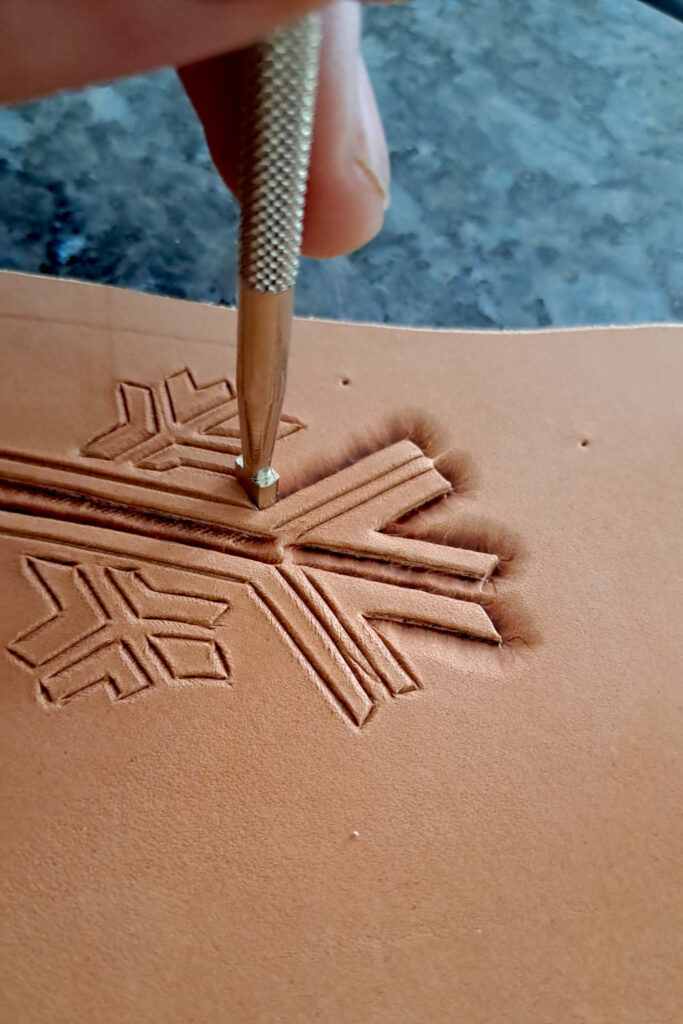
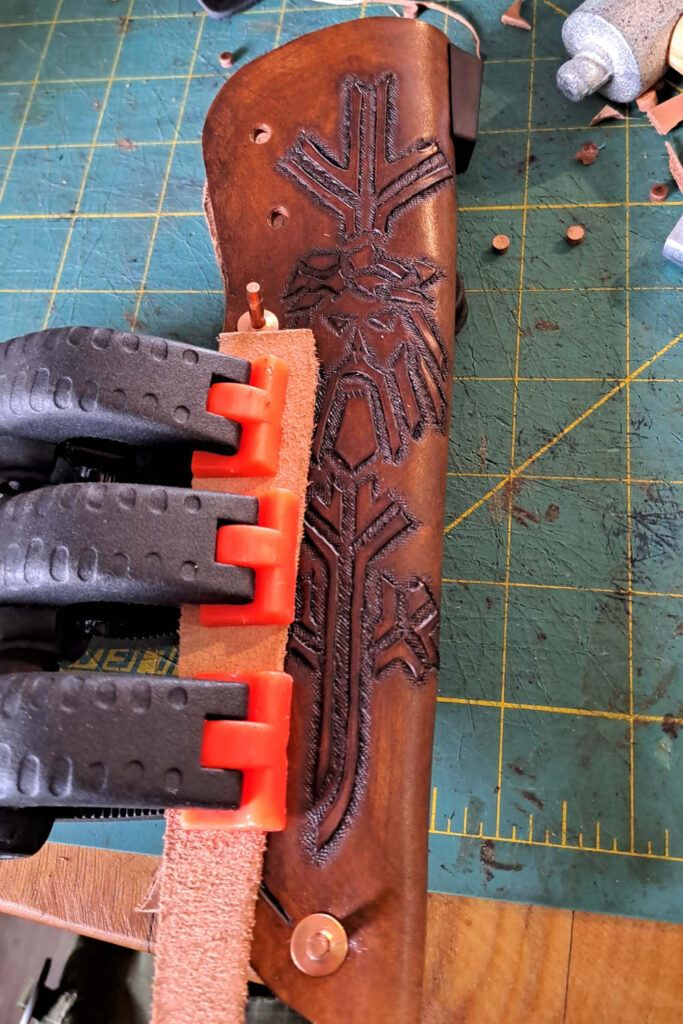
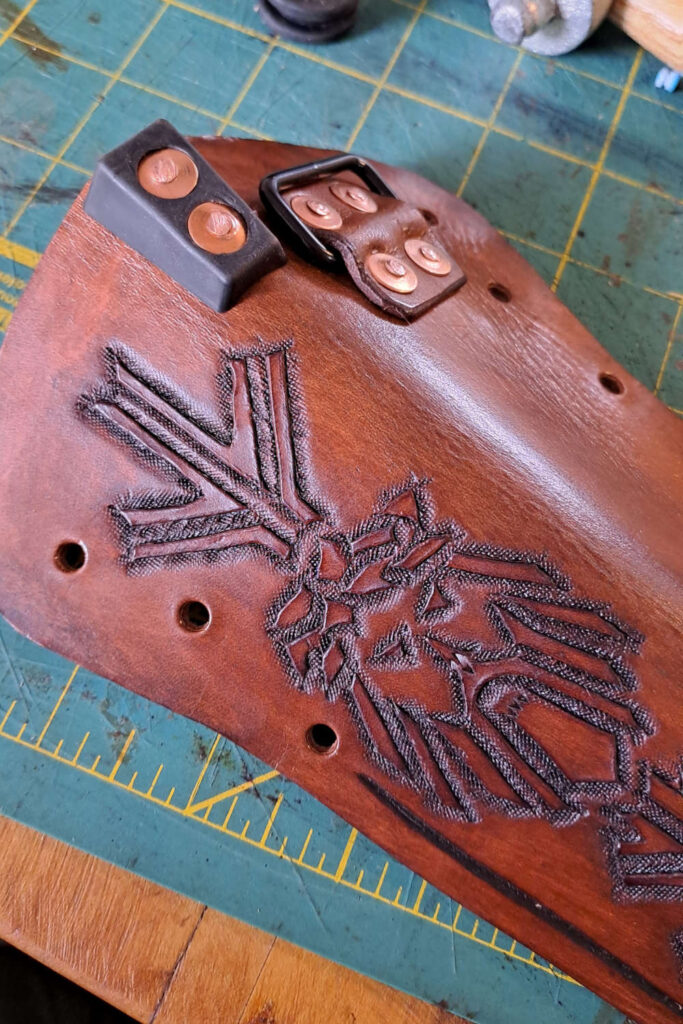
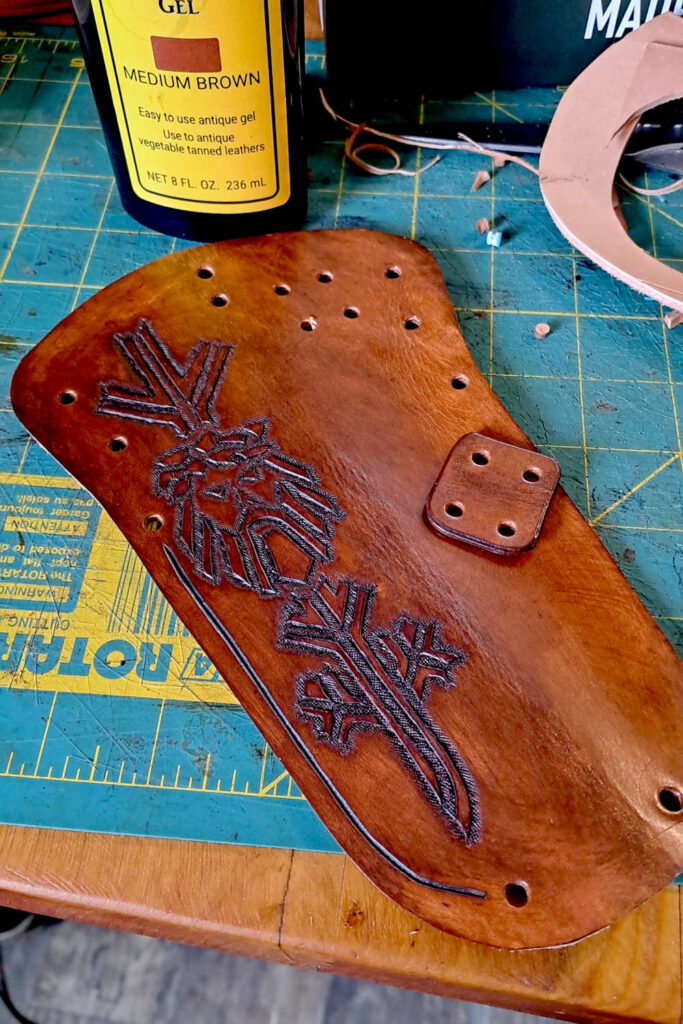
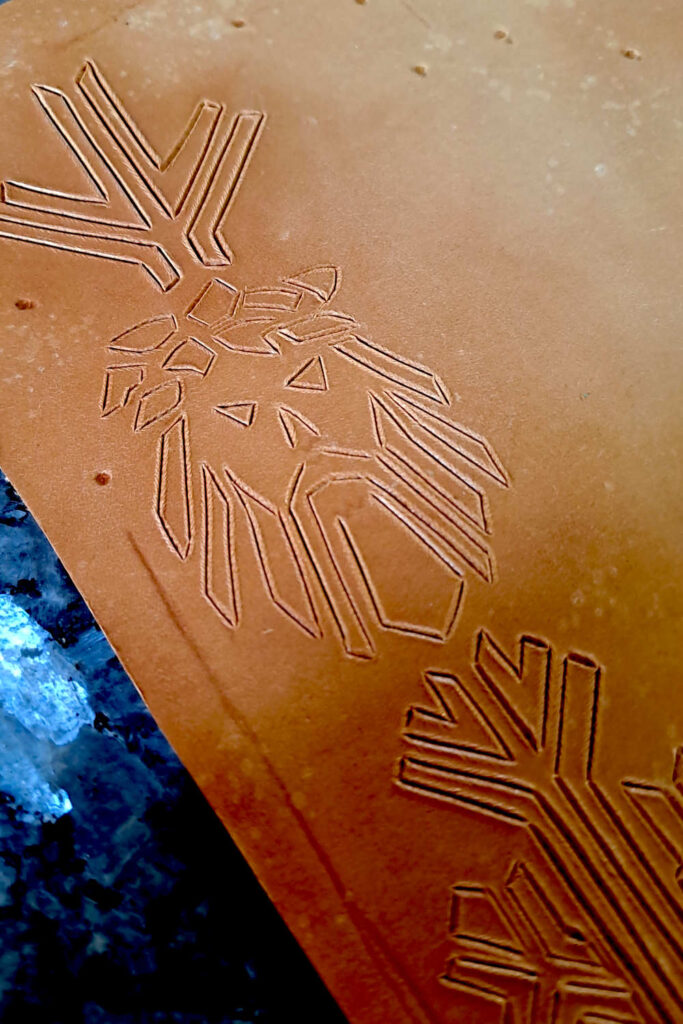
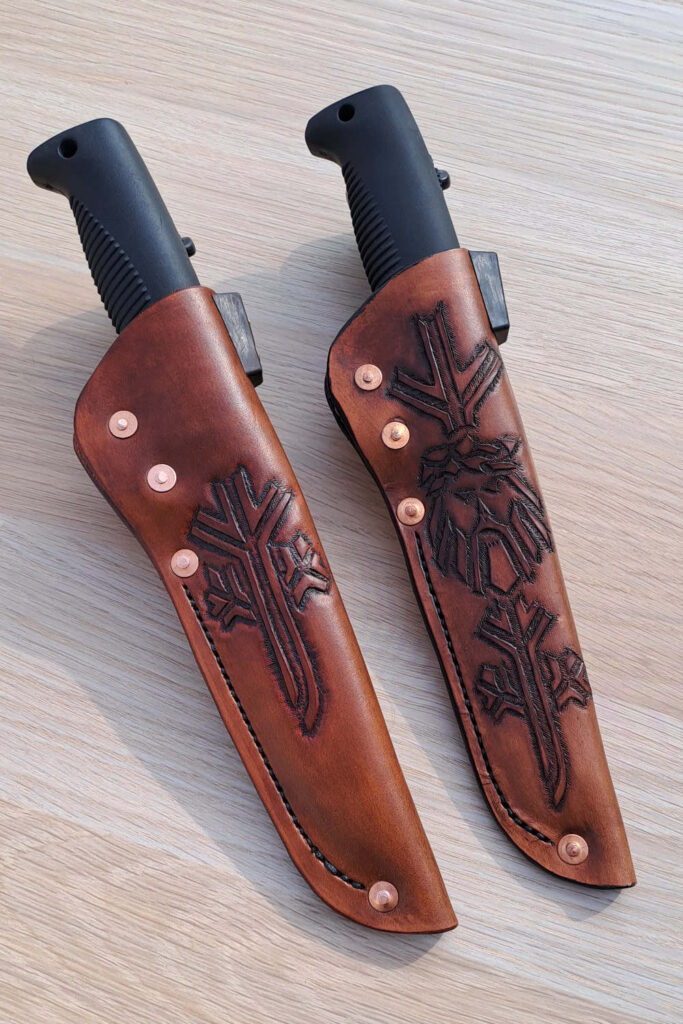
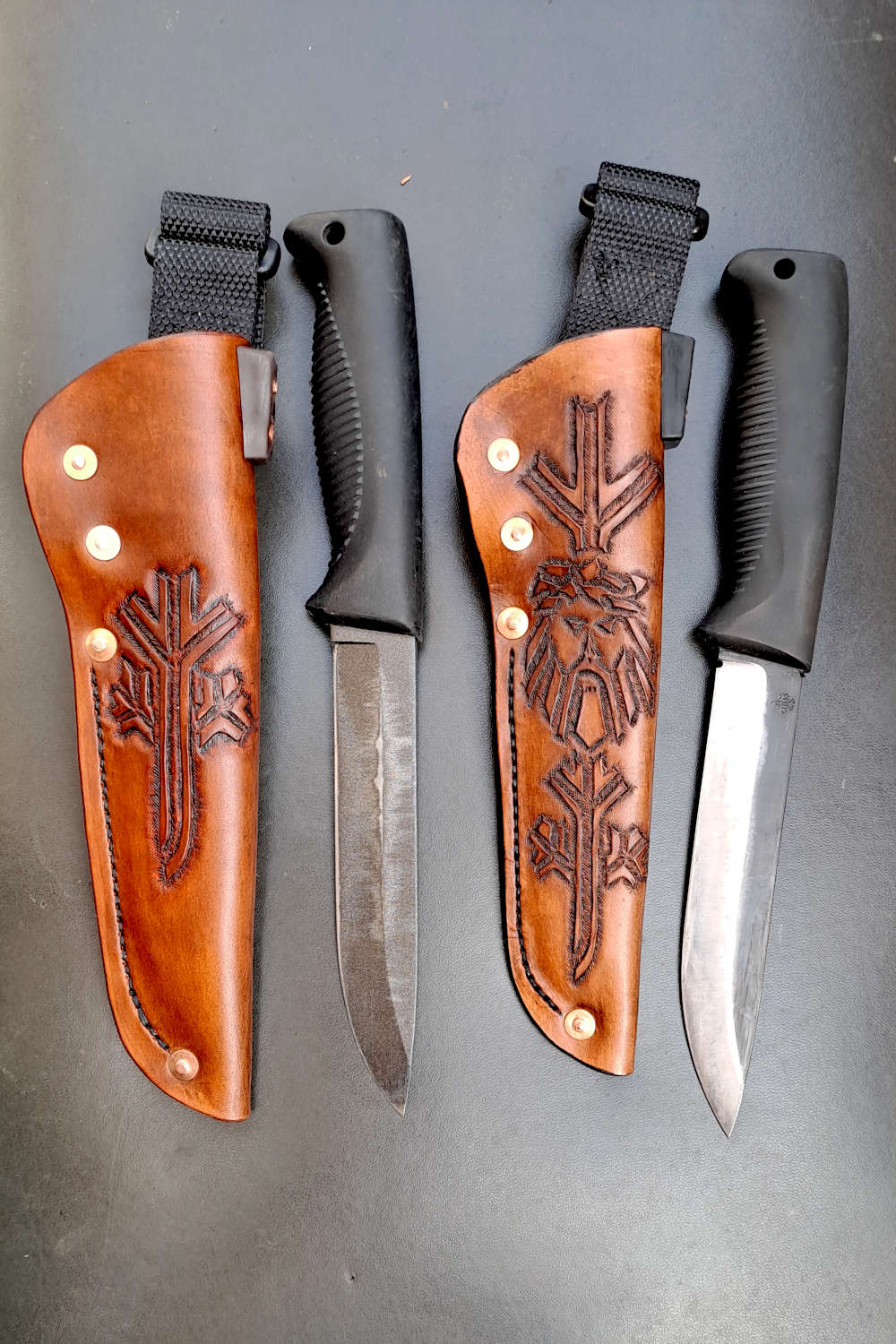
Tooling: I hand-carved and tooled a custom design into the leather. I wanted to make a striking “wild man” motif, though looking at the final piece, it turned out looking a bit more like a grumpy Jesus—which honestly just gives it more character.
Dyeing and Sewing: After tooling, the leather was dyed a rich, deep brown, and the edges were burnished smooth. I stitched the body tightly using a traditional, heavy-duty saddle stitch.
Riveting and Reassembly: Finally, I integrated the original rubber roller into the new leather housing and set heavy new rivets to lock the entire construction together, ensuring the knife still clicks into place with that signature, rock-solid Peltonen retention.
I actually made two of these custom creations. One was sent back to its homeland in Finland, and the other one stayed right here with me as a permanent part of my kit.
A Visual Walkthrough: Below, you can see the step-by-step images of the process—from butchering the original sheath and marking the pattern to tooling, dyeing, and setting the final rivets.
Final Thoughts: Respect the Edge
The Peltonen M95 is an incredible piece of equipment. It even gave me a permanent scar and a memorable one-and-a-half-hour drive to the hospital in Rovaniemi, Finland, after a brief moment of distraction while prepping kindling. It taught me the hard way that the Finnish word for emergency room is Päivystys, and that the edge on this knife demands absolute respect.
It is a phenomenal tactical outdoor tool, but it is not a dedicated woodworking carver. It is the knife you carry when failure is not an option, but perhaps not the one you reach for when you want to spend a quiet afternoon slowly shaping a wooden spoon.
See the Full Review: If you want to see how the M95 handles food prep, heavy batoning on seasoned hardwood, and a closer look at my custom leather sheath modification, watch the full field-test video below!