There is a distinct, ancient magic in looking at a raw piece of wood lying in the yard and seeing a hidden form waiting to be released. I have always been drawn to carving simple, rustic god idols. There is something profoundly archaic about them. They do not require polished perfection or intricate lace-like details; they demand raw character, strong lines, and a connection to the material.
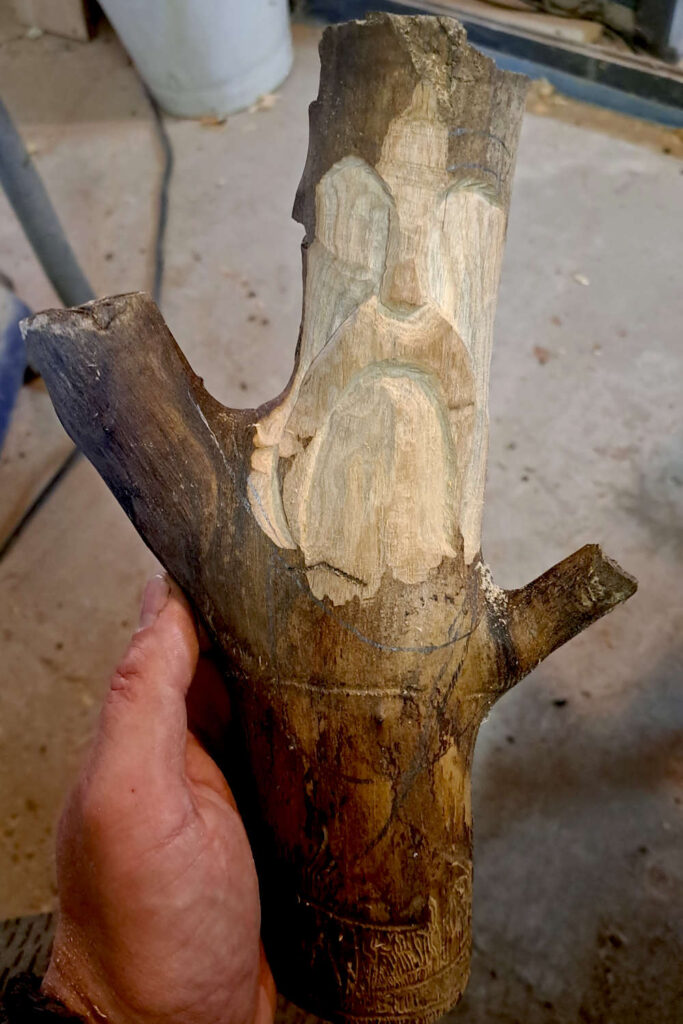
My latest project came from a weathered piece of old wood found right here on our farm. As soon as I looked at the natural shape and the way the branches split, I knew exactly who was resting inside the grain: Tyr, the one-handed god of law, justice, and heroic sacrifice.
The Lore of Tyr: The God of Tuesday
Tyr (or Tíw in Old English) is one of the oldest and most honorable deities in the Norse pantheon. While modern pop culture often shines all the spotlight on Odin or Thor, Tyr represents the core of old-world ethics. He is not a god of reckless slaughter, but of binding oaths, justice, and the somber reality of law.
His most famous myth is the binding of the monstrous wolf, Fenrir. When the gods realized Fenrir was becoming too powerful and dangerous, they tried to bind him with a magical chain. The wolf, sensing a trap, agreed to be bound only if one of the gods placed their hand in his jaws as a pledge of good faith. Only Tyr had the courage to step forward. When Fenrir realized he was tricked and couldn’t break free, he bit Tyr’s hand clean off at the wrist. Tyr made the ultimate sacrifice for the safety of the collective, knowing full well the price he would pay.
For me, this connection runs even deeper. I was born on a Tuesday—which literally translates to “Tyr’s Day” (derived from the Old English Tíwesdæg). Carving him felt less like a random choice and more like a quiet nod to the day I entered this world.
Crafting Tyr: Integrating the Grain
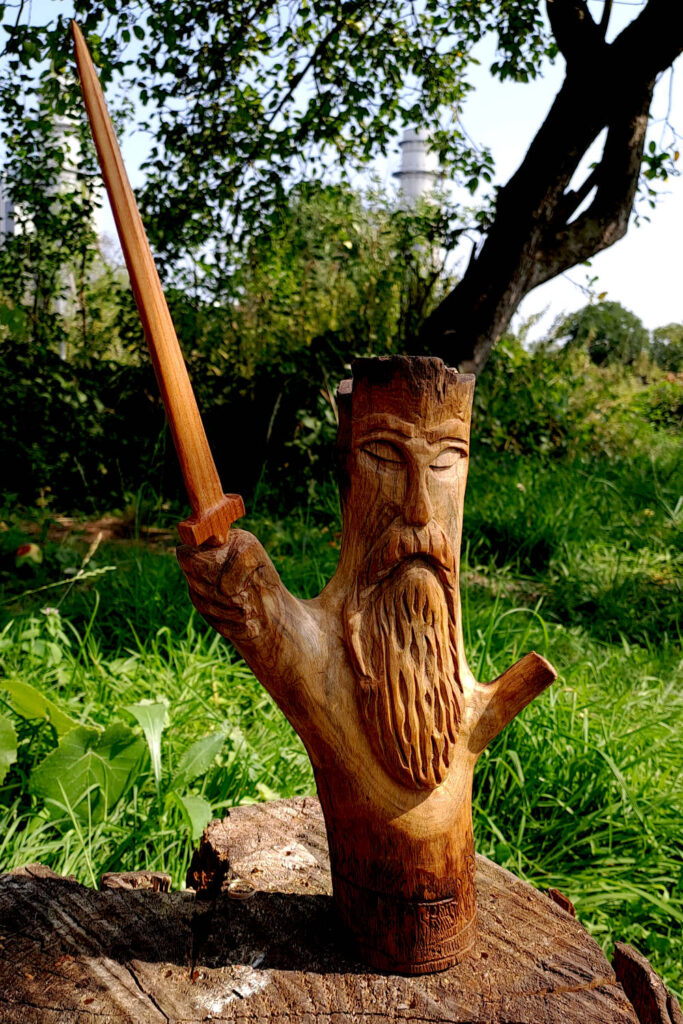
When you look at the carving, you can see how the natural growth of the wood dictated the entire structure of the idol.
- The Bound Stump: Instead of carving a highly detailed anatomy, I chose to let the left branch stump naturally represent his missing hand, severed by Fenrir. It is a raw, blunt reminder of his sacrifice, left exactly where the tree intended it to be.
- The Elm Wood Sword: In his remaining right hand, Tyr raises a sword. I carved this blade separately out of a piece of dense, tough elm wood. Elm is notoriously difficult to split and work with because of its interlocking grain, making it the perfect choice for a weapon of a god known for his unyielding steadfastness.
- The Face: The features are simple, solemn, and weathered—etched deeply into the old wood with strong tool marks left visible to preserve that ancient, protective guardian feel.
The Philosophy of Simple Idols
In a world obsessed with mass-produced plastic and hyper-detailed consumer goods, carving these simple wooden figures is a form of grounding. It connects the hands directly to old lore, using nothing but a knife, a found piece of wood from the earth beneath our feet, and a bit of focus.
Tyr now stands watching over the yard, a heavy wooden reminder of courage, law, and the strength it takes to make a hard sacrifice when the time comes.
How do you connect with the old traditions? Do you have a specific tool, craft, or symbol that aligns with your own roots or the day you were born? Let me know in the comments below!
Cheers!