There is a fundamental truth that every outdoorsman eventually realizes: the best kitchen in the world doesn’t have four walls, a marble countertop, or an induction stove. It has a dirt floor, a stack of seasoned hardwood, and a canopy of open sky.
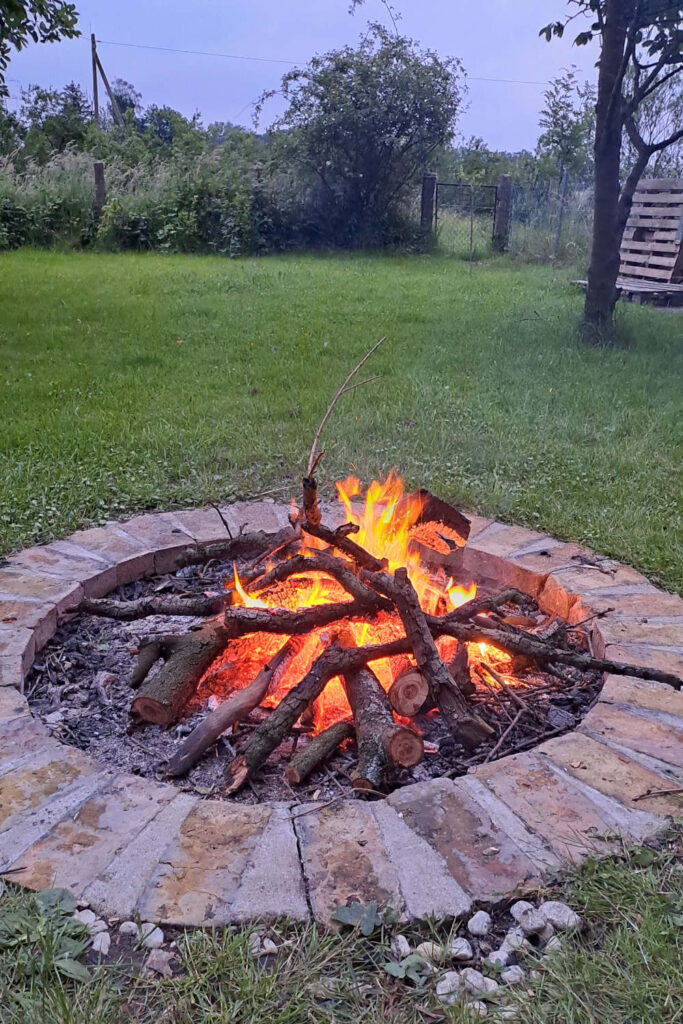
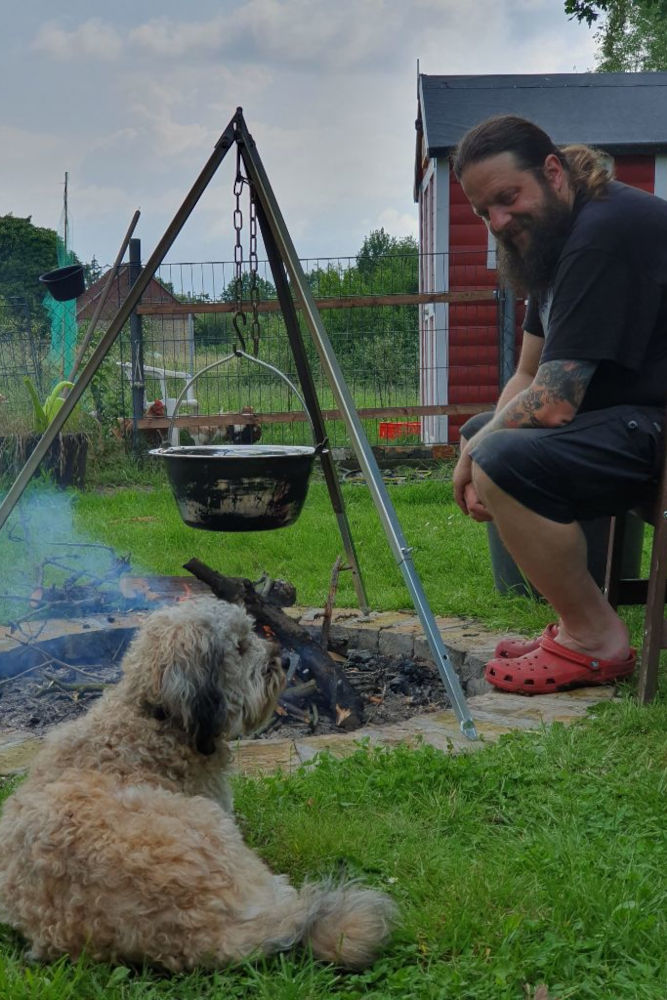
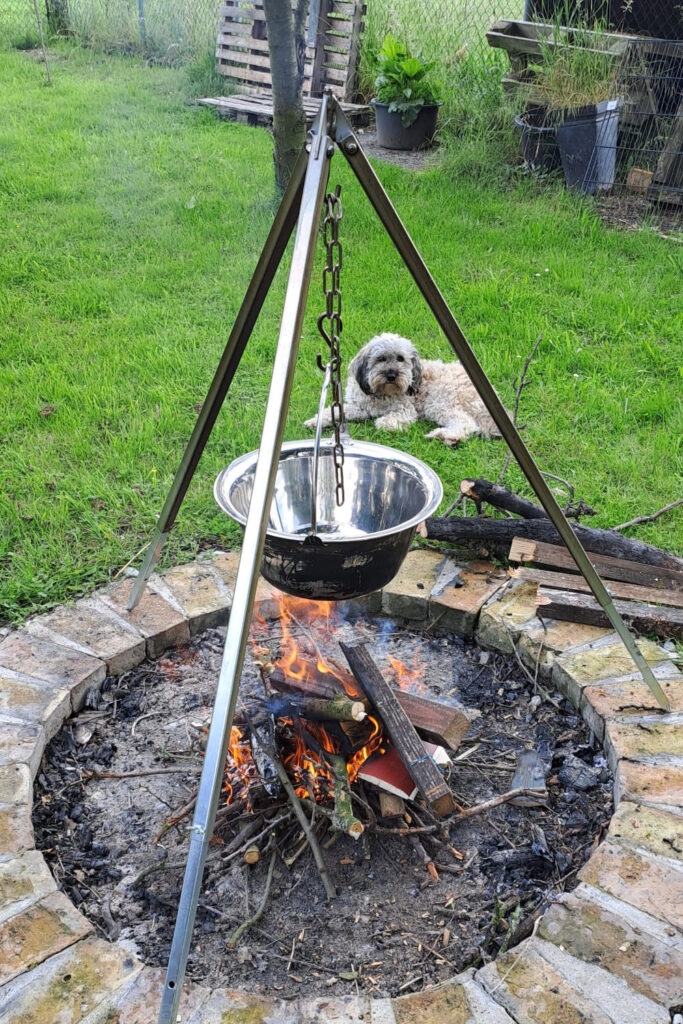
A while ago, I spent the afternoon exactly where I belong—tending the flames in the garden, with a heavy Hungarian Bogrács (goulash cauldron) hanging over the fire pit. The mission was simple, rustic, and timeless: a hearty pork and potato goulash, slow-cooked over an open wood fire.
Why Cooking Over the Fire Changes Everything
In a modern kitchen, cooking is often reduced to a chore—a series of buttons to press and timers that beep. It’s sterile. But when you step outside and light a fire, cooking transforms into an archaic ritual.
The Rhythm of the Flame
You cannot rush a wood fire. You have to read the wood, manage the coals, and adjust the heat by moving logs rather than turning a dial. It forces you to slow down. The steady hum of the wind in the trees, the crackle of the embers, and the rising smoke create a meditative rhythm. It grounds you in the present moment.
The Element of Smoke
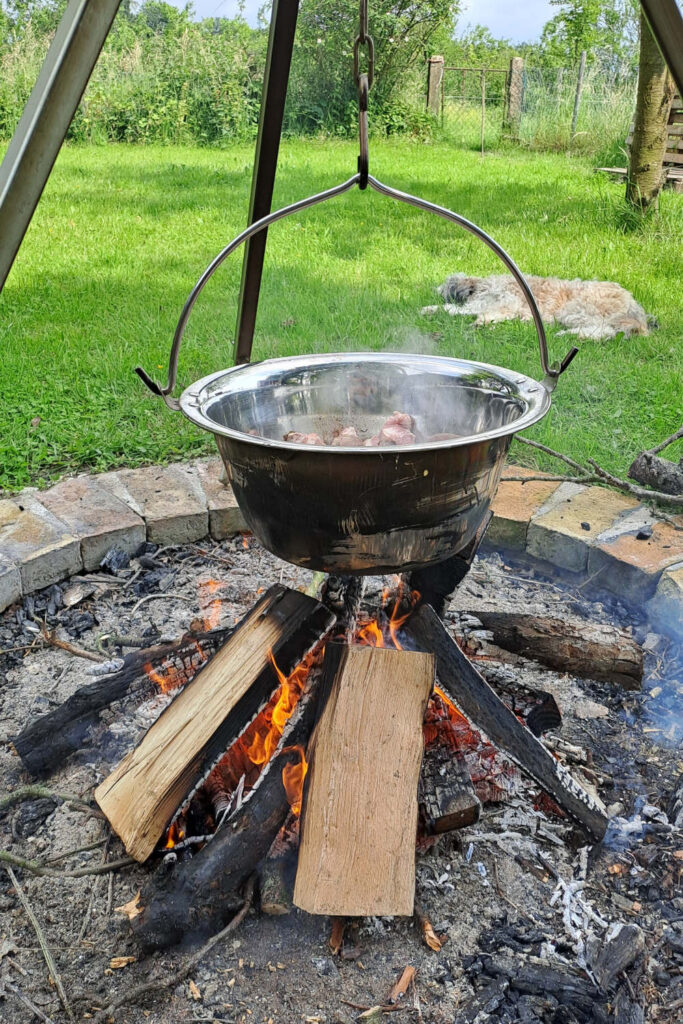
No spice rack in the world can replicate what clean wood smoke does to a dish. As the goulash simmers in the open iron cauldron, it gently catches the passing smoke from the hardwood. It adds a deep, primeval layer of flavor that turns a simple rustic stew into something legendary. It tastes like the woods.
My Take on the Cauldron Classic
To be clear for the purists out there: this is not a strict, traditional Pörkölt (which is typically a thick, highly concentrated meat stew without potatoes) or a classic Bográcsgulyás. This is my personal backyard variant—a rustic hybrid born from what was on hand, designed to feed a hungry camp with honest ingredients.
Even though pork from our own slaughter cooks faster than tough beef, I still let this dish simmer and hang over the open fire for hours. The long, slow exposure to the gentle wood heat and shifting smoke is non-negotiable. It allows the fat, onions, and paprika to completely melt together, creating a depth of flavor you simply cannot rush.
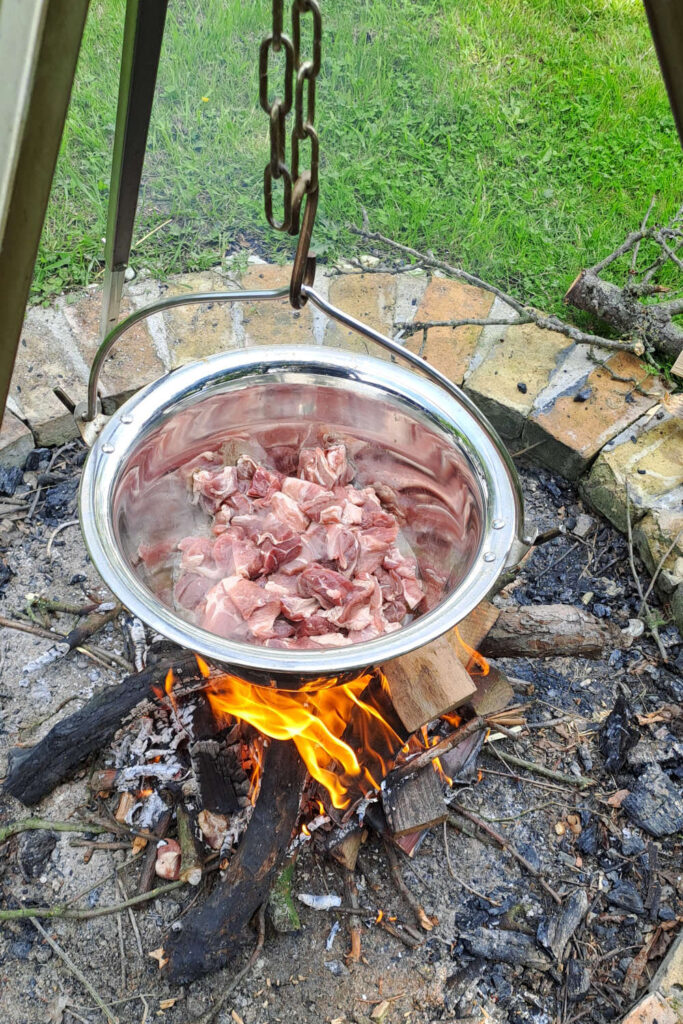
The Recipe: Pork & Potato Cauldron Goulash
The Ingredients (Feeds a Hungry Camp)
- 1.5 kg Home-Butchered Pork (cut into rough 2 cm cubes—shoulder, neck, or belly work best, balancing lean meat with natural fat)
- 1.5 kg Yellow Onions (finely diced—equal parts onion and meat is the secret to a rich base)
- 3-4 tablespoons Pork Lard (traditional, preferably from your own stock)
- 4-5 tablespoons Sweet Hungarian Paprika
- 4 cloves of Garlic (minced)
- 1 teaspoon Caraway Seeds (slightly crushed)
- 2 fresh Tomatoes (diced, for a bit of acidity)
- 5 large Potatoes (peeled and cut into sturdy chunks—we went heavy on the potatoes instead of using bell peppers)
- Salt, Pepper, and 2 Bay Leaves
- Water
The Step-by-Step Guide
Step 1: Establish the Coals
Get a good fire going underneath your tripod. You want a solid bed of hot coals for the initial searing phase, with a few smaller logs ready to maintain a steady, gentle simmer later on.
Step 2: The Onion Foundation
Hang your cauldron over the fire and melt the lard. Add the massive pile of diced onions. Sweat them down slowly until they are completely translucent and turning a beautiful golden yellow. Take your time here—this is where the sweetness of the dish is born.
Step 3: The Secret to the Paprika
Swing the cauldron slightly away from the direct heat or damp down the flames. Stir in the Hungarian paprika quickly. Never burn your paprika over high heat, or it will turn bitter. Once the paprika is fully incorporated into the onions and fat, add the cubed pork and minced garlic. Swing it back over the heat and sear the meat until it changes color, letting the rich pork fat blend with the paprika base.
Step 4: The Long Simmer
Add the caraway seeds, bay leaves, and chopped tomatoes. Pour in just enough water to cover the pork halfway. Let the cauldron simmer over a gentle, steady flame. Keep the fire low and let it braise slowly for a full 3 hours. This long, unhurried exposure to the heat allows the pork fat and onions to completely break down, infusing the meat with a deep, smoky richness and creating an incredibly tender foundation.
Step 5: The Potato Feast
Now, add the massive pile of potato chunks into the cauldron. Pour in additional water until the pork and potatoes are fully submerged. Maintain a steady, gentle simmer for another 45 minutes. Over this nearly three-quarter-hour stretch, the potatoes will become completely fork-tender, absorbing the concentrated paprikash flavors like a sponge. Their outer edges will beautifully dissolve into the broth, turning the lard, onions, and juices into a thick, velvety, and legendary stew. Taste, adjust with salt and pepper, and let it rest off the heat for ten minutes before digging in.
The Reward
There is no better feeling than ladling a steaming portion of wood-fired goulash into a rough bowl, holding a thick slice of rustic bread, and sitting by the dying embers as the evening cools down. It’s simple food, built from basic ingredients, elevated by patience and the element of fire.
From the FirePit: How do you prefer to cook outdoors? Are you team iron cauldron, or do you prefer simple skillet meals directly on the coals? Let me know in the comments below!
Cheers!