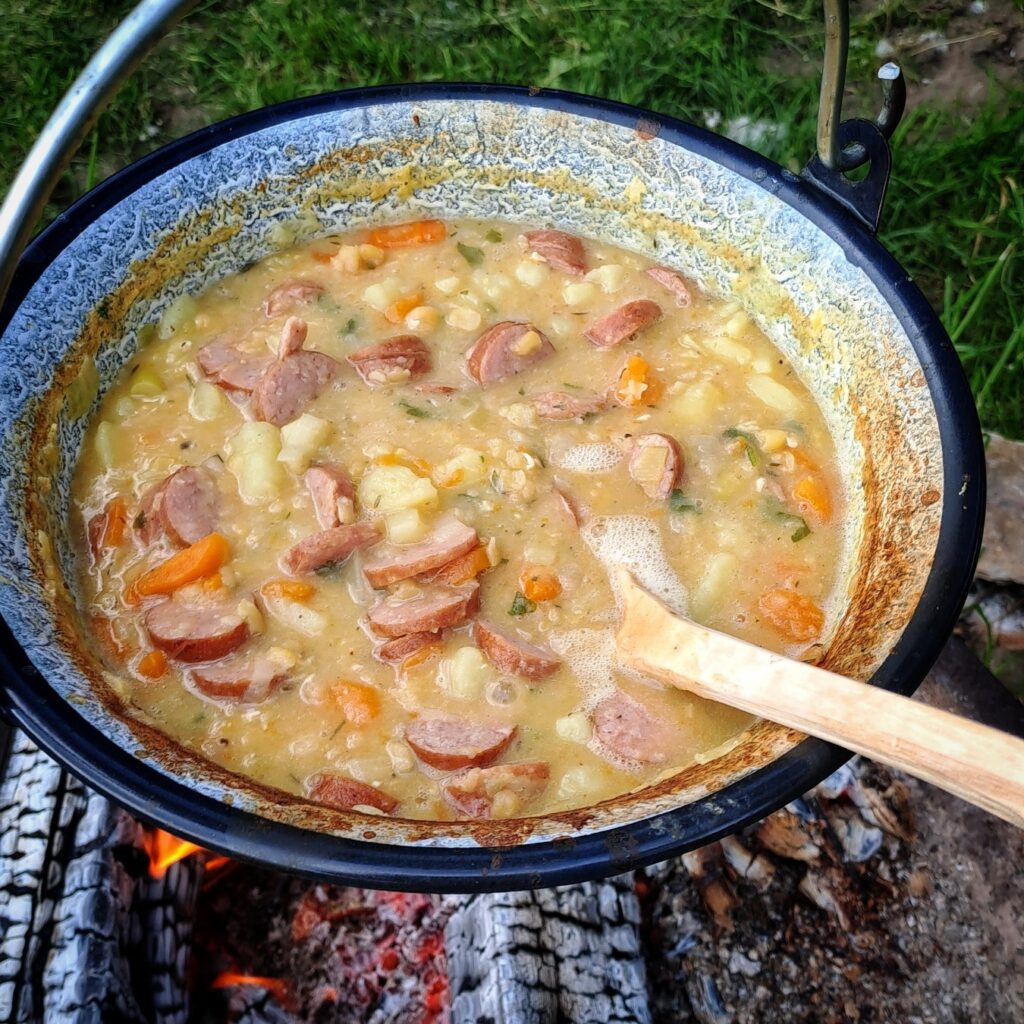
There is something about the smell of woodsmoke and dried peas that feels like home, no matter how deep you are in the woods. Sometimes, we decide to slow things down and cook up a batch of hearty pea soup over the open flame.
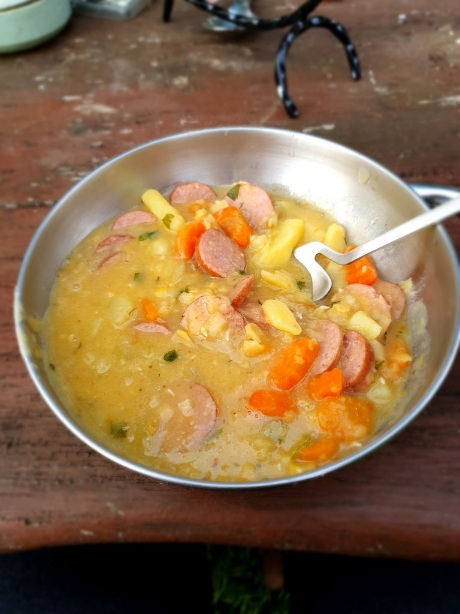
This isn’t just a meal; it’s a ritual. It’s about the patient chop of the vegetables and the long wait as the flavors meld in the cauldron. While I was stirring the pot, I couldn’t help but think about how this humble soup has sustained people for centuries across Northern Europe. It isn’t just “camp food”—it’s a dish steeped in tradition.
- Thursday is for Sweden: In Sweden, eating ärtsoppa (yellow pea soup) on Thursdays is a tradition dating back to the Middle Ages. Originally, it was a way to “fuel up” with a hearty, meat-filled meal before the Friday fast required by the Catholic Church. To this day, you’ll find it served in Swedish schools, restaurants, and military messes every single Thursday, almost always followed by thin pancakes and jam.
- Saturday is for Germany: Travel south to Germany, and you’ll find that Erbsensuppe (pea soup) is often the star of the table on Saturdays. In many German households and local restaurants, Saturday is “stew day” (Eintopf), a practical and comforting tradition that marks the transition into the weekend. Interestingly, the Swedes tend to take yellow peas, whereas green peas are preferred in Germany. When I was a child, we had Stew every Saturday and I honestly found it boring back then. But now, I could eat these simple things every day.
- The Food of the Gods: Most interestingly, pea soup has a legendary fan—Thor, the Old Norse god of thunder. Ancient folklore suggests that peas and pork were considered the “food of the gods” in Viking times. Swedish author August Strindberg even famously referred to the dish as gudamat (God-food) because of its divine hearty nature.
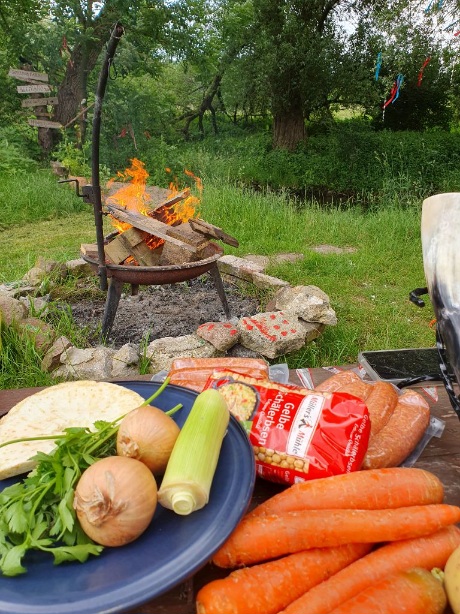
The Ingredients (Feeds 4 hungry campers)
- 1 lb (450g) Yellow Split Peas: Rinsed well.
- 6 Mettwurst Sausages: Or any piece of salted meat. This is the soul of the soup.
- 2 Carrots & 1 thick piece Knob Celery: Diced chunky.
- 6 Potatoes: peeled and roughly diced
- 1 Large Onions and 1 piece of Leek: Roughly chopped.
- 3 Cloves of Garlic: Smashed.
- 8 Cups Water: (Or a mix of water and broth).
- Seasoning: 2 Bay leaves, a sprig of fresh thyme, and plenty of cracked black pepper. (Hold the salt until the end—the sausage is salty and the peas will cook better!) Some fresh parsley.
The Prep: One Knife, One Cauldron
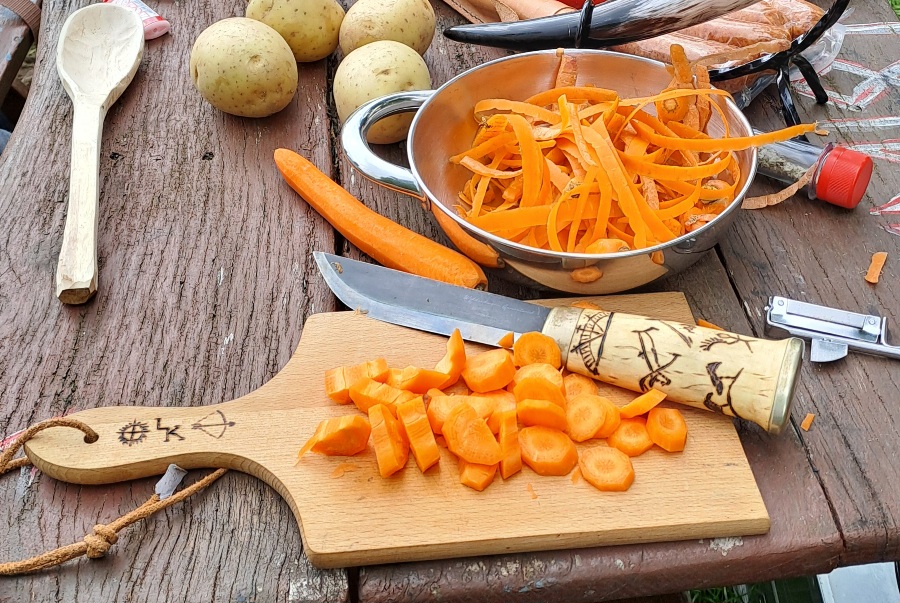
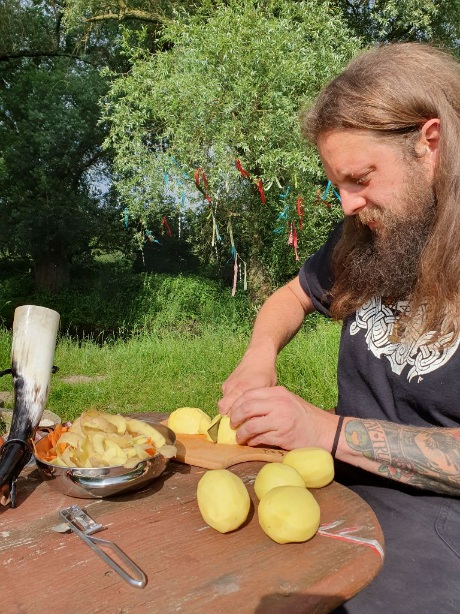
I didn’t bring a kitchen’s worth of gadgets into the woods. I brought my Sami knife. This traditional blade of the North is designed for survival, but its true beauty shines in the camp kitchen.
Using the flat of the blade and its keen edge, I prepped everything right there:
- Dicing the onions, leek and carrots.
- Cutting through the thick, smoky sausages.
- Crushing the garlic cloves with the heavy pommel.
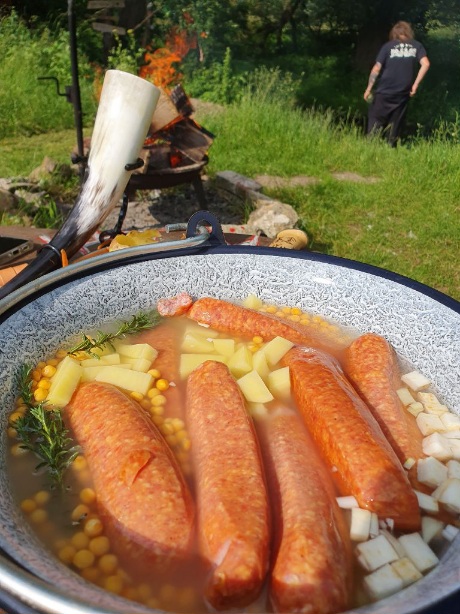
With the prep finished, I swept the ingredients into the cauldron hanging over the crackling fire. There is a primitive satisfaction in that sound—the splash of fresh ingredients hitting the water followed by the steady roar of the flames.
Slow Food in a Fast World
Once everything is in the pot, the real work begins: waiting.
This isn’t a meal you rush. You let the cauldron sit in the heat until the peas break down into a thick, creamy stew and the sausages release their smoky oils into the broth (That’s why you should pierce it several times before adding to the pot). As the woodsmoke swirled around the pot, I could almost imagine a Viking camp or a Swedish farmhouse hundreds of years ago smelling exactly like this.
Cooking this way reminds you that the best things in life—and the best flavors—take time, a good fire, and a sharp knife.