Skip to content
Ulvgart
  • Traditional Crafts
    • Leather & Metal
    • Wood & Horn
    • Art & Ink
  • Food & Fire
    • Fire-cooked Recipes
    • Foraging & Preservation
  • Bushcraft & Wilderness
    • Knives & Gear
    • Skills & Camp
  • Viðarr’s Hearth
  • Folks & Places
  • Search Icon
Peasoup: A Bowl of History and Mythology

Peasoup: A Bowl of History and Mythology

18. January 2026 Widowulf Comments 0 Comment

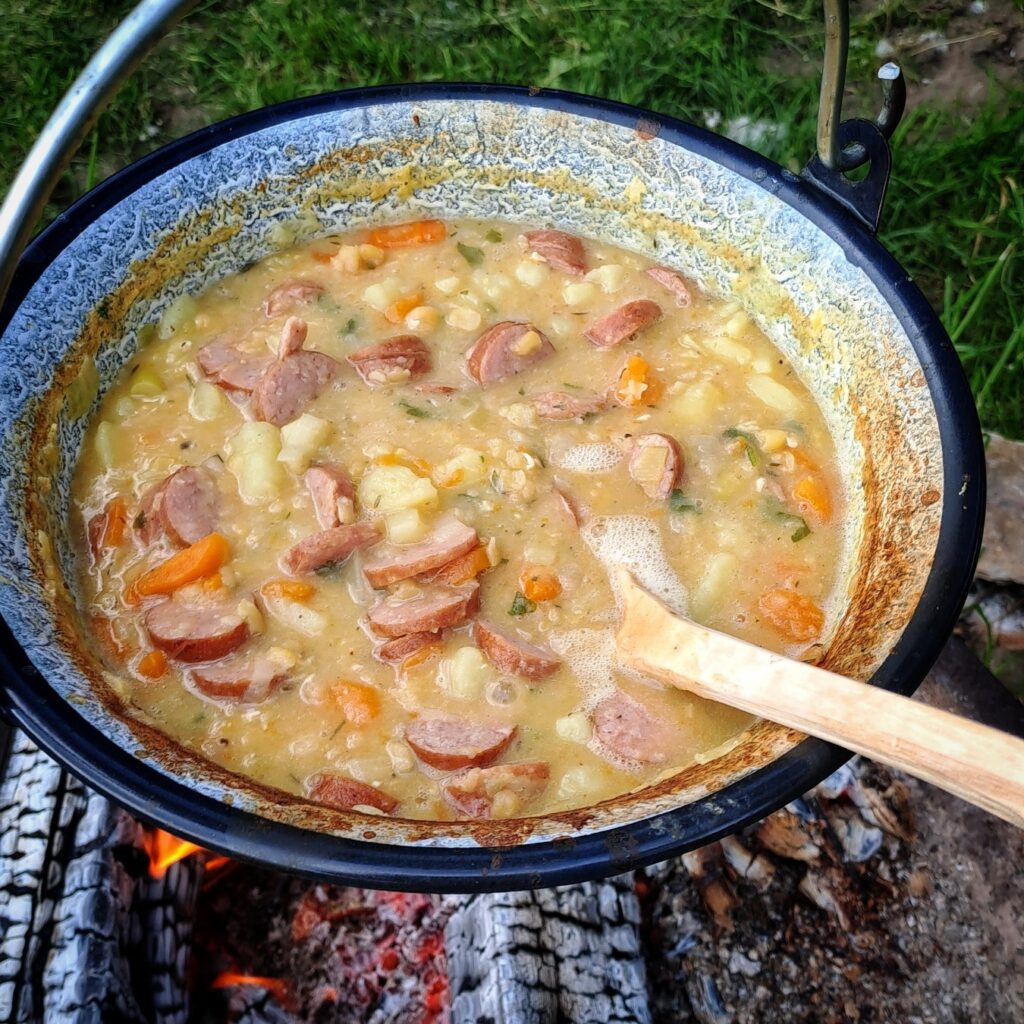
There is something about the smell of woodsmoke and dried peas that feels like home, no matter how deep you are in the woods. Sometimes, we decide to slow things down and cook up a batch of hearty pea soup over the open flame.

This isn’t just a meal; it’s a ritual. It’s about the patient chop of the vegetables and the long wait as the flavors meld in the cauldron. While I was stirring the pot, I couldn’t help but think about how this humble soup has sustained people for centuries across Northern Europe. It isn’t just “camp food”—it’s a dish steeped in tradition.
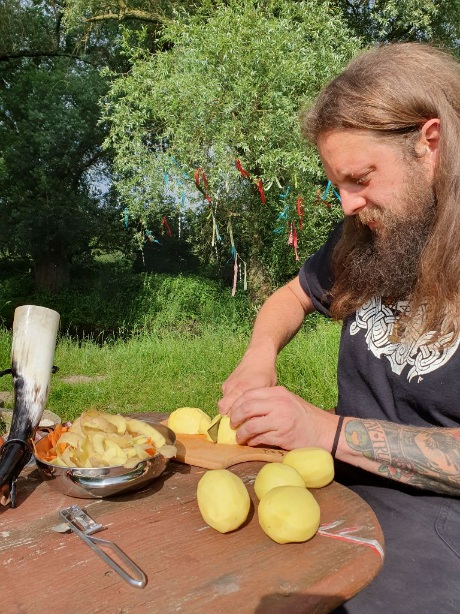
  • Thursday is for Sweden: In Sweden, eating ärtsoppa (yellow pea soup) on Thursdays is a tradition dating back to the Middle Ages. Originally, it was a way to “fuel up” with a hearty, meat-filled meal before the Friday fast required by the Catholic Church. To this day, you’ll find it served in Swedish schools, restaurants, and military messes every single Thursday, almost always followed by thin pancakes and jam.
  • Saturday is for Germany: Travel south to Germany, and you’ll find that Erbsensuppe (pea soup) is often the star of the table on Saturdays. In many German households and local restaurants, Saturday is “stew day” (Eintopf), a practical and comforting tradition that marks the transition into the weekend. Interestingly, the Swedes tend to take yellow peas, whereas green peas are preferred in Germany. When I was a child, we had Stew every Saturday and I honestly found it boring back then. But now, I could eat these simple things every day.
  • The Food of the Gods: Most interestingly, pea soup has a legendary fan—Thor, the Old Norse god of thunder. Ancient folklore suggests that peas and pork were considered the “food of the gods” in Viking times. Swedish author August Strindberg even famously referred to the dish as gudamat (God-food) because of its divine hearty nature. 
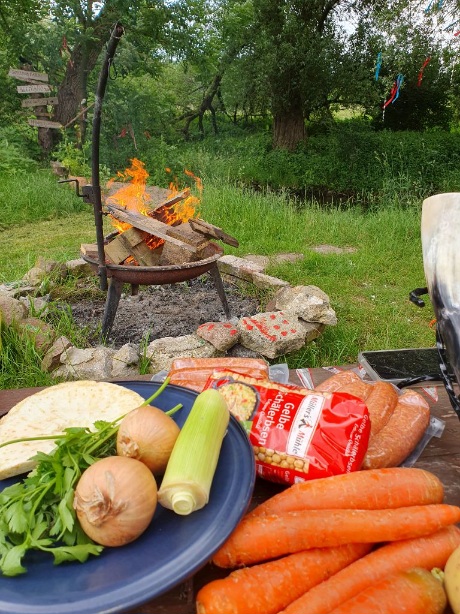
The Ingredients (Feeds 4 hungry campers)

  • 1 lb (450g) Yellow Split Peas: Rinsed well.
  • 6 Mettwurst Sausages: Or any piece of salted meat. This is the soul of the soup.
  • 2 Carrots & 1 thick piece Knob Celery: Diced chunky.
  • 6 Potatoes: peeled and roughly diced
  • 1 Large Onions and 1 piece of Leek: Roughly chopped.
  • 3 Cloves of Garlic: Smashed.
  • 8 Cups Water: (Or a mix of water and broth).
  • Seasoning: 2 Bay leaves, a sprig of fresh thyme, and plenty of cracked black pepper. (Hold the salt until the end—the sausage is salty and the peas will cook better!) Some fresh parsley.

The Prep: One Knife, One Cauldron
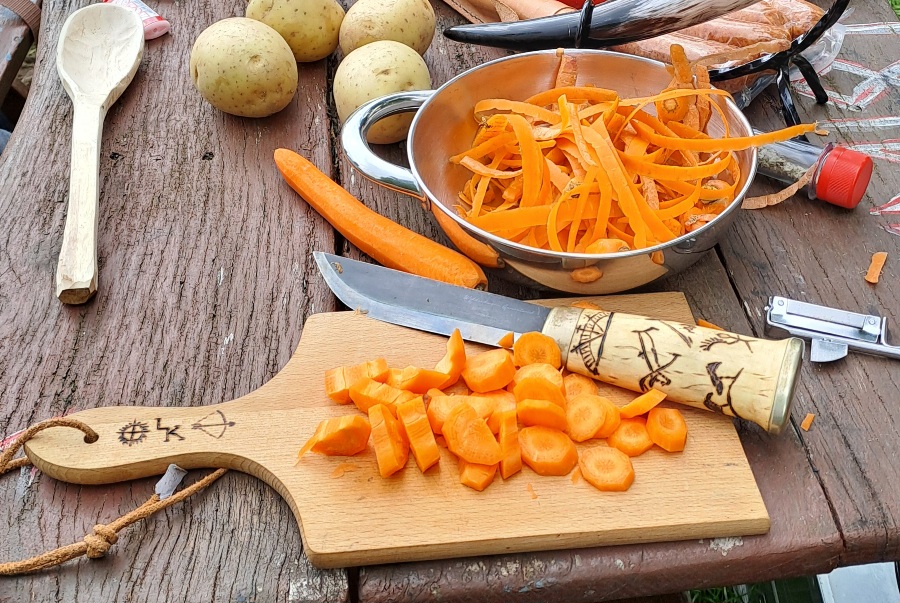
I didn’t bring a kitchen’s worth of gadgets into the woods. I brought my Sami knife. This traditional blade of the North is designed for survival, but its true beauty shines in the camp kitchen.

Using the flat of the blade and its keen edge, I prepped everything right there:

  • Dicing the onions, leek and carrots.
  • Cutting through the thick, smoky sausages.
  • Crushing the garlic cloves with the heavy pommel.

With the prep finished, I swept the ingredients into the cauldron hanging over the crackling fire. There is a primitive satisfaction in that sound—the splash of fresh ingredients hitting the water followed by the steady roar of the flames.
Slow Food in a Fast World

Once everything is in the pot, the real work begins: waiting.

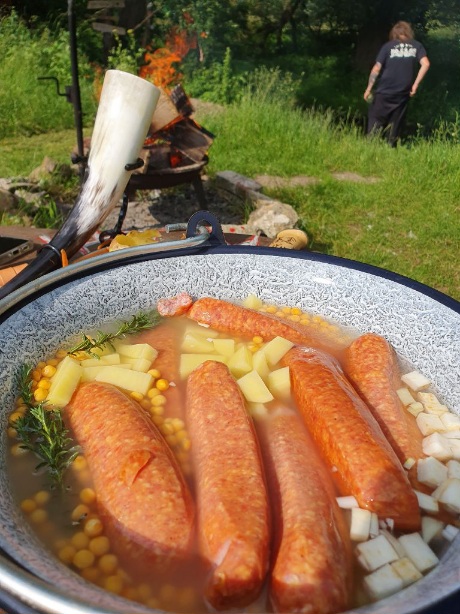
This isn’t a meal you rush. You let the cauldron sit in the heat until the peas break down into a thick, creamy stew and the sausages release their smoky oils into the broth (That’s why you should pierce it several times before adding to the pot). As the woodsmoke swirled around the pot, I could almost imagine a Viking camp or a Swedish farmhouse hundreds of years ago smelling exactly like this.

Cooking this way reminds you that the best things in life—and the best flavors—take time, a good fire, and a sharp knife.

Post navigation

PREVIOUS
From My Studio to the Far North: A Charcoal Gift for a Soulbrother
NEXT
Crafting a Viking-Inspired Belt Pouch
This error message is only visible to WordPress admins

Error: No feed found with the ID 2.

Go to the All Feeds page and select an ID from an existing feed.

Leave a Reply Cancel reply

Your email address will not be published. Required fields are marked *

"All good things are wild and free"

H. D. Thoreau

Vintage Mora Knife from Frost's Sweden #moramonday #morakniv #moraknife #moraofsweden #bushcraft
The Casström Lars Fält is often called the gold standard of bushcraft knives — full tang, thick spine, built to survive batoning and rough abuse. It earned that reputation. But every capability you build into a knife gets paid for somewhere, and I think that price rarely gets mentioned.

I put my own handmade puukko, Viima — thin, differentially hardened, built for exactly one job — up against the Casström through feathersticks, carving, food prep, and batoning. Neither knife loses. They're paying different taxes for different jobs.

This isn't a takedown of the Casström. It's an honest look at what "does everything" actually costs — and why knowing your real work matters more than owning the knife that claims to do it all.

No sponsorships, no scripts — just an eldgäst sharing genuine experience at the fire.

#bushcraft #puukko #casström #larsfält #knifecomparison #handmade #knifemaking #sloyd #scandigrind #traditionalbushcraft #carbonsteel #eldgäst #ulvgart #outdoorskills
Why 'Does Everything' Knives Cut Worse
Is it hypocrisy to preach consumer criticism while carrying a ridiculously expensive titanium canteen? Let's talk about it honestly.

For years, I tried to make the sensible, cheaper choice. I bought several of those popular plastic bottles – they all ended up beaten up and looking terrible. A couple of others literally cracked and broke on me. Then I tried a cheaper metal option, only for the cheap plastic cap to fail and the handle to fall off after a short time.

When you add up the cost of all that discarded plastic and broken gear, 'buying cheap' becomes incredibly expensive—both for your wallet and the environment.

So, I made a choice. I bought a high-end titanium canteen set. Yes, it’s uncomfortably expensive. But it’s also the last canteen I will ever buy. It doesn't rust, it doesn't decay, it doesn't leak microplastics, and I can toss it directly into the hot coals.

This isn't a sponsored review. I don't care about the brand, and I'm not here to sell you anything. I'm here to talk about a simple philosophy: Buy once, cry once. Stop buying cheap plastic trash that ends up in a landfill, and start investing in things that will outlive you.

Is it still a guilty pleasure? Maybe. But to me, it's the only logic that makes sense in the long run.

Welcome to the fire.

Cheers!

My Homepage: https://www.ulvgart.com

#honestreview #titaniumcanteen #buyitforlife #consumerism #outdoorgear #bushcraftgear #plasticfree #sustainableliving
My $150 "Guilty Pleasure" – Hypocrisy or Sustainable?
A real hobo stove is made from a cheap tin can. So why do we spend a fortune on titanium folding gadgets?

In this video, I’m sharing my honest thoughts after 15 years of using the Picogrill 239. While cooking breakfast in my hunter's pan, I talk about why I’m not a big fan of modern wood stoves and bushboxes anymore. The Picogrill is okay – it’s large enough to double as a small fire pit inside a Lavvu tent – but if you ask me whether I’d buy it again today? No. It’s simply not worth the price tag anymore.

But since I already own it, I’ll keep using it until it falls apart. Let’s talk about real utility versus overhyped outdoor consumerism.

Grab a coffee, welcome to the fire.

Cheers!

My homepage: https://ulvgart.com/

#picogrill #hobostove #bushcraft #woodstove #campcooking #honestreview
The Hobo Cult: 15 Years with the Picogrill 239 (And Why I Wouldn't Buy It Today)
The price tag is hefty, and honestly, I really hope the quality holds up to it. But for me, I’d much rather invest more money into a durable, long-lasting product made closer to home than buy cheap synthetic gear from the other side of the planet that ends up in a landfill after a few trips.

In this video, I’m sharing my first impressions of the 'Loki' 1-person tent from @nordicwolfbushcraft. I bought this shelter myself on sale—I am not sponsored, and I have no connection to the company. I just wanted a real alternative to modern plastic tents and tarps.

I pitched it in my garden in a few different setup variations to see what this regional gear is capable of. Let’s look at the material and find out if it's worth the investment.

Welcome to the garden, grab a coffee!

My homepage: https://ulvgart.com/

#bushcraftshelter #canvastent #bushcraftcamping #nordicwolf
#outdoorshelter #bushcraft #noplastic
Nordicwolf Loki: Why I Paid More for a "Made in Germany" Tent
Livestream von Ulvgart | Feral Sloyd & Bushcraft
Paracord Hack for Axes #survival #bushcraft #axecraft #outdoorgear
Article on my website: https://ulvgart.com/axe-lanyards-grip-wraps-a-modern-myth-that-ruins-your-tool-and-your-health/

Axe lanyards and paracord wraps are everywhere on social media. They look "tactical", they look "bushcrafty" – but in reality, they are a modern myth that ruins your tool's ergonomics and, worse, invites serious injury. 

In this video, I share my personal view on this. 

An old master craftsman once taught me a golden rule of the trade: "Grip the haft, or leave the craft." Real tools are designed to be held with a full fist. Relying on a string to keep a swinging blade in your hand is fighting against physics. 

We look back in history at traditional tools like the flail to understand why swinging tools were designed the way they were – and why modern axe lanyards turn a sharp blade into a dangerous boomerang pointing straight at your own arm. 

If you want blisters on your hands and a ticket to the ER, keep wrapping your axes. If you want to know how real hand tools actually work, let's look at the facts.

Homepage: https://ulvgart.com/

#bushcraft #axehacks #woodworking #safetyfirst #handtools #outdoors
Lanyards & Grip Wraps on Axes and Knives: A Modern Myth That Ruins Your Tool (and Your Health)
https://ulvgart.com/shadows-in-the-pith-whittling-elder-wood-spirits/
Turning simple elder branches into small character heads! In this video, I’ll show you how I whittle these tiny faces using just a small carving knife. The best part about elder wood? The soft pith in the center is incredibly easy to hollow out. This leaves the perfect channel to slide a hemp cord through for hanging—or to create some wild hemp hair for these little guys!

This is a super relaxing, beginner-friendly whittling project. Grab a stick, grab your knife, and let's get carving!

https://ulvgart.com/

#Whittling #Woodcarving #WoodCarvingProjects #DIY #Greenman #Bushcraft #Woodcraft
How to Whittle Small Heads from Elder Branches (Step-by-Step)
Subscribe

All Categories:

  • Traditional Crafts
    • Leather & Metal
    • Wood & Horn
    • Art & Ink
  • Food & Fire
    • Fire-cooked Recipes
    • Foraging & Preservation
  • Bushcraft & Wilderness
    • Knives & Gear
    • Skills & Camp
  • Viðarr’s Hearth
  • Folks & Places
  • YouTube
  • Pinterest
  • Reddit

Archives

  • July 2026
  • June 2026
  • May 2026
  • April 2026
  • January 2026

axecraft belt pouch beverage boreal art boreal life Bricoleur bushcraft bushcraftknife Campfire gourmet campfire kitchen carving Consumecraft customknife diy drawing elder eldgäst fermentation finland handmade knifesheath lanyard leathercraft leuku Mindfulness norsegods Outdoor cooking outdoorcooking paganart paracord peltonen personal hero puukko recipe safety survival survivalknife tea UnlearnCivilisation viking style whittle whittling woodart woodcarving woodcraft

Privacy Policy
Legal Notice
About Me

Contact


0 / 180
© 2026   by Widowulf. All Rights Reserved.